
 Nana Wu
For decades, the hospitality industry operated under a singular, undisputed axiom: if you want to capture the high-end leisure market, you sell the sun. The standard cruise formula was a feat of industrial repetition—construct a vessel the size of a municipal skyscraper, cram four thousand guests onto a synthetic pool deck, and follow the trade winds toward the predictably warm waters of the Caribbean or the Mediterranean. It was a model built on scale, predictability, and mass-market consumption.
However, a granular analysis of current global booking data reveals a tectonic shift. The industry’s most lucrative demographic—high-net-worth individuals, multi-generational families, and "experience-seeking" luxury travelers—are increasingly turning their backs on the manicured beaches of the tropics. Instead, they are gravitating toward the cold spray, the vertical mountain walls, and the unforgiving, freezing northern seas. This pivot is not merely a passing trend; it is a fundamental reconfiguration of the luxury travel market, offering a roadmap for any business leader looking to capture high-margin, loyal clientele.
The Reality of Navigating the North: Operational Constraints
The appeal of the North is paradoxical, as the environment is fundamentally hostile to traditional commercial tourism. Venturing beyond the UK coast, past the jagged teeth of the Norwegian fjords, and into the sub-polar territories requires a complete departure from the "mega-ship" logistics that have defined the last fifty years of maritime travel.
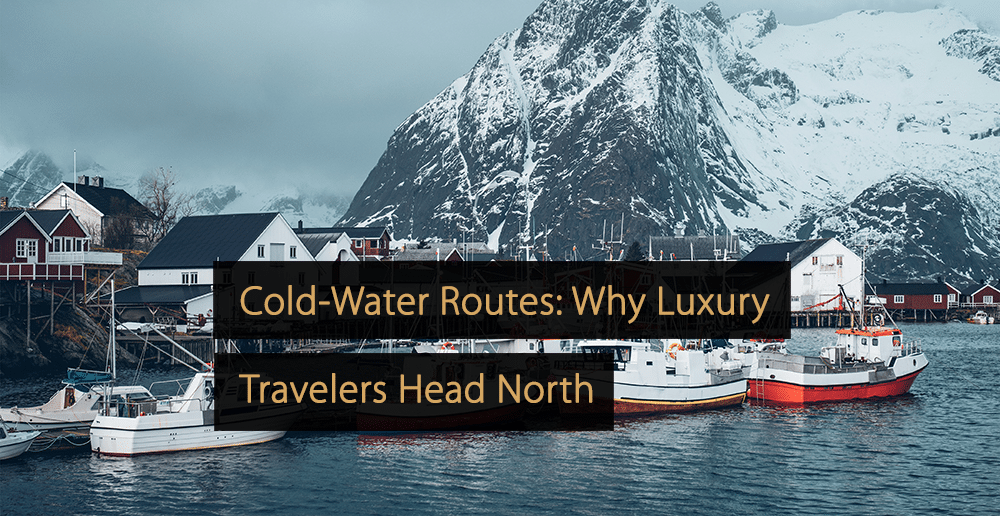
In these latitudes, the sea is an active participant in the itinerary, not a backdrop. Weather systems shift in minutes; swells manifest from nowhere; and the infrastructure is non-existent. Most coastal settlements in these regions are comprised of small, wooden piers designed for local fishing cutters—not for five-hundred-foot steel hulls.
When a standard cruise line attempts to operate in these waters, the experience becomes a logistical failure. A massive vessel cannot approach the coastline without risking a grounding. Consequently, the ship must anchor miles offshore in deep, often turbulent water. Guests are then forced to spend hours waiting in queues for tender boats, only to arrive on shore exhausted, with half their day squandered. The "luxury" experience vanishes, replaced by the friction of mass-transit logistics.
The Small-Vessel Advantage: Precision Over Scale
The solution, which has become the gold standard for the modern expedition operator, is the small-vessel model. By capping passenger counts between fifty and eighty, operators drastically reduce the vessel’s draft. This allows the skipper to navigate directly into rocky inlets, slip past sandbars, and utilize sheltered coves as natural havens from squalls—maneuvers that would lead to a catastrophic hull breach for a standard commercial liner.
This shift to smaller vessels transforms the travel experience from a passive, observation-based trip into an active, exploratory one. It is a transition from being a "passenger" on a floating city to being a "participant" in a rugged, high-stakes environment.
Why Travelers Pay Fortunes to Freeze
To the casual observer, the economics of this sector seem counterintuitive. Why would a family invest fifteen thousand dollars to trade a sandy beach for a parka and thermal underwear? The answer lies in the shifting definition of luxury.
1. The Scarcity of Authenticity
In an era where every destination is hyper-documented on social media, true "untouched" experiences have become the ultimate luxury commodity. The Arctic offers a lack of commercialization that is impossible to replicate in the tropics.
2. The Psychology of "Active" Adventure
High-spending travelers are increasingly suffering from "resort fatigue." The monotony of a pool-side cocktail has been eclipsed by the dopamine hit of witnessing a calving glacier or the rare sighting of a polar bear. It is an engagement-based value proposition.
3. Intellectual Fulfillment
Expedition travel often involves onboard experts—biologists, glaciologists, and historians. The trip is not just a vacation; it is a learning experience, satisfying the growing desire for self-actualization through travel.
Northern Case Study: The Svalbard Expedition
To understand the logistical mastery required, one must look at the Arctic cruise circuit to Svalbard. In the Barents Sea, the concept of "infrastructure" is discarded entirely. There are no supply chains, no coast guard stations nearby to assist with a mechanical failure, and no cellular networks. The vessel must function as a self-contained, high-performance basecamp for weeks at a time.
Operators like Aqua Expeditions have mastered this by treating the itinerary as a living document. Their model focuses on three pillars:
- Agile Itineraries: If a scout detects ice clearing to the north or wildlife in an unexpected location, the captain alters the course instantly. This level of flexibility is fundamentally incompatible with the rigid, pre-planned schedules of mega-ships.
- Safety as Luxury: In the Arctic, the most profound service an operator provides is the assurance of safety in a dangerous environment. The expertise of the crew and the durability of the vessel are the "amenities" that justify the premium price.
- The "Homecoming" Experience: After a day in sub-zero temperatures, the transition into a warm, high-design stateroom with locally sourced, gourmet cuisine feels significantly more luxurious than the same experience in a tropical climate.
Chronology of the Market Shift
The evolution of this travel trend can be tracked over the last decade:
- 2014-2017: Initial rise in "Expedition-Lite" travel, where small luxury boats began replacing traditional cruises for the ultra-wealthy.
- 2018-2021: The emergence of "Purpose-Built" expedition vessels—ships engineered specifically for ice-breaking and shallow-water navigation.
- 2022-2025: Mainstream adoption by high-spending families. The industry saw a 40% increase in bookings for polar expeditions as travelers sought "revenge travel" that offered isolation rather than crowding.
- 2026-Present: The normalization of the "basecamp" cruise model, where the vessel is viewed as a mobile, luxury platform for deep-environment exploration.
Implications for the Broader Hospitality Industry
You do not need an ice-class vessel or a radar-equipped ship to harness this market shift. The lessons learned in the North are applicable to boutique hotels, private tour companies, and independent lodges.
1. Prioritize Access Over Amenities
In the modern market, "access" is the new amenity. Can you provide your guests with a tour that the general public cannot book? Can you offer an experience that is impossible to find on a standard booking platform? If your business provides exclusive, hard-to-reach experiences, you can command a significant price premium.
2. Embrace "Loose" Planning
Standardized, minute-by-minute itineraries are becoming a relic. High-end clients value the ability to pivot. Train your staff to be responsive to the "local conditions" of your location—whether that means changing dinner plans because a local event popped up or offering a spontaneous excursion.
3. The Power of Intellectual Engagement
Whether you run a mountain lodge or a city-center hotel, find ways to inject expertise into the guest experience. Partner with local historians, artisans, or guides. Transforming a stay from a "room rental" to an "educational journey" builds the kind of loyalty that ensures repeat bookings.
Conclusion: The New Luxury
The high-latitude expedition trend serves as a vital case study for the entire hospitality industry. It proves that affluent travelers are increasingly willing to sacrifice the traditional markers of luxury—such as massive buffets, sprawling pool complexes, and predictable, sunny itineraries—in exchange for raw access, personalized human service, and quiet, meaningful surroundings.
For business owners, the directive is clear: stop competing on scale. You cannot beat the mega-corporations at their own game. Instead, compete on the "expedition" mindset. Bring those grounded, authentic, and highly responsive habits into your own operation, and you will not only survive the shifting market trends—you will thrive in the space where the margins are highest and the client loyalty is most profound.
As we look toward the future of global travel, the most successful businesses will be those that realize the customer is no longer looking for a place to hide from the world, but a place that allows them to interact with it on a deeper, more challenging, and ultimately more rewarding level.


 Reynand Wu
 Lina Irawan




