
 Nila Kartika Wati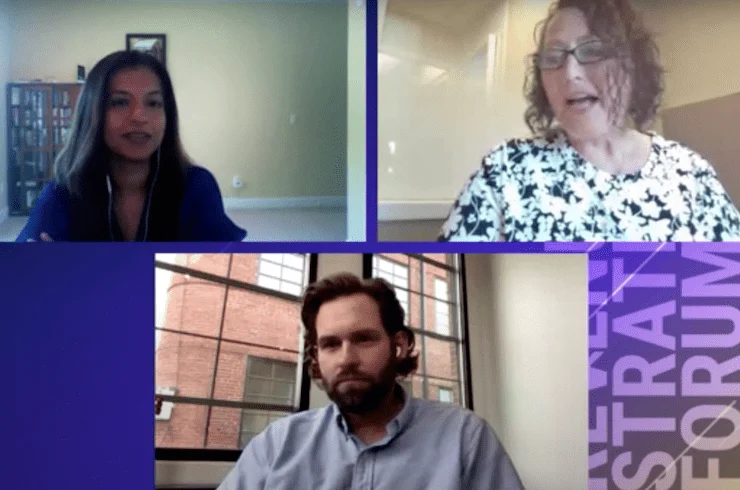
The global hospitality landscape underwent an unprecedented transformation in 2020, forcing hoteliers to abandon traditional operational playbooks in favor of agility, data-driven decision-making, and leaner structural models. On May 19, 2021, the Silver Hospitality Group, in collaboration with Duetto, hosted the inaugural Revenue Strategy Forum (RSF). The event served as a critical nexus for industry leaders to dissect the post-pandemic economic outlook and the pivotal role of technology in recovery.
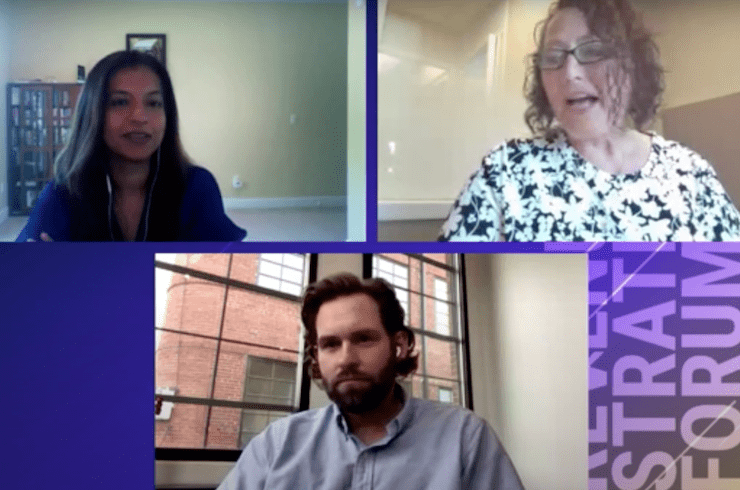
The centerpiece of the forum was a panel titled “Navigating Uncertainty in Profitability,” moderated by Caryl Helsel, Founder and CEO of Dragonfly Strategists. The panel featured two prominent industry voices: Priya Chandnani, Vice President of Revenue Management for Benchmark Hotels & Resorts, and David Rochefort, President of Graduate Hotels. Their discussion provided a roadmap for how hospitality brands successfully managed survival during the crisis and how they are positioning themselves for a robust, albeit unpredictable, recovery.
Main Facts: The Strategic Shift
The fundamental takeaway from the 2021 Revenue Strategy Forum was the industry-wide pivot away from "muscle memory"—the reliance on historical data patterns that were rendered obsolete by the pandemic—toward real-time, data-centric revenue management.
Both Benchmark Hotels & Resorts and Graduate Hotels faced the dual challenge of preserving capital while maintaining service quality. The strategies employed to bridge this gap included:
- Centralization of Revenue Management: Scaling regional support to cover a broader portfolio of properties.
- Direct Channel Optimization: Prioritizing direct booking channels to mitigate high distribution costs associated with third-party platforms.
- Technological Integration: Utilizing advanced revenue management systems (RMS), such as Duetto, to maintain operational visibility even during periods of minimal demand.
- Dynamic Rate Management: Implementing more aggressive pricing strategies to combat labor shortages and rising operational costs.
Chronology: From Lockdown to Rebound
The timeline of the hospitality recovery, as discussed by the panelists, reveals a journey of proactive preservation followed by aggressive scaling.
Phase 1: The Preservation Period
In the early months of the pandemic, survival was the only metric that mattered. David Rochefort noted that Graduate Hotels took the radical step of closing their properties three weeks earlier than much of the industry. While this may have seemed counterintuitive, the goal was to preserve liquidity. By "turning off" the operational engine early, the company avoided the "bleeding" of cash flow that affected competitors who attempted to stay open at low occupancy levels.
Phase 2: The "Idling" Strategy
Rather than dismantling their revenue management teams entirely, Graduate Hotels chose to keep their core expertise intact. "We never turned it off," Rochefort stated. "We never let every revenue manager go." By keeping the engine "idling," the company ensured that as demand signals flickered to life, they were prepared to capitalize on the rebound instantly, rather than facing a slow, painful ramp-up period.
Phase 3: The Recovery Phase
By May 2021, the focus shifted to tactical growth. Benchmark Hotels & Resorts had maintained their marketing investments throughout the pandemic, a decision that paid dividends as travel demand surged. By keeping their brand presence consistent, they were able to drive direct traffic, which minimized the dependency on high-commission distribution channels during the crucial initial recovery window.
Supporting Data: Efficiency and Demand
The financial pressures of the pandemic mandated a shift in how hotels view distribution. Priya Chandnani of Benchmark emphasized that the company’s ability to drive direct bookings was not a byproduct of luck, but a result of sustained investment.
Distribution Cost Management
Distribution costs represent one of the largest drains on hotel profitability. During the panel, it was revealed that Benchmark’s strategy was rooted in "caution." By maintaining marketing spend while other firms cut back, Benchmark successfully captured the initial wave of travelers, keeping their acquisition costs lower than they would have been had they relied on third-party aggregators during the rebound.
The Staffing Paradox
The "very real problem" of staffing shortages in 2021 forced a change in room inventory management. As labor pools shrank, hoteliers could not clean every room or provide full-service options at all times. Benchmark responded by restricting standard room types and playing a more aggressive rate strategy. By raising rates and limiting availability, they achieved optimal RevPAR (Revenue Per Available Room) while managing a smaller staff.
Graduate Hotels, while still facing a shortfall of roughly 600 roles, leaned on technological automation to offset the deficit, ensuring that the existing team could handle the increasing demand without burning out.
Official Responses: Lessons from Leadership
The Role of Technology and Data
Both panelists agreed that the pandemic served as an accelerator for digital transformation. Chandnani emphasized that the reliance on intuition is no longer sustainable. "Our ability to use data to make our decisions rather than emotions—or for lack of a better word, muscle memory—is essential," she remarked.
For Rochefort, the technology provided by platforms like Duetto was not just about pricing; it was about internal communication. He noted that the most valuable application of this data was in having "honest and real conversations" with stakeholders. In an era of extreme volatility, transparency about what was achievable—and what was not—allowed the rest of the organization to adapt their expectations and operational goals in real-time.
Communication as a Pillar
The panelists underscored that leadership during a crisis is fundamentally a communication challenge. Whether it was closing hotels, furloughing staff, or reopening for the summer season, the ability of management to "talk to one another, trust one another, and really rely on one another" was cited by Chandnani as the greatest asset of the recovery phase.
Implications for the Future of Hospitality
The insights shared at the 2021 Revenue Strategy Forum suggest a permanent shift in how hotels will operate moving forward.
1. The Death of Historical Forecasting
The industry is moving toward a model where predictive analytics and real-time market data replace the use of "the same week last year" as a primary forecast tool. The success of both Benchmark and Graduate suggests that those who can model scenarios based on current demand signals—rather than historical averages—will lead the market.
2. Strategic Flexibility
The "idling engine" concept popularized by Graduate Hotels is likely to become a standard for large hospitality groups. Maintaining core revenue management talent during downturns, even while downsizing operations, allows a firm to remain agile. The cost of retraining and re-hiring is significantly higher than the cost of maintaining a streamlined, centralized team that can oversee multiple properties.
3. The Summer of 2021 and Beyond
At the time of the forum, both leaders expressed extreme optimism regarding the summer of 2021. For Graduate Hotels, which focuses on university towns and secondary markets, the "pickup" was driven by school sports and move-in dates. For Benchmark, the summer was viewed as a potential record-breaker.
However, the panel remained cognizant of the challenges beyond the summer. Chandnani noted that the industry must be prepared to react to a shift in demand as seasonal travel tapers off. This forward-looking posture—anticipating the "ramp down" of demand before it happens—is the hallmark of the new, sophisticated revenue management culture.
4. Labor and Rate Alignment
The most significant implication for the average traveler is the shift in room availability and pricing. As hotels struggle with staffing, the strategy of restricting room categories and implementing aggressive rate management is expected to persist. Hotels are no longer looking to fill every room at any price; they are looking to maximize yield on the rooms they have the labor capacity to service. This represents a fundamental change in the relationship between inventory management and the guest experience.
Conclusion
The 2021 Revenue Strategy Forum provided a window into a resilient and evolving industry. By trading emotion for data, prioritizing direct bookings, and fostering an environment of radical transparency, hospitality leaders like those at Benchmark and Graduate are not just surviving—they are engineering a recovery that is smarter, leaner, and more profitable than the industry that existed prior to 2020. As the sector moves further into the post-pandemic era, these lessons in agility and communication will remain the cornerstones of long-term success.


 Reynand Wu
 Nana Wu




