
 Jia Lissa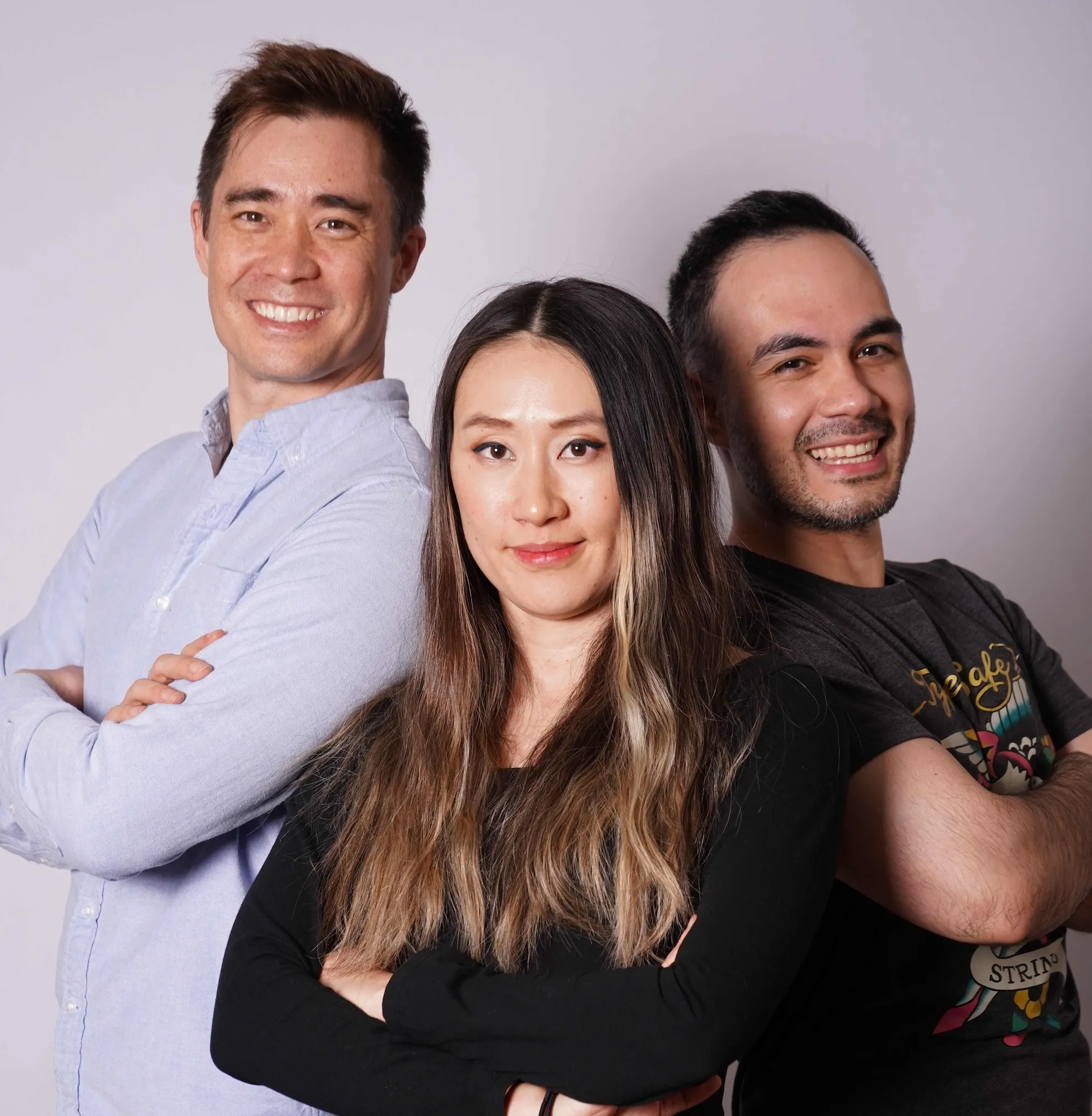
By Tech Insights Bureau
October 9, 2026
In a staggering demonstration of the market’s hunger for post-generative AI utility, TypeSafe AI—the startup behind the viral "Jev" model—has announced a massive $870 million Series A funding round. The investment values the San Francisco-based company at an eye-watering $7.5 billion, a figure that underscores the rapid shift from conversational AI to autonomous, decision-centric computing.
The round was spearheaded by Andreessen Horowitz (a16z), with significant follow-on participation from Sequoia Capital and existing investor DCVC. This influx of capital arrives less than a month after the company’s public debut, cementing TypeSafe AI’s position as one of the fastest-growing enterprise infrastructure players in the history of the artificial intelligence boom.
Main Facts: A New Paradigm in Automation
TypeSafe AI, founded in 2024, has fundamentally diverged from the industry’s obsession with Large Language Models (LLMs). While companies like OpenAI and Anthropic have focused on perfecting the art of the chatbot—generating prose, poetry, and code—TypeSafe has built Jev, a system designed specifically for deterministic, high-stakes decision-making.
Jev does not "speak." It does not engage in fluid dialogue, nor does it hallucinate creative narratives. Instead, Jev is built on a specialized transformer architecture that processes inputs to output "calibrated decisions." By bypassing the linguistic overhead of LLMs, the model achieves computational efficiency that industry observers are calling "transformative."
The startup reports that Jev is already being utilized by one-third of the Fortune 500, a staggering adoption rate for a product that was only released to the public on September 15, 2026. These enterprises are leveraging the model to automate complex backend workflows that were previously deemed too "fuzzy" for traditional software but too resource-intensive for standard LLMs.
Chronology: The Road to the $7.5B Valuation
The ascent of TypeSafe AI has been nothing short of meteoric. The timeline of the company’s emergence reflects the current "sprint" mentality of the AI sector:
- 2024: TypeSafe AI is incorporated by a trio of high-profile industry veterans: Diogo Almeida, a former researcher at OpenAI; Sasha Sheng, a former research engineer at Meta; and Erik Gafni, a seasoned engineer and entrepreneur. The founders spend the year operating in stealth, focusing on a fundamental critique of the transformer architecture’s application to business logic.
- Early 2026: The team begins testing Jev with a select group of enterprise partners, moving away from the "chat-first" paradigm.
- September 15, 2026: Jev is released to the public. It immediately triggers a fervor among software engineers and CTOs for its ability to provide high-probability, actionable outputs without the latency and token-cost associated with traditional LLMs.
- October 9, 2026: TypeSafe AI formally closes its $870 million Series A round, valuing the company at $7.5 billion. The sheer speed of this valuation growth marks it as a landmark moment in venture capital history.
Supporting Data: Why Efficiency Matters
The central value proposition of Jev is the radical reduction of resource consumption. Traditional LLMs are notoriously expensive and slow, largely because they are optimized for human language—a complex, multi-layered medium.
TypeSafe’s argument is that human language is, in fact, an inefficient interface for machine-to-machine automation. By focusing on "calibrated decisions," TypeSafe has optimized its model to operate on a fraction of the compute required by GPT-4 or Claude 3.5.
Key metrics currently being touted by early adopters include:

- Token Reduction: Jev requires significantly fewer tokens to process enterprise logic, leading to cost savings estimated at 70-80% compared to traditional LLM-based automation.
- Latency: Because Jev does not need to construct natural language sentences, it can deliver decisions in milliseconds, making it suitable for real-time financial trading, logistics optimization, and automated security patching.
- Enterprise Penetration: Within three weeks of launch, 33% of the Fortune 500 have integrated Jev into their stacks, suggesting that the model is solving a "bottleneck" problem that businesses have been desperate to address since the initial AI hype cycle began.
Official Responses and Founder Vision
The co-founders of TypeSafe AI have been vocal about their skepticism toward the current state of "human-like" AI. During a recent interview, Diogo Almeida crystallized the company’s philosophy:
"We have been super good at human language for four years," Almeida noted. "But it’s not useful for automation because computers speak a different language. We are building the translator that allows AI to speak ‘computer’ rather than ‘human,’ and in doing so, we are unlocking true autonomous operations."
This sentiment is echoed by the investment community. A16z, in their internal memos supporting the investment, highlighted that the "LLM era" was merely the pilot phase. They argue that the "Decision Era"—led by companies like TypeSafe—is where the real economic value of AI will be captured.
Implications: The Death of the Chatbot?
The success of TypeSafe AI carries profound implications for the broader tech ecosystem. If a model that eschews chat capabilities can command a $7.5 billion valuation, the industry may be seeing the beginning of a "de-coupling" in AI development.
1. The Shift to Utility
For two years, the industry has been obsessed with "chat." The implications of TypeSafe’s rise suggest that enterprises are becoming bored with conversational agents that offer "polite" but often imprecise responses. The market is pivoting toward "utility AI"—systems that do not need to be charming or conversational, but simply need to be right.
2. Computational Sovereignty
The cost of running massive LLMs has created a barrier to entry that favors only the largest tech giants. TypeSafe’s lean approach could democratize AI, allowing smaller, more agile firms to deploy high-performance automation without needing the massive GPU clusters currently required by the industry’s top players.
3. The Future of the Workforce
If Jev succeeds in automating the "decision layer" of large corporations, the nature of white-collar work will face a second, more severe wave of disruption. The first wave targeted writing, coding, and administrative tasks. The second wave, spearheaded by technologies like Jev, targets decision-making, auditing, and complex operational workflows.
4. A Potential Correction for LLM Startups
Investors are now asking: If a model can perform better by doing less, why are we pouring billions into models that do more? This puts pressure on "generalist" AI startups to prove that their chat capabilities are actually worth the high price tag. We may see a valuation correction for LLM-focused startups that cannot demonstrate specific, measurable ROI for the enterprise.
Conclusion: The Quiet Revolution
As we move toward the end of 2026, TypeSafe AI has signaled that the future of the technology is not in the noise of the conversation, but in the precision of the output. By stripping away the conversational layer and focusing on the raw mechanics of decision-making, the company has tapped into a massive, latent demand for reliable, high-speed automation.
Whether Jev will indeed replace the conversational model as the gold standard of AI remains to be seen. However, with $870 million in the bank and a client list that includes a third of the world’s largest companies, the message from the market is clear: enterprises don’t need an AI that can chat; they need an AI that can work.


 Siti Muinah
 Reynand Wu





