
 Suro Senen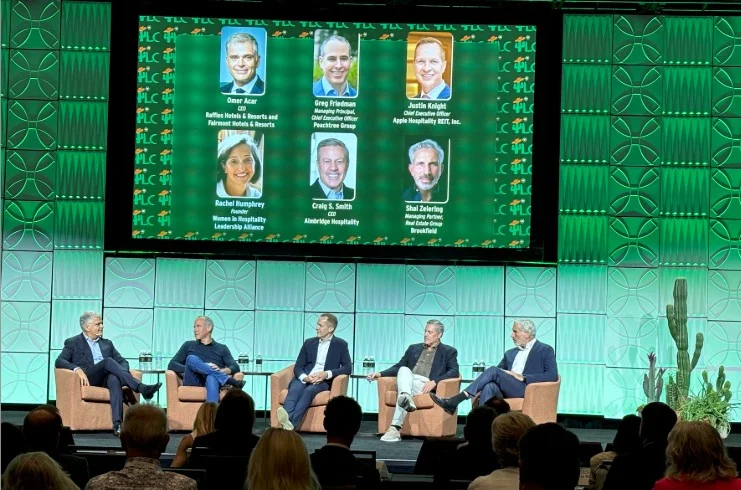
Phoenix, Arizona – [Date of Publication] – The C Suite Update session at The Lodging Conference, held yesterday in Phoenix, Arizona, served as a powerful barometer for the global hospitality industry. Amidst an palpable air of cautious optimism, top executives affirmed that industry fundamentals are arguably the strongest they’ve been in a decade, yet a collective sentiment resonated: "we still have work to do." This critical assessment underscored a period of significant opportunity, tempered by the imperative for strategic action across talent development, market transactions, guest experience, and the transformative embrace of artificial intelligence.
Moderated by Rachel Humphrey, founder of the Women in Hospitality Leadership Alliance, the panel brought together an influential cohort of industry titans. Participants included Justin Knight, CEO of Apple Hospitality REIT, Inc.; Omer Acar, CEO of Raffles Hotels & Resorts and Fairmont Hotels & Resorts; Greg Friedman, Managing Principal and CEO of Peachtree Group; Craig S. Smith, CEO of Aimbridge Hospitality; and Shai Zelering, Managing Partner of the Real Estate Group at Brookfield. Their candid insights painted a comprehensive picture of an industry poised for continued growth, provided it navigates evolving economic landscapes and rapidly accelerating technological shifts with agility and foresight.
A Resilient Industry Navigates New Horizons
The prevailing mood among the C-suite leaders was decidedly positive, reflecting robust performance metrics observed across many segments of the hospitality sector. Greg Friedman articulated this optimism succinctly, asserting, "I think overall, this is a great time to be in the business." He elaborated on the strategic implications of this strong position, suggesting it’s an opportune moment to "shore up" existing operations and "build, go back and build talent, which is another thing that the industry is really lacking. So overall, we’re sitting in a decent place right now." This sentiment highlights a dual focus: leveraging current strengths while proactively addressing foundational weaknesses, particularly the persistent challenge of talent acquisition and retention.
Shai Zelering echoed Friedman’s positive assessment, noting, "It’s been a very good year, both from a transaction perspective and fundamentals." This enthusiasm stems from a period of sustained recovery and growth following unprecedented global disruptions. The underlying health of the industry, characterized by strong occupancy rates, rising Average Daily Rates (ADR), and robust RevPAR (Revenue Per Available Room) figures, provides a solid foundation for future investment and expansion.
Economic Undercurrents and Transaction Dynamics
While acknowledging the constructive environment, the panel also delved into the macroeconomic factors influencing current operations and future outlook, particularly the pervasive discussion around interest rates. Zelering offered a valuable historical perspective, contextualizing current rates within a broader economic timeline. "I’m sure we’ll talk about interest rates, but overall, we’re in a very constructive environment," he remarked. He further elaborated, "If you look between 1970 and 1995, interest rates were much higher than they are today. So, on a relative basis—relative to the past 20 years—they’re higher, but they’re still constructive." This perspective suggests that while the past two decades have accustomed the industry to historically low borrowing costs, current rates, when viewed through a longer lens, remain conducive to healthy investment and development, albeit with a greater emphasis on prudent financial management and strong underlying asset performance.
Despite the positive fundamentals, a critical point of discussion centered on a perceived lack of urgency in capitalizing on the current strong market, particularly concerning transaction volumes. Zelering pinpointed this as a key area for improvement: "For Zelering, it’s not conviction in the industry that’s lacking; it’s urgency at a time when hoteliers need to capitalize on a strong year." This observation implies that while investors and operators believe in the long-term viability and profitability of hospitality assets, the pace of deal-making may not fully reflect the market’s inherent strength.
Justin Knight reinforced this perspective, highlighting the dynamics at play in the transaction environment. "There’s still a lot of people who want to get transactions done. I think the comment earlier about urgency is a real one, especially in an environment where things are getting materially better very quickly," Knight stated. He identified a persistent "bid-ask spread between buyers and sellers that is yet to be fully bid up." This ‘bid-ask spread’ refers to the difference between the price buyers are willing to pay and the price sellers are willing to accept. In a rapidly improving market, sellers might hold out for even higher prices, while buyers, though eager, may still be recalibrating their valuations, leading to a temporary slowdown in deal closures despite strong underlying demand. Addressing this gap will be crucial for unlocking further capital flow and accelerating market activity.
The Imperative of Talent Development
Friedman’s initial comment about the industry "lacking" talent resonated deeply throughout the discussion, subtly underpinning many of the challenges and opportunities identified. The post-pandemic landscape has exacerbated long-standing issues in hospitality staffing, from frontline roles to management positions. The "great resignation" and shifting employee expectations have forced the industry to rethink its approach to recruitment, training, and retention.
Building talent in this context is not merely about filling vacancies; it’s about investing in human capital as a strategic asset. This involves creating attractive career paths, offering competitive wages and benefits, fostering inclusive work environments, and leveraging technology to enhance employee efficiency and satisfaction. The urgency to "shore up" and "build talent" is therefore not just an operational necessity but a critical competitive differentiator, ensuring that the industry can sustain its growth trajectory and deliver the high-quality experiences guests increasingly demand.
Elevating the Guest Experience: Luxury and Beyond
Beyond economic fundamentals and transactional fluidity, the panel pivoted to the intrinsic core of hospitality: the guest experience. A significant portion of the discussion focused on the luxury segment, a rapidly expanding market driven by a growing high-net-worth demographic and an evolving definition of value.
When queried about where luxury guests are willing to invest their money, Omer Acar’s response was definitive: "The short answer is experience. … We sell an an experience … how we make that feel instead of what they get as a service." This distinction is profound. It shifts the focus from tangible amenities and standardized services to the intangible, emotional, and personalized journey a guest undertakes. For the ultra-luxury traveler, mere opulence is no longer sufficient; they seek unique, authentic, and often transformational encounters that resonate on a deeper level.
Acar further elaborated on the strategic balance between growth and differentiation for a brand. "Growth and differentiation for a brand—they are not competing priorities. You can have disciplined growth, but you can also differentiate the brand," he explained. This means that even as luxury brands expand their footprint, they must meticulously preserve and enhance the distinctive qualities that set them apart. The emphasis is on curating bespoke experiences that cannot be easily replicated, fostering a sense of exclusivity and individuality for each guest. "So, I think that the guests on the luxury and ultra-luxury side, they are looking for that differentiation [of] experience that they want to go and travel for."
Shai Zelering reinforced this perspective, linking the enduring strength of the luxury segment to demographic shifts and evolving consumer preferences. "Luxury will remain there just because the high-net-worth cohort is growing, and people are seeking experiences," he observed. He delivered a powerful statement that encapsulates the modern luxury paradigm: "You don’t get luxury because of the logo on the building; you really have to focus on the experience itself." This underscores a fundamental shift where brand prestige, while still important, is now secondary to the actual delivery of a meticulously crafted, personalized, and memorable experience. It challenges hoteliers to move beyond superficial markers of luxury and delve into the nuances of service, ambiance, and emotional connection.
Reimagining Owner-Brand Relationships: A Collaborative Imperative
Crafting exceptional guest experiences, particularly at scale, is often a complex dance between brand vision and owner execution. The panel candidly addressed the perennial challenge of improving owner/brand relationships, acknowledging that a more collaborative and empathetic approach is crucial for collective success.
Omer Acar advocated for a fundamental shift in how brand executives engage with franchisees and owners. He maintained that before judging performance, brands must listen: "understanding their financing issues, understanding of the performance issues, and let’s look at ourselves,” he said. “What can we do first before we can ask others to do?" This introspective approach marks a departure from a purely prescriptive model to one rooted in mutual understanding and shared problem-solving. Acar highlighted the historical perception: "Now, the brand was always looked at as a standards enforcer—let’s be realistic." However, he argued for an evolution of this role: "But I think owners are paying us also to find ways we can create uniqueness." This implies that owners are seeking more than just brand guidelines; they expect brands to be strategic partners in identifying market opportunities, fostering innovation, and driving differentiation that enhances asset value and profitability.
Justin Knight elaborated on the financial disparities that have historically strained these relationships, citing "a meaningful distinction in how brand profitability has trended versus owner profitability over the past decade, and there are a variety of factors." This profitability gap often stems from fee structures, brand-mandated capital expenditure requirements, and differing perspectives on revenue distribution. However, Knight expressed optimism for a more balanced future: "I think brands are coming to the table to get to where we need to be. There will be hard decisions that impact short-term profitability potentially, but drive long-term help for the business overall." This suggests a recognition within brand organizations that sustainable long-term growth requires aligning the financial interests of both brands and owners, even if it means re-evaluating traditional practices and making difficult choices in the short term. The emphasis is on fostering a true partnership where both parties contribute to, and benefit from, the overarching success of the business.
The AI Revolution: A Defining Moment for Hospitality
Perhaps the most compelling and urgent theme of the C Suite Update was the impending and rapidly accelerating artificial intelligence revolution. Panelists unanimously declared AI as a transformative force, comparable only to the advent of digital technology.
Craig S. Smith unequivocally stated its significance: "It’s the second greatest change in the industry in 30 years. So, digital was the first one. [AI] is going to be the next greatest change." This bold assertion sets the stage for a paradigm shift that will redefine operations, marketing, and the very nature of guest interaction. Smith outlined a spectrum of AI applications, from optimizing internal processes to enhancing customer touchpoints. "You can use AI in forecasts. You can use AI in models for labor management," he noted, highlighting its potential for driving operational efficiencies and predictive analytics.
However, Smith quickly pivoted to the human element, posing a critical question: "And then, are we getting our people ready? Are we using AI to prepare ourselves for this onslaught of how people work in the future? And I’m not sure as an industry we’ve really thought through that." This points to the profound need for workforce reskilling and upskilling to harness AI’s capabilities effectively. The "onslaught" suggests that ignoring or delaying AI adoption is not an option; it’s a competitive imperative.
Smith challenged the industry’s current readiness, particularly in guest-facing digital assets. "Everybody’s waiting for the digital side of it to change—brands, the OTAs, and individuals will figure that out. But the real question: Are you ready as a hotel? [For example] do you have descriptors out there, or do you have a very boxy website that just says, ‘I have a pool.’" He emphasized the immediate opportunity: "The descriptors on your hotel need to be, and they can be, built with AI bots, and you’ve got to get them out there." This highlights how AI can instantly elevate online presence, offering rich, personalized, and engaging content that goes beyond static information.
The urgency, Smith stressed, cannot be overstated. "The brands, the operators, and the hotel owners—we can’t wait for this. We have to figure out, where does everybody put their flag down, and where do we help to win in the space? Because it’s coming, and it’s going to be faster than the digital revolution. … We all have gray hair on this stage to remember that digital piece before and how that changed the world that we lived in. Imagine now something that is going to happen faster and much more dramatically." This vivid comparison serves as a stark warning and a call to immediate action, emphasizing that the speed and scope of AI’s impact will far outstrip previous technological shifts.
Providing a tangible example of proactive AI adoption, Omer Acar noted Fairmont’s pioneering efforts. "Fairmont has launched an AI concierge for all Accor properties, 6,000 hotels worldwide," he announced. This initiative underscores the belief that controlling the guest journey through AI offers a significant competitive advantage. The tool’s capabilities extend beyond basic information, helping travelers make nuanced booking decisions based on budget, preferences across destinations, food & beverage options, activities, amenities, and more. This move illustrates how AI can personalize and streamline the entire guest experience, from pre-arrival planning to in-stay assistance.
Investment in the AI Ecosystem
The conversation naturally extended to the broader economic implications of the AI boom. Greg Friedman highlighted the massive capital flowing into the AI infrastructure. "There’s so much capital flowing to AI, and as it relates to real estate, it’s data centers," Friedman pointed out. "About a third of the new capital coming into real estate is going to data centers." This significant allocation of capital to support AI infrastructure underscores the scale of the technological shift. While data centers might seem distinct from traditional hospitality assets, this trend signifies a profound realignment of investment priorities and highlights the foundational role of robust digital infrastructure in the AI era.
For hoteliers, this means that investment in AI is not a luxury but a strategic necessity. Whether it’s optimizing back-of-house operations, enhancing marketing efforts, or revolutionizing guest services, the panelists stressed the critical urgency of these initiatives. The question is no longer if to invest in AI, but how and how quickly to integrate it effectively across all facets of the hospitality value chain to maintain competitiveness and drive future growth.
Implications and the Path Forward
The C Suite Update at The Lodging Conference provided a nuanced and forward-looking perspective on the hospitality industry. While basking in the glow of strong fundamentals and a generally constructive economic environment, the leaders were acutely aware of the "work to do" that lies ahead.
The implications for the industry are clear:
- Strategic Capital Deployment: Leveraging the current strong market for prudent investments, while navigating the bid-ask spread in transactions.
- Human Capital Development: Prioritizing talent acquisition, retention, and upskilling to address persistent labor shortages and prepare the workforce for an AI-driven future.
- Experience-Centric Design: Continuing to evolve the guest experience, particularly in the luxury segment, by focusing on personalization, differentiation, and emotional connection over mere service or branding.
- Collaborative Partnerships: Fostering more equitable and collaborative relationships between brands and owners, aligning profitability goals for long-term mutual benefit.
- Aggressive AI Adoption: Embracing artificial intelligence not as a distant future trend, but as an immediate and transformative imperative across operations, marketing, and guest engagement, understanding that delay carries significant competitive risks.
The insights shared yesterday in Phoenix underscore a pivotal moment for hospitality. The industry stands at the cusp of unprecedented technological change, demanding not just adaptation, but proactive innovation and strategic leadership. The leaders on stage, with their collective experience and foresight, have laid out a compelling roadmap for navigating these exciting yet challenging times, ensuring that hospitality remains vibrant, relevant, and profitable for decades to come.


 Sagoh
Sagoh
 Rifan Muazin



