
 Rifan Muazin
In an era defined by thousand-dollar flagships and constant hardware iteration, the humble sub-$100 smartphone remains a misunderstood category. For many, the idea of a functional device at this price point feels like a relic of the past—a "junk phone" destined for the junk drawer. However, as of 2026, the landscape of entry-level mobile technology has evolved significantly. While you won’t be winning any awards for photography or gaming performance, the barrier to entry for a reliable, connected mobile experience has shifted, offering surprising value for those willing to look past the marketing hype of premium devices.
The State of the Market: Main Facts
The primary reality of the $100 smartphone market is that it is fundamentally a game of compromise. If you are shopping for a brand-new, fully unlocked device, your expectations must be firmly grounded. These phones are designed for the essentials: calls, messaging, navigation, and light web browsing.
At this price point, you are generally looking at hardware that prioritizes utility over luxury. You will rarely find high-refresh-rate OLED panels, flagship-tier camera sensors, or the latest top-of-the-line processors. Instead, you are paying for the bare minimum of modern connectivity. When you strip away the "nice-to-have" features that manufacturers use to justify four-figure price tags—such as 100x zoom or titanium frames—what remains is a functional, albeit basic, communication tool.
The market currently divides itself into three distinct tiers:
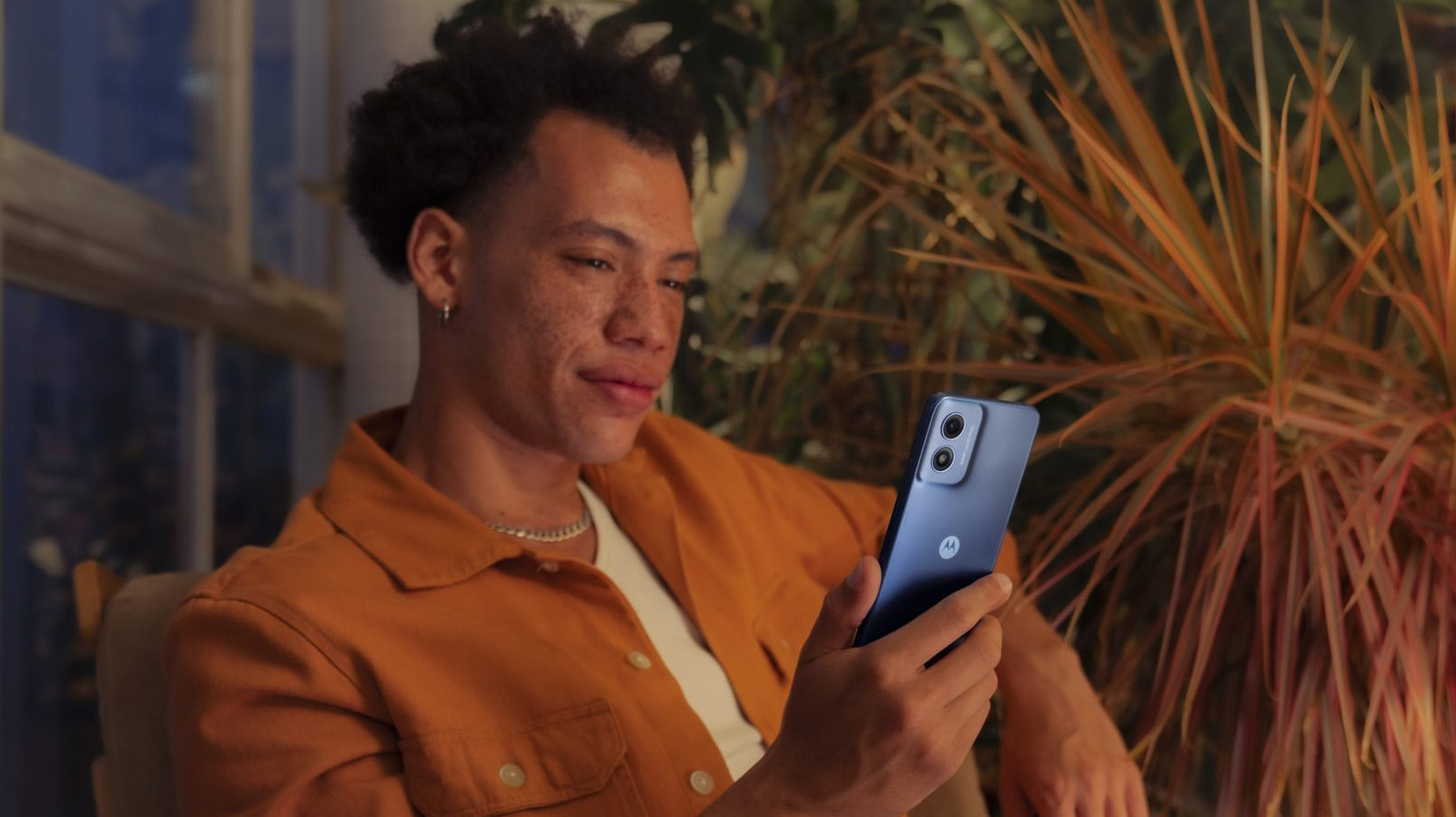
- Fully Unlocked: Maximum freedom, minimum performance.
- Prepaid/Locked: Higher hardware specs, restricted carrier flexibility.
- The Used/Renewed Market: The "wild west" of high-end hardware with aging components.
A Chronological Evolution of Budget Tech
To understand why a $100 phone feels "better" in 2026 than it did a decade ago, one must look at the historical trajectory of mobile hardware.
- 2012–2016: The era of "disposable" smartphones. Devices at this price point were plagued by resistive touchscreens, abysmal battery life, and storage capacities that made installing more than three apps a logistical challenge.
- 2017–2021: The standardization of the "good enough" phone. As manufacturing costs for LCD panels and basic chipsets plummeted, the $100-$150 price bracket began to feature reliable 4G LTE, respectable battery life, and usable Android interfaces.
- 2022–2026: The current "Value-Tier" renaissance. Thanks to the commoditization of 5G modems and high-efficiency processors, even budget-friendly chips can now handle modern applications with relative fluidity. We have moved from a time where budget phones were "unusable" to a time where they are simply "unexciting."
Supporting Data: What Your Money Actually Buys
When you analyze the spec sheets of current sub-$100 offerings, a clear pattern emerges.
The Fully Unlocked Experience
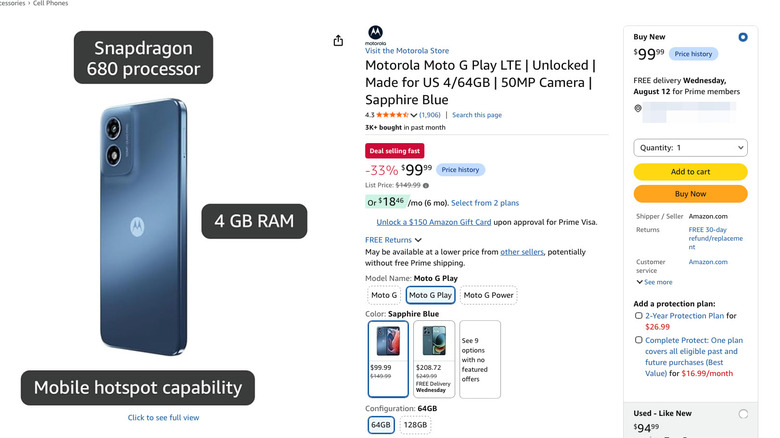
The 2024 Moto G Play stands as the industry benchmark for a new, unlocked budget device. Priced at roughly $100-$150, it offers a 6.5-inch 90Hz display and a 50MP main camera. While it lacks 5G, its stock-like Android experience and 5,000mAh battery provide a level of longevity that was unheard of for this price five years ago. Conversely, manufacturers like TCL and BLU occupy the lower end, often sacrificing build quality and RAM to hit the sub-$100 mark. These devices are technically "smart," but they serve as a stark reminder that optimization matters just as much as raw specifications.
The Prepaid Advantage
If you are willing to commit to a specific carrier, the value proposition changes entirely. Prepaid offerings from Samsung—specifically the Galaxy A-series—routinely outperform unlocked competitors. Because these devices are subsidized by the carriers (like Straight Talk or Cricket), you can often find handsets with 5G connectivity, FHD+ AMOLED displays, and 128GB of storage for prices that would otherwise be impossible.
The Used/Refurbished Sector
For the savvy consumer, the used market is the ultimate equalizer. Platforms like Swappa and eBay allow users to acquire older flagship devices—such as the iPhone 11, iPhone 12, or the Samsung Galaxy S20 FE—for around $100. These devices often feature superior build quality, water resistance, and camera systems that remain competitive with the best budget phones of today.
Official Perspectives and Industry Implications
Industry analysts note that the rise of the "budget-conscious" consumer is not just a trend, but a structural shift in the industry. As smartphone saturation hits its peak in developed nations, manufacturers are focusing more on software longevity to keep users in their ecosystems.
"The stigma against budget phones is fading," says one industry observer. "The average user is realizing that the leap from a $100 phone to a $1,000 phone is no longer a leap in utility—it’s a leap in lifestyle branding."
The implication for manufacturers is significant: they must now find ways to differentiate their entry-level devices through software support. Even in the $100 range, users are beginning to demand security patches and OS updates. This has forced companies to move away from the "release and forget" strategy of the past, as even the most budget-conscious consumer expects their device to remain secure for at least two years.
Implications for the Future of Connectivity
What does this mean for the average person? It means that digital access is becoming more democratic. By providing functional, reliable smartphones at the $100 price point, manufacturers are ensuring that the digital divide—the gap between those who have access to the internet and those who do not—continues to shrink.
However, the "cost" of these devices goes beyond the initial transaction. The consumer must weigh the trade-offs:
- Software Decay: While flagships get years of updates, budget devices often reach their "end of life" much sooner, necessitating more frequent upgrades.
- Environmental Impact: The "disposable" nature of cheaper hardware leads to a faster cycle of e-waste, unless consumers choose the "refurbished" route.
- The Freedom Trade-off: By choosing a locked prepaid phone, the user saves money today but loses the ability to switch carriers at will, effectively tethering themselves to a contract or a prepaid system that may not offer the best service in their area.
Final Assessment: Is it Worth It?
The $100 smartphone is no longer a "junk" proposition. Whether you opt for a new, basic unlocked model like the Moto G Play, a carrier-subsidized Samsung Galaxy, or a pre-loved iPhone, you are acquiring a sophisticated piece of technology that can handle the complexities of modern digital life.
The key to navigating this market is honesty about your own usage. If your phone is a tool for communication and information, a $100 device will suffice. If your phone is a professional camera, a mobile gaming rig, or a status symbol, you will inevitably find these devices lacking. In 2026, the $100 phone is not a compromise on quality—it is a choice to prioritize value over vanity. As we look toward the future, the continued refinement of this segment will likely play a pivotal role in keeping the global population connected in an increasingly digital world.

 Sagoh
Sagoh
 Asep Darmawan