Laily UPN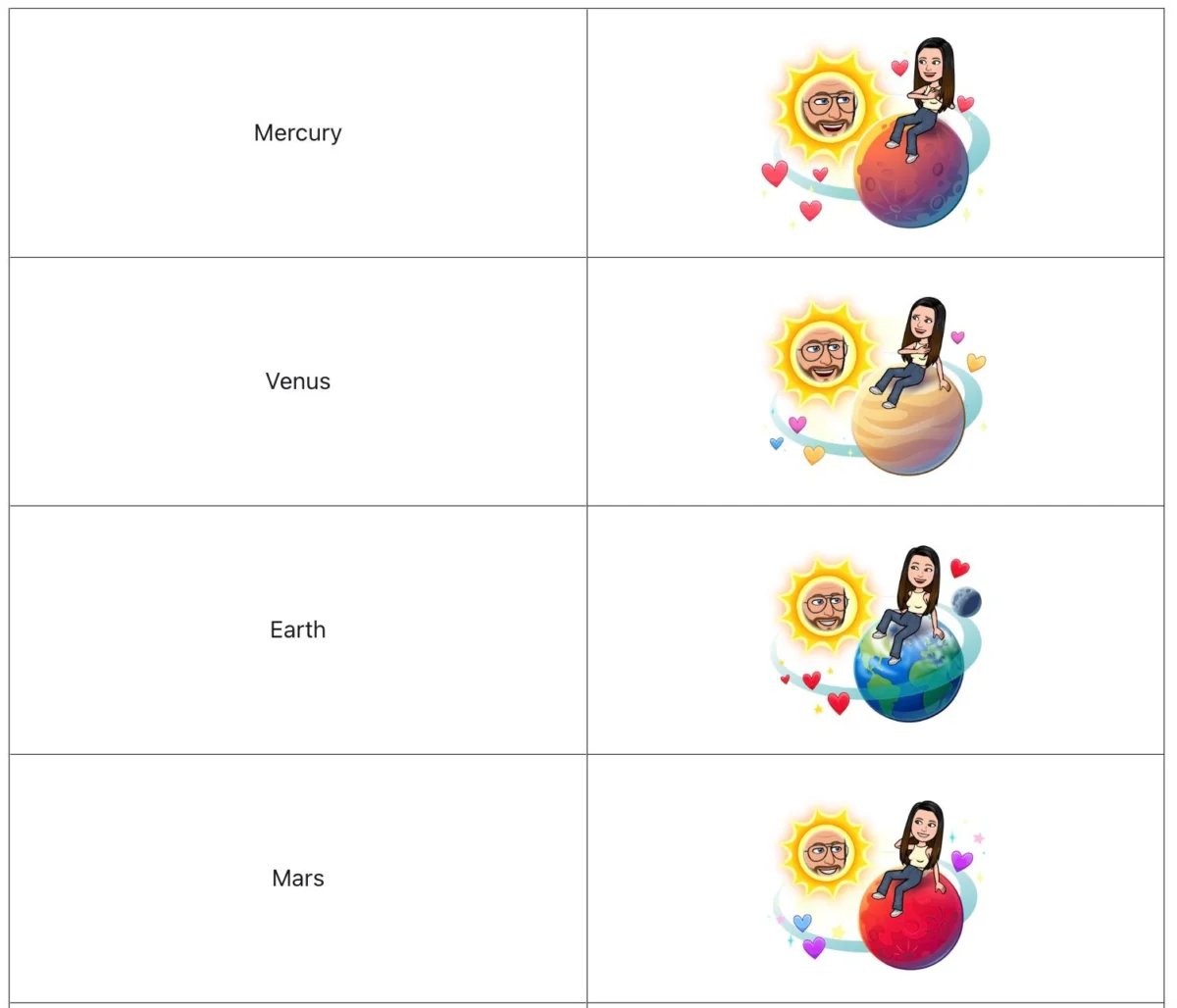
In the ever-evolving landscape of social media, few features have sparked as much intrigue, debate, and digital curiosity as "Snapchat Planets." Part of the exclusive Snapchat+ subscription tier, this feature—formally known as the "Friend Solar System"—reimagines the standard, sterile "Best Friends" list into a dynamic, celestial hierarchy. By assigning each of your top eight friends a specific planet based on your interaction frequency, Snapchat has turned the mundane act of messaging into a game of cosmic proximity.
But what lies behind this celestial facade? Is it a true metric of friendship, or merely an algorithmic reflection of your screen time? This guide explores the mechanics, the implications, and the cultural impact of Snapchat’s most mysterious feature.
The Core Concept: Gamifying Human Connection
At its heart, the Friend Solar System is a visual metadata tool. While traditional platforms might simply list friends by alphabetical order or recent activity, Snapchat uses the eight planets of our solar system to provide an instant, at-a-glance snapshot of your digital inner circle.
The system is elegant in its simplicity: The closer a friend is to the "Sun" (which represents you), the higher they rank in your personal ecosystem. Mercury, the closest planet to the sun, is reserved for your absolute closest friend—the person with whom you exchange the most snaps and chats. As you move outward toward the orbit of Neptune, the interaction frequency decreases, representing the eighth-most interacted-with person in your network.

This feature is exclusive to Snapchat+ subscribers, a paid tier that offers power users additional customization and analytical tools. While the basic version of Snapchat tracks "Best Friends" behind the scenes, the Solar System feature brings that data to the forefront, allowing subscribers to visualize their social hierarchy in a way that feels both gamified and deeply personal.
A Chronological Evolution of Snapchat Social Features
To understand the weight of the Friend Solar System, one must look at the chronology of Snapchat’s social engineering.
- The Early Era (2011–2014): When Snapchat first launched, it was defined by ephemerality. There were no public rankings; the focus was purely on the "disappearing" nature of the message.
- The Introduction of Best Friends (2015): As the platform grew, Snapchat introduced the "Best Friends" list. This feature utilized a private algorithm to determine who you contacted most frequently, essentially creating a "top list" that was hidden from public view.
- The Rise of Snapchat+ (2022): In June 2022, Snap Inc. launched its premium subscription service. This marked a shift toward monetization, offering "super-users" features that were previously unavailable. Among the first of these perks was the Friend Solar System.
- Refinement and Expansion (2023–Present): Over the last two years, Snapchat has refined the sensitivity of the algorithm. The introduction of the "Gold Badge" for users in someone’s top eight has added a layer of social validation (and, at times, anxiety) that has become a staple of modern digital interaction.
Decoding the Solar System: What Each Planet Means
The beauty of the system lies in its rigid, scientific structure. Because the order is fixed to the celestial model, users can immediately identify their ranking relative to their friends.
| Planet | Rank | Significance |
|---|---|---|
| Mercury | #1 | You are their most frequent point of contact. |
| Venus | #2 | You are their second most frequent contact. |
| Earth | #3 | You are their third most frequent contact. |
| Mars | #4 | You are their fourth most frequent contact. |
| Jupiter | #5 | You are their fifth most frequent contact. |
| Saturn | #6 | You are their sixth most frequent contact. |
| Uranus | #7 | You are their seventh most frequent contact. |
| Neptune | #8 | You are their eighth most frequent contact. |
It is crucial to note that Pluto is excluded, mirroring the real-world scientific consensus of 2006. This attention to detail reinforces the "space" theme, though it has occasionally led to humorous complaints from users who feel their ninth-closest friend is being unfairly marginalized.

Supporting Data: How the Algorithm Functions
Snapchat has remained notoriously tight-lipped regarding the exact variables behind its "Best Friends" algorithm. However, through user observation and technical analysis, we can deduce the core components that drive the rankings:
- Snap Frequency: The raw number of snaps sent and received is the primary weight.
- Chat Interaction: While snaps are vital, text-based messages (chats) and the frequency of replies are weighted heavily.
- Consistency: The algorithm favors long-term, consistent interaction over a burst of messages sent over a single afternoon.
- Recency: Recent interactions have a "decay factor." If you stop snapping a close friend for a week, they will inevitably drop in rank, even if you previously messaged them daily for months.
The Myth of "Friendship Strength"
A common misconception is that the Solar System measures the quality of a friendship. In reality, it only measures volume. A spam bot or a group chat participant you interact with frequently might rank higher than your best friend from childhood who you only message occasionally. It is a metric of digital utility, not emotional intimacy.
Official Stance and Implications: The Social Pressure Paradox
From an official standpoint, Snap Inc. promotes the Solar System as a fun, visual way to keep track of your "closest connections." In their promotional materials, the feature is marketed as a way to "stay close to your best friends."
However, the implications are far more complex. Psychologists have noted that features like the Friend Solar System can exacerbate "social comparison anxiety." When a user discovers they are someone’s "Mercury," it provides a dopamine hit of validation. Conversely, being excluded from a friend’s top eight—or noticing that a partner’s ranking has shifted—can trigger feelings of exclusion or suspicion.

Snapchat’s decision to hide this data behind a paywall (Snapchat+) is a brilliant business move. It transforms a standard piece of social data into a "premium" insight, incentivizing users to pay for the privilege of knowing where they stand in their friends’ social orbits.
How to Enable and Navigate Your Solar System
If you are a Snapchat+ subscriber, the feature is usually enabled by default, but you may need to verify your settings if you have recently updated the app.
Steps to View Your Ranking:
- Ensure you have an active Snapchat+ subscription: You cannot access the Solar System without a paid account.
- Navigate to your friend’s profile: Open your Chat tab and tap on the Bitmoji or profile icon of the person you wish to check.
- Look for the "Best Friends" or "Friends" badge: If the person is in your top eight, you will see a badge that, when tapped, reveals their specific planet.
- Viewing your status: If you want to see where you stand in their list, tap on the "Best Friends" badge on their profile. If you appear in their top eight, your specific planet will be displayed.
Troubleshooting
If you do not see a planet:
- The Friend hasn’t enabled the feature: Both users generally need to have their profiles configured to show their "Best Friends" status.
- You are outside the Top 8: If you are the ninth person or lower, you will not be assigned a planet.
- Privacy Settings: Check if your "Best Friends" visibility is set to "Public" or "Friends Only" in your privacy settings.
Future Outlook: The Gamification of Relationships
The Friend Solar System is more than just a novelty; it is a preview of the future of social media. As platforms compete for our dwindling attention, they are increasingly relying on gamified metrics to keep users engaged. By turning the "Best Friends" list into a competitive, visual, and exclusive experience, Snapchat has successfully turned the social graph into a game.

Whether you view the feature as a fun insight into your digital life or a stressful indicator of social standing, one thing is clear: the Solar System has fundamentally changed how we perceive our interactions on the app. As long as users remain invested in their "rank," Snapchat will continue to find ways to quantify the, at times, unquantifiable nature of human friendship.
Ultimately, the planets serve as a reminder that in the digital universe, we are all just nodes in an algorithm, constantly orbiting each other in a dance defined by the frequency of our taps and the brevity of our snaps.


 Lina Hope
 Jia Lissa