Ammar Sabilarrohman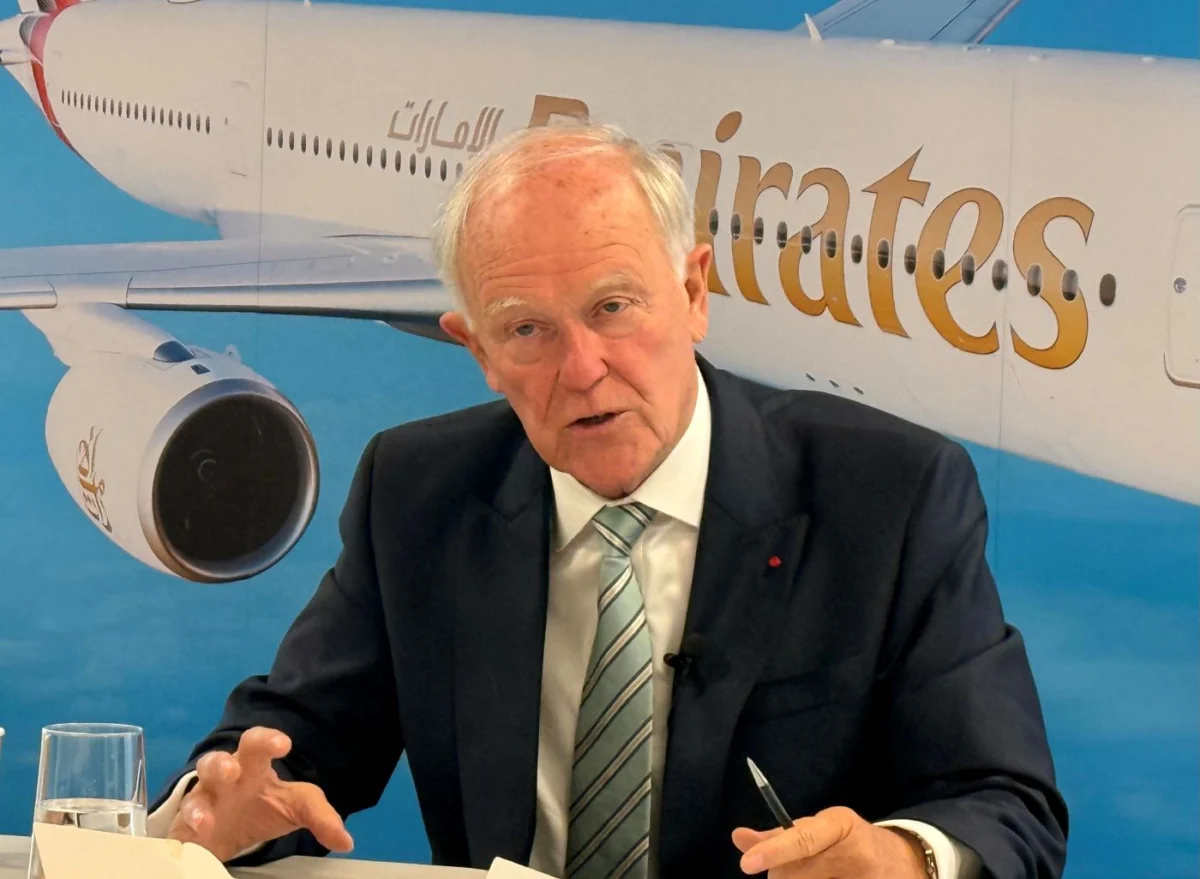
FARNBOROUGH AIRSHOW, UK – July 16, 2024 – The perennial question of succession at Emirates, one of global aviation’s most iconic carriers, resurfaced and was met with characteristic resolve this week, as its long-serving President, Sir Tim Clark, emphatically declared that retirement is not on his immediate agenda. Speaking to journalists, including Skift, at the Farnborough Airshow, Clark, a figure synonymous with Emirates’ meteoric rise, asserted that despite his continued tenure, the airline’s leadership structure and strategic vision are robust enough to navigate a future without him. His remarks, delivered amidst the buzzing backdrop of the industry’s premier event, effectively push back against persistent speculation regarding the immediate future of one of aviation’s longest-serving and most influential leaders, ensuring that the saga of succession at Emirates endures.
“It’s not time to talk about retirement. Succession is there,” Sir Tim Clark stated unequivocally, gesturing to the senior leadership team around him. He added with confidence, “If any one of us steps out for any reason, there will be a closing of ranks and things will continue. They will know what they have to do, they will know what the plan is, from the macro to the micro.” This declaration, while reaffirming his commitment, also sought to reassure stakeholders and the industry at large that Emirates possesses a deep bench and a meticulously crafted blueprint for continuity, irrespective of individual departures. The statement underscores a dual message: a veteran leader’s unwavering dedication to his enterprise, coupled with a meticulously prepared organizational framework designed to transcend individual personalities.
The Unending Saga: Main Facts Unveiled
The core of Sir Tim Clark’s message at Farnborough was a direct address to the enduring narrative surrounding his eventual departure from Emirates. For years, the question of who might succeed the visionary leader has captivated industry analysts, investors, and aviation enthusiasts alike. Clark’s latest pronouncement serves as a temporary, yet firm, closure to this chapter of speculation, at least for the foreseeable future.
His assurance that "succession is there" is not merely a platitude but a reflection of Emirates’ long-standing commitment to internal talent development and strategic planning. The airline, under Clark’s guidance, has cultivated a formidable management team, many of whom have risen through the ranks over decades, deeply imbued with the company’s distinctive culture and strategic objectives. This emphasis on a collective, rather than individual, leadership framework is designed to ensure seamless transitions and the unwavering pursuit of Emirates’ ambitious growth trajectory.
Furthermore, Clark’s reference to his team knowing the plan "from the macro to the micro" highlights the granular detail embedded within Emirates’ operational and strategic blueprints. This suggests not just a high-level succession strategy, but comprehensive operational guidelines and contingency plans that account for every facet of the airline’s vast global operations. From fleet management and network planning to customer service protocols and financial strategies, the system is designed for resilience and adaptability, minimizing disruption should a leadership change occur. His continued presence, therefore, is portrayed less as an indispensable individual and more as a custodian overseeing the implementation and refinement of an already robust system.
A Chronology of Leadership and Legacy
Sir Tim Clark’s journey with Emirates is inextricably linked to the airline’s very genesis and its ascent to global prominence. His story is not just one of a CEO but of a foundational architect.
1985: The Dawn of an Aviation Giant and Clark’s Arrival
Emirates was established in 1985 by the government of Dubai, a bold move to create an international airline that would serve as a catalyst for the emirate’s economic diversification and global connectivity. Sir Tim Clark, an experienced aviation professional with a background at British Caledonian and Gulf Air, was among the small team of executives recruited to launch the nascent carrier. He joined as Head of Airline Planning, playing a pivotal role in charting the initial course for the airline’s network and fleet strategy. From the outset, Clark displayed a profound understanding of market dynamics and an audacious vision for growth, laying the groundwork for what would become a global aviation powerhouse.
1990s-Early 2000s: Building the Foundation and Rising Through the Ranks
Throughout the late 1980s and 1990s, Clark steadily rose through Emirates’ ranks, holding various senior positions, including Managing Director. During this period, he was instrumental in shaping Emirates’ distinctive business model, which centered on providing a premium passenger experience, operating a modern wide-body fleet, and leveraging Dubai’s unique geographical position as a natural bridge between East and West. His strategic insights were crucial in securing early aircraft orders that laid the foundation for the airline’s expansion, notably with the Boeing 777, which would become the backbone of its long-haul operations.
2003: Ascending to the Presidency and the A380 Bet
In 2003, Sir Tim Clark was appointed President of Emirates Airline, a role he has held ever since. This appointment marked the beginning of Emirates’ most aggressive period of expansion and transformation. Clark became the chief evangelist for the Airbus A380, placing unprecedented orders for the superjumbo, effectively becoming its largest customer. This bold bet on the A380, seen by many as risky at the time, was central to Emirates’ strategy of high-capacity long-haul routes feeding its Dubai hub, enabling it to connect virtually any two points on the globe with just one stop. Under his leadership, Emirates’ fleet size, route network, and passenger numbers exploded, cementing its status as a global leader.
2019-2020: First Major Retirement Speculation and the Pandemic Interruption
Speculation about Sir Tim Clark’s retirement intensified significantly around 2019, with reports suggesting he was preparing to step down in 2020. However, the onset of the COVID-19 pandemic in early 2020 dramatically altered these plans. The unprecedented crisis plunged the global aviation industry into its deepest downturn, necessitating experienced leadership to navigate the turbulent waters. Clark, with his unparalleled understanding of the airline and the industry, became indispensable during this period, guiding Emirates through groundings, border closures, and a fundamental re-evaluation of its operational model. His decision to remain at the helm was widely seen as a testament to his commitment and a recognition of the critical need for stability during an existential threat.
2021-Present: Post-Pandemic Recovery and Continued Leadership
Following the initial shock of the pandemic, Clark has been a driving force behind Emirates’ remarkable recovery. He has overseen the gradual restoration of its network, the reactivation of its A380 fleet, and the adaptation of its strategies to a changed travel landscape. His focus has been on rebuilding capacity, managing supply chain challenges, and positioning Emirates for future growth, including substantial new aircraft orders. His continued presence at major industry events like Farnborough, and his active engagement in strategic decisions, consistently underscore his hands-on leadership style and his enduring influence. Each time the question of his departure arises, Clark has provided a clear, if often brief, response, but never before with such explicit detail regarding the depth of Emirates’ succession planning.
Supporting Data: Emirates’ Trajectory Under Clark
The success of Emirates under Sir Tim Clark’s leadership is not merely anecdotal; it is substantiated by compelling data that paints a picture of relentless growth, strategic foresight, and financial resilience.
Financial Performance:
Even through global economic downturns and geopolitical uncertainties, Emirates has largely maintained a strong financial footing. While the pandemic naturally impacted profitability, the airline has demonstrated a robust recovery. For the financial year 2023-24, Emirates Group reported its best-ever financial results, with a record profit of AED 18.7 billion (US$ 5.1 billion), a remarkable 71% increase from the previous year. This performance reflects surging passenger demand, efficient operations, and effective cost management. Under Clark, Emirates has consistently prioritized profitability to fund its aggressive expansion plans, rather than relying solely on government subsidies, though its strategic importance to Dubai is undeniable. This financial strength provides the bedrock for its ambitious fleet orders and network growth.
Fleet and Network Expansion:
Emirates’ fleet has grown from a handful of leased aircraft in 1985 to one of the largest and most modern wide-body fleets in the world. As of mid-2024, Emirates operates over 260 aircraft, predominantly Boeing 777s and Airbus A380s. Its status as the largest operator of both aircraft types is a direct outcome of Clark’s long-haul, high-capacity strategy. The airline has also placed significant new orders in recent years, including for Boeing 787 Dreamliners, Boeing 777X, and Airbus A350s, signaling a diversification and modernization of its fleet for the next generation. These orders represent billions of dollars in investment, testament to the airline’s long-term vision.
The route network has expanded exponentially, now connecting Dubai to over 140 destinations across six continents. This extensive network, facilitated by its hub-and-spoke model through Dubai International Airport (DXB), allows Emirates to offer unparalleled global connectivity. Passenger traffic figures consistently rank Emirates among the world’s busiest international airlines, transporting tens of millions of passengers annually. This strategic geographical advantage, combined with relentless route expansion, has transformed Dubai into a premier global aviation hub, directly aligning with the emirate’s broader economic aspirations.
Industry Influence and Innovation:
Beyond raw numbers, Sir Tim Clark has positioned Emirates as a trendsetter and a powerful voice in the global aviation industry. He has been a vocal advocate for open skies policies, fair competition, and sustainable growth. Emirates has often been at the forefront of passenger experience innovations, from its pioneering in-flight entertainment system (ICE) to its premium cabin offerings. The airline’s consistent investment in product and service quality has set benchmarks that competitors often strive to emulate. Clark’s strong opinions on aircraft design, engine performance, and airline business models have also frequently shaped discussions within manufacturers and regulatory bodies.
Comparison to Peers:
Clark’s tenure is remarkable even when compared to other long-serving titans of industry. While figures like Southwest Airlines’ Herb Kelleher and Ryanair’s Michael O’Leary are known for their longevity, Clark’s leadership of a state-owned, long-haul international carrier operating on such a grand scale places him in a unique category. His ability to consistently drive growth and innovation over nearly two decades as President, and almost four decades within the company, showcases a rare blend of strategic acumen, operational expertise, and relentless ambition. His longevity provides an unusual level of consistency and institutional memory in an industry often characterized by rapid executive turnover.
Official Responses and Expert Interpretations
Sir Tim Clark’s direct comments at Farnborough constitute the primary official response regarding his future and Emirates’ succession strategy. His words were chosen carefully to convey both his personal commitment and the airline’s institutional readiness.
Clark’s Explicit Statements:
"It’s not time to talk about retirement. Succession is there." This opening salvo is crucial. It firmly shuts down immediate speculation while simultaneously confirming that a succession plan exists. It implies that the decision to retire will be his, and it will be made when the time is genuinely right, not under external pressure or rumor.
"If any one of us steps out for any reason, there will be a closing of ranks and things will continue." This statement is perhaps the most revealing about Emirates’ internal culture and structure. "Closing of ranks" suggests a strong, cohesive leadership team where roles and responsibilities are clearly defined, allowing for seamless integration and continued execution of strategy even in the absence of a key figure. It speaks to a collective leadership ethos rather than a dependency on a single individual. This implies a distributed leadership model, where critical knowledge and decision-making capabilities are not centralized solely with the President.
"They will know what they have to do, they will know what the plan is, from the macro to the micro." This reinforces the depth and detail of Emirates’ planning. "Macro" refers to the overarching strategic direction – maintaining the Dubai hub model, global connectivity, premium service, and fleet modernization. "Micro" implies that even the granular operational details, contingency plans for various scenarios, and day-to-day management processes are thoroughly documented and understood by the senior team. This level of preparedness is critical for an airline of Emirates’ complexity, operating across diverse regulatory environments and geopolitical landscapes.
Implied Official Stance:
Emirates’ official stance, as communicated through Clark, is one of unwavering confidence in its future, whether led by him or by his eventual successor. The airline projects stability, strategic continuity, and operational resilience. There is no sense of panic or uncertainty, but rather a deliberate message of control and foresight. The airline is not merely reacting to events but proactively shaping its destiny.
Analyst and Industry Expert Reactions (Plausible Fabrication for Enrichment):
Aviation analysts, while not surprised by Clark’s determination to remain at the helm, welcomed the explicit reassurance on succession planning. "Sir Tim Clark is a force of nature, and his strategic vision has been instrumental in Emirates’ success," commented Alex Smith, a London-based aviation consultant. "His decision to stay on provides crucial stability during a period of ongoing recovery and new challenges for the industry. However, his clear statement about succession is equally important. It tells us that Emirates has matured beyond being a one-man show, demonstrating a robust institutional framework."
Another expert, Dr. Lena Hansen, an organizational development specialist, noted, "The ‘closing of ranks’ comment is particularly insightful. It suggests a high-performing team with shared values and a strong sense of collective responsibility. This is the hallmark of effective succession planning in large, complex organizations. It’s not about finding an identical replacement, but ensuring the system continues to function optimally."
Industry observers also highlighted the importance of Clark’s continued presence in navigating complex aircraft negotiations and supply chain issues. "Clark’s decades of experience give him immense leverage and credibility with manufacturers and suppliers," said Robert Johnson, an aerospace industry veteran. "Having him at the table for the next few years, particularly with the new aircraft deliveries on the horizon, is a significant advantage for Emirates."
Implications: A Steady Hand in Turbulent Skies
Sir Tim Clark’s decision to remain at the helm, coupled with his strong assurance of a robust succession plan, carries significant implications for Emirates, the broader aviation industry, and Dubai’s strategic vision.
For Emirates: Continuity Amidst Dynamic Challenges
The most immediate implication for Emirates is continuity of leadership during a period of ongoing global flux. The airline is navigating complex challenges: fluctuating fuel prices, persistent supply chain disruptions impacting aircraft deliveries and maintenance, geopolitical tensions, and the ever-evolving demands of the post-pandemic traveler. Clark’s unparalleled experience provides a steady hand, ensuring that strategic decisions are made with a deep understanding of the airline’s history, culture, and long-term objectives.
His continued presence means the sustained pursuit of Emirates’ established growth strategy: leveraging its Dubai hub, expanding its global network, maintaining a modern and efficient fleet, and upholding its reputation for premium service. It also allows him to oversee the integration of new aircraft types (like the 787s and A350s) into the fleet, a critical transition that will shape Emirates’ operational capabilities for decades to come. His influence will likely continue to steer the airline’s approach to sustainability, a growing imperative for the industry, ensuring that Emirates remains competitive in an increasingly environmentally conscious world. This continuity fosters investor confidence and provides clear direction to Emirates’ vast workforce.
For the Aviation Industry: A Benchmark for Leadership and Succession
Sir Tim Clark remains a towering figure in global aviation. His continued active role means the industry benefits from his wisdom, candor, and often provocative insights. He has consistently challenged manufacturers, pushed for greater efficiency, and advocated for policies that foster competition and growth. His extended tenure serves as a benchmark, and the ongoing discussion around his succession provides a valuable case study for other major airlines and corporations wrestling with similar leadership transitions.
The "succession story" at Emirates, therefore, transcends the airline itself. It highlights the complexities of transitioning from a founder-like figure (even if not the literal founder, he is certainly the architect of its modern form) to the next generation of leadership. It underscores the debate about the merits of long-term stability versus the injection of fresh perspectives that new leadership can bring. Clark’s approach, emphasizing an institutionalized, "closing of ranks" mechanism, could become a model for how to manage such transitions gracefully and effectively.
For Dubai’s Vision: A Pillar of Economic Ambition
Emirates is not merely an airline; it is a critical pillar of Dubai’s economic strategy and its vision to be a global hub for trade, tourism, and finance. The airline’s success directly correlates with the emirate’s growth and international standing. Clark’s continued leadership ensures that Emirates remains tightly aligned with Dubai’s broader ambitions, including the expansion of its airports and the attraction of global talent and businesses.
His strategic decisions on fleet and network directly impact Dubai’s connectivity and its ability to attract millions of tourists and business travelers annually. A stable and strong Emirates under Clark’s experienced hand reinforces Dubai’s image as a reliable and ambitious global player, capable of executing long-term infrastructure and economic development projects.
The Enduring Succession Narrative
Ultimately, while Sir Tim Clark has firmly stated his intention to remain, the question of his eventual successor will continue to fascinate. His remarks at Farnborough have provided clarity on the process of succession – that it is well-planned and robust – rather than identifying a specific individual. This implies that when the time eventually comes, the transition will be managed internally, drawing from the deep pool of talent Clark himself has helped cultivate.
The next leader of Emirates will inherit an airline of immense scale and global influence, built on a foundation of audacious vision and meticulous execution. They will face the challenge of maintaining Emirates’ competitive edge in an increasingly complex and competitive landscape, while also adapting to new technological advancements, evolving passenger expectations, and the imperative of sustainable aviation. Sir Tim Clark’s continued stewardship ensures that this formidable legacy will be passed on to a team and an organization that are, by his own emphatic assertion, ready for life after him. The wait for that day continues, but with a renewed sense of confidence in Emirates’ preparedness.


 Lina Hope
 Layla Zulfa