Asro
Asro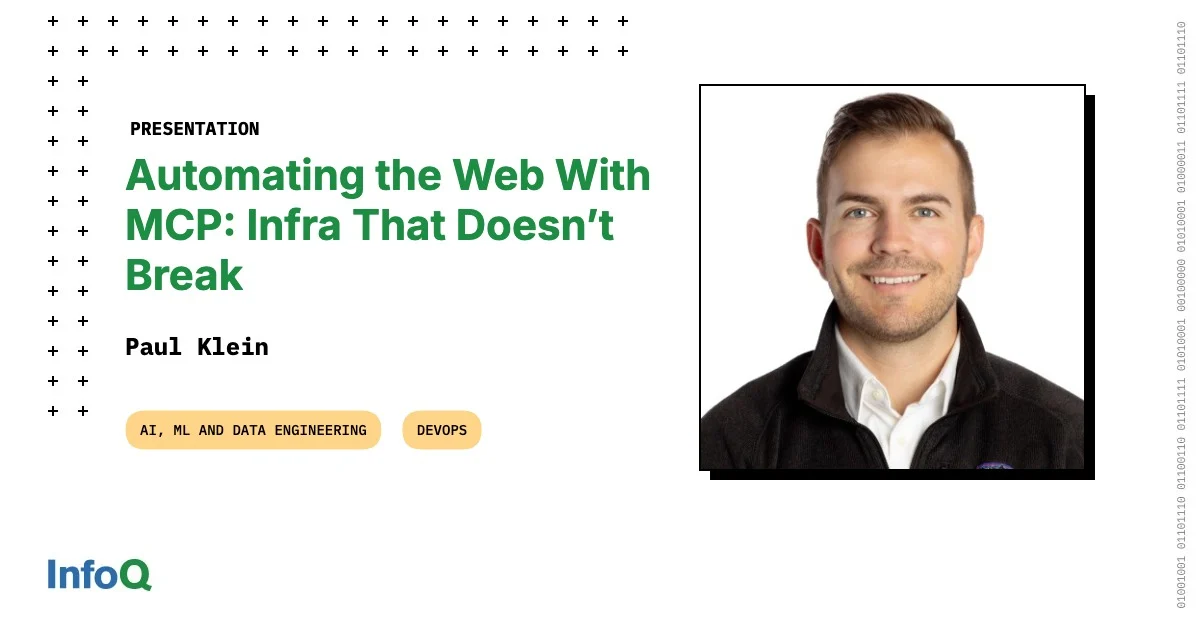
The landscape of software development is undergoing a tectonic shift. For decades, developers relied on deterministic code—structured logic where a specific input consistently yielded a specific, predictable output. Today, that paradigm is being replaced by "Agentic Infrastructure," a new class of software primitives that leverage Large Language Models (LLMs) to reason, plan, and execute tasks across the vast, chaotic expanse of the modern web.
At the forefront of this movement is Browserbase, a Series B startup building the foundational infrastructure for AI agents. By providing a reliable, scalable, and secure environment for AI to browse the web, the company is bridging the gap between artificial intelligence and the "real" digital world of human-centric interfaces.
The Evolution of Software: From Deterministic to Agentic
For the past 15 years, software development was largely defined by predictability. Human developers wrote rigid rules, performed code reviews, and managed clear inputs and outputs. This determinism was a virtue; it allowed for easy debugging and auditing. However, it was also fragile. When users interacted with software in unexpected ways—such as attempting "SQL injection" or navigating to edge-case URLs—deterministic systems often failed, requiring developers to write an endless stream of if/else statements to patch the cracks.
The introduction of LLMs has birthed a new primitive: Reasoning. By embedding knowledge into applications, developers can now build software that is "evergreen," capable of adapting to changing user needs and evolving environments. Yet, knowledge alone is insufficient. As Paul Klein, founder of Browserbase, notes, "Knowledge without action is limited." To be truly productive, AI needs to transition from "talking" to "doing"—and that requires access to the tools humans use every day: browsers, terminals, and APIs.
Chronology: The Emergence of the Web Agent
The quest to create autonomous web agents has followed a clear, rapid trajectory over the last few years.
- The Early Foundations (WebVoyager/Adept): Research projects like WebVoyager demonstrated that models could be taught to observe a webpage, reason about its content, and execute actions (like clicking or typing) in a loop. These early experiments proved the "ReAct" (Reasoning + Acting) framework, where the agent makes an observation, decides on a step, and refines its strategy based on the outcome.
- The Rise of Specialized Models: The industry evolved from general-purpose LLMs to specialized "Computer-Use" models. Unlike standard models, these are trained on "web trajectories"—vast datasets showing millions of human interactions with the web. This allows models to understand long-term context, such as the multi-step process of booking an appointment or purchasing a product.
- The Modern Agentic Stack: Today, we see a convergence of Vision-Language Models (vLLMs) and traditional browser automation tools. Techniques like "Set-of-Marks" prompting allow models to visually map elements on a page, while advancements in accessibility trees (ARIA tags) allow text-based agents to parse complex websites with high accuracy.
Supporting Data: The Scale of Automation
The demand for agentic infrastructure is not merely theoretical; it is massive and growing at an exponential rate. In a recent internal audit, Browserbase reported that its platform powered over 92 years of cumulative browsing time in a single month. This staggering figure highlights the shift from AI as a static chatbot to AI as a dynamic, high-utility workforce.
From a technical perspective, running these agents at scale is a complex distributed systems challenge. Browserbase utilizes a multi-layered infrastructure to ensure stability:
- The Sandbox: Utilizing Firecracker (a Virtual Machine monitor) to isolate browser processes, ensuring that if an agent encounters a malicious site, it cannot escape to the host system.
- The Scheduler: A Kubernetes-based orchestration layer that manages bursty traffic and ensures that browser instances are warm and ready for sub-second responses.
- The Protocol: Moving away from standard REST APIs toward the Model Context Protocol (MCP), which provides a unified schema for tools. This allows AI models to understand, authenticate, and interact with various tools (like GitHub, SQL databases, or browser navigators) through a standardized interface rather than custom, brittle API integrations.
Official Perspectives: The Role of MCP and Standardization
A critical development in this space is the Model Context Protocol (MCP). As developers strive to connect AI agents to the wider world, the fragmentation of API structures has become a bottleneck.
"MCP is about creating a standard schema for tools," explains Klein. "It’s about moving beyond just a REST endpoint. It provides natural language descriptions for the model, making the tool-calling process more reliable and portable across different LLMs."
The industry is also beginning to address the "Good Bot vs. Bad Bot" problem. Following high-profile disputes—such as Cloudflare’s initial resistance to Perplexity’s scraping activities—the industry is moving toward standards like Web Bot Auth. This proposed IETF standard would allow AI agents to carry a "digital passport," proving they are authorized, trustworthy bots. This shift from adversarial scraping to cooperative automation is expected to redefine how corporations interact with AI agents.
Implications: The Future of "Browser-as-an-API"
The implications of this technology are profound for business and consumer software alike.
1. The Death of the Custom Integration
Many companies spend millions building and maintaining bespoke API integrations for their services. However, if an agent can navigate a website as efficiently as a human, the website itself becomes the API. For sectors like procurement, legal research, or travel management, agents can now interact with thousands of unique, non-standardized portals without needing a dedicated integration for each one.
2. Security and the "Zero-Trust" Browser
As agents become more capable, the security risk grows. Prompt injection—where a website includes hidden instructions to manipulate an agent—is a genuine threat. Browserbase and other infrastructure providers are moving toward a "Zero-Trust" browser model. They operate on the assumption that the browser will eventually be compromised; therefore, the goal is to limit the blast radius through aggressive sandboxing and strict policy enforcement.
3. The Shift to "Human-in-the-Loop" to "Human-as-Supervisor"
The role of the developer is changing from writing code to building "tool-sets." As participants in the developer community noted, agents are becoming capable of writing their own scripts to handle repetitive tasks. We are moving toward a future where a developer defines the goal, and the agent, using its own browser-based tools, writes the necessary code and creates the required automation to achieve it.
Conclusion: A New Frontier
The transition to agentic software is not about replacing human intent; it is about scaling human capability. By providing the infrastructure—the browsers, the sandboxes, and the protocols—that allow AI to navigate the modern web, companies like Browserbase are turning the internet into a giant, programmable toolset.
While the challenges of security, reliability, and token efficiency remain, the trajectory is clear. The browser, once a simple window for humans to view documents, is becoming the primary operating system for the next generation of artificial intelligence. As these agents get better at browsing, they may eventually turn the tables, making websites more "human-friendly" by optimizing them for the AI that will eventually interact with them on our behalf.


 Pevita Pearce
 Raul Delapena Setiawan