Neng Nana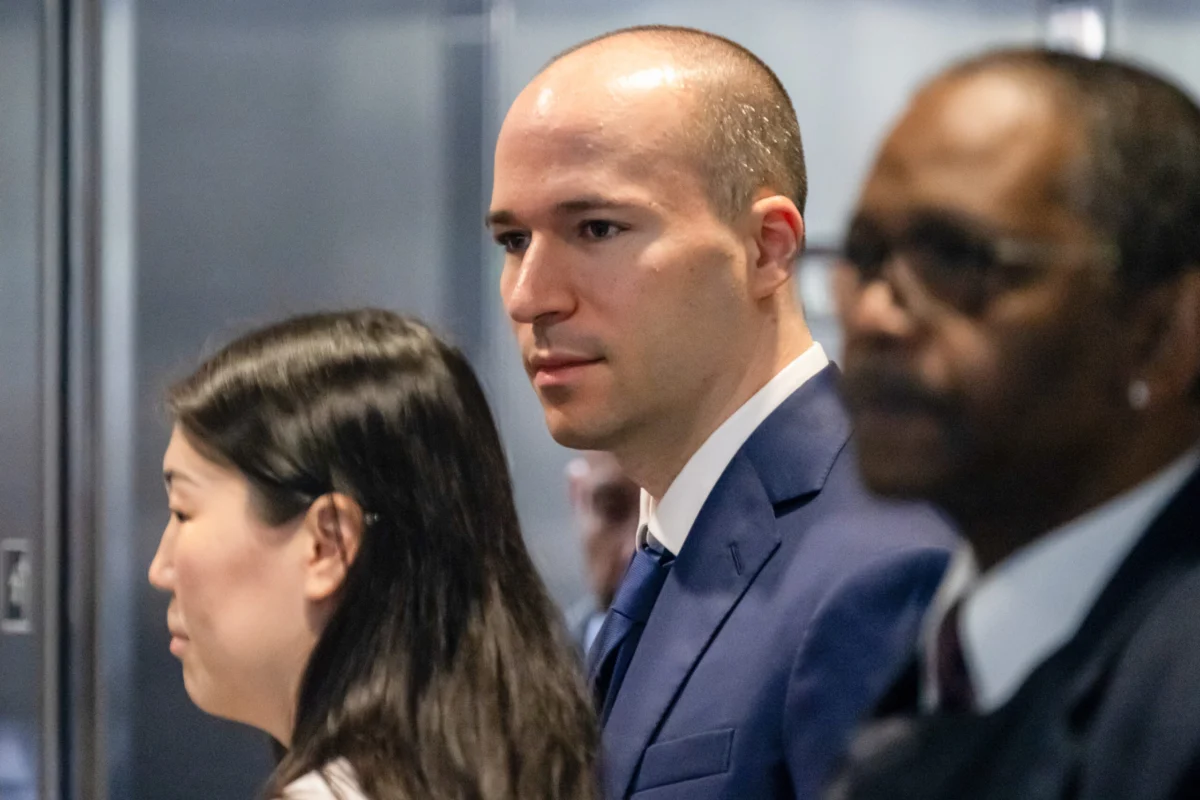
By Tech Insights Staff
May 16, 2026
In a move that signals a definitive end to OpenAI’s period of experimental diversification, the company’s president and co-founder, Greg Brockman, has officially assumed leadership over the organization’s product strategy. This leadership shift, reported initially by Wired, marks a pivotal moment for the San Francisco-based artificial intelligence giant as it pivots away from its "side quest" era and toward a hyper-focused future centered on agentic AI deployment.
The appointment comes at a time of significant organizational flux. Brockman, who has been overseeing product development on an interim basis, is stepping into the role while Fidji Simo, the company’s CEO of AGI deployment, remains on medical leave. According to internal communications and official statements, this transition is not merely a temporary stopgap but a foundational restructuring of how OpenAI intends to ship its technology to the masses.
The Core Consolidation: Merging ChatGPT and Codex
The most significant takeaway from Brockman’s ascension is the strategic decision to unify the company’s fractured product landscape. For years, OpenAI operated under a sprawling model, building out disparate interfaces and specialized tools. Now, the mandate is clear: consolidation.
In a staff memo obtained by industry reporters, Brockman outlined a roadmap that includes the integration of ChatGPT and the programming-focused Codex into a single, cohesive user experience. The objective is to eliminate the friction between general-purpose conversational AI and high-utility technical tooling.
"We’re consolidating our product efforts to execute with maximum focus toward the agentic future, to win across both consumer and enterprise," Brockman stated in the memo.
This vision of an "agentic future" suggests a shift from passive, chat-based interfaces to systems capable of autonomous task execution. By bringing Codex—the engine that powers code generation—directly into the ChatGPT ecosystem, OpenAI is positioning itself to offer a singular, powerful interface where users can plan, code, and execute complex workflows without switching contexts or platforms.
Chronology: From "Code Red" to Strategic Realignment
To understand why this change is happening now, one must look back at the turbulent final months of 2025.
- December 2025: Facing intense competitive pressure—particularly from Google’s aggressive rollout of advanced reasoning models—CEO Sam Altman issued an internal "code red." The memo signaled that OpenAI had become too diffuse, losing sight of its primary advantage: the flagship ChatGPT experience.
- January–March 2026: The company began a systematic review of its R&D pipeline. The goal was to determine which projects were "core" and which were distractions.
- April 2026: The strategy took a human toll. High-profile departures, including executives Kevin Weil and Bill Peebles, highlighted the friction caused by the company’s decision to abandon "side quests." Projects like the Sora video generator and the OpenAI for Science division, which once represented the cutting edge of the company’s research portfolio, were effectively put on ice or wound down.
- April 30, 2026: Public scrutiny intensified as leadership, including Brockman, was seen attending federal court hearings in Oakland, California, marking the intersection of the company’s legal battles and its internal restructuring.
- May 2026: The official announcement of Brockman’s leadership role confirms the completion of the "pivot to focus" strategy.
Supporting Data: Why the Pivot Was Necessary
OpenAI’s decision to pull back from non-core initiatives is rooted in a sobering realization: the AI market is shifting from "wow factor" demonstrations to "utility-driven" economics.
For the past 18 months, the industry was obsessed with generative video and experimental science tools. However, revenue growth for AI companies has increasingly relied on enterprise integration and agentic capabilities—the ability for AI to actually do work rather than just write about it.
Data from the last two quarters suggests that while engagement with experimental tools like Sora was high, the conversion to enterprise revenue was low compared to the core API and ChatGPT platforms. By folding these tools into a single platform, OpenAI is likely aiming to reduce infrastructure overhead—a massive expense for a company running thousands of GPUs—while simultaneously creating a stickier user ecosystem.

Furthermore, the company’s move to combine its API services with its core product team suggests an attempt to simplify the developer experience. By streamlining the "one core product team" philosophy, OpenAI aims to ensure that advancements in model intelligence are deployed simultaneously to consumers and enterprise developers, rather than in fragmented, version-locked releases.
Official Responses and Internal Dynamics
In a statement provided to TechCrunch, an OpenAI spokesperson sought to frame the transition as a collaborative effort rather than a sudden change in direction. The company clarified that although Fidji Simo remains on medical leave, the strategic realignment was developed in close consultation with her.
"We are aligning our resources to better serve our mission," the spokesperson noted. "The decision to unify our platforms under a single product team is the natural evolution of our work over the past year. We have been discussing the integration of ChatGPT, Codex, and our API for some time, and this move simply accelerates that timeline."
The emphasis on collaboration is significant. It serves to dampen speculation regarding potential internal discord following the high-profile departures of key executives in April. By positioning Brockman’s move as a continuation of Simo’s vision, the company is attempting to project stability during a period of transition.
Implications: The "Agentic" Future
What does this mean for the end user? If Brockman’s vision holds, the ChatGPT experience is about to become far more active.
1. The Death of the "Prompt-and-Wait" Model
The shift toward an "agentic" architecture implies that the software will increasingly be given agency to act on behalf of the user. Instead of simply generating code for a user to copy-paste, a unified ChatGPT-Codex experience would be expected to write, test, debug, and deploy that code within a sandbox environment.
2. Enterprise Dominance
By consolidating its product stack, OpenAI is likely preparing to offer a more robust, "all-in-one" subscription for corporate clients. Companies that currently use disparate tools for internal communications, coding, and data analysis may soon find a single, unified interface that handles all three, potentially displacing smaller niche SaaS competitors.
3. Reduced R&D Risk
The abandonment of "side quests" is a mature move. It signals that OpenAI has graduated from a research-first lab to a product-first corporation. This is a vital stage in the company’s lifecycle, moving from the excitement of breakthrough discoveries to the grind of product-market fit and sustainable scaling.
Conclusion: A New Chapter for OpenAI
The appointment of Greg Brockman to lead product strategy is a clear signal that the era of "AI as a research playground" is over at OpenAI. The company is hunkering down, cutting the fat, and preparing for the next phase of the AI arms race.
By unifying its disparate tools into a single, coherent product suite, OpenAI is betting that the winner of the AI era will not be the company with the most research papers, but the company that provides the most efficient, reliable, and capable interface for getting work done. As the company moves forward without the distractions of experimental video or scientific side-projects, the industry will be watching closely to see if this "maximum focus" approach yields the dominance that the company’s leadership clearly expects.
The transition, while marked by the absence of key leaders and the end of once-celebrated projects, represents a calculated bet on the future of work. For Greg Brockman and the team at OpenAI, the mission is no longer just to build AGI—it is to build the product that makes AGI indispensable to the daily life of every professional on the planet.


 Lina Hope
 Ammar Sabilarrohman