Rifan Muazin
In the shifting landscape of global cyber-espionage, the distinction between static malware and living, breathing digital infrastructure has never been more blurred. Recent findings by Microsoft researchers have revealed that the Russian state-sponsored threat actor known as "Secret Blizzard"—a group whose operational fingerprints align with the notorious Turla, Uroburos, and Venomous Bear syndicates—has successfully evolved its flagship Kazuar backdoor into a highly sophisticated, modular peer-to-peer (P2P) botnet. This transformation marks a significant escalation in the group’s ability to maintain long-term persistence within high-value government, diplomatic, and defense networks across Europe, Asia, and Ukraine.
The Genesis and Lineage of Kazuar
Kazuar is not a newcomer to the threat landscape. Since its initial documentation in 2017, it has been categorized as a premium espionage tool, with code lineage tracing back as far as 2005. Its development suggests a deliberate, long-term investment by Russian intelligence services—specifically the Federal Security Service (FSB)—to craft a tool capable of evading modern security stacks.
The group behind Kazuar, identified by industry observers as Secret Blizzard, has a well-documented history of targeting the bedrock of international relations. From the 2020 breach of European government organizations to the 2023 cyber-campaigns against Ukrainian infrastructure, the malware has been the instrument of choice for actors who prioritize stealth, longevity, and the methodical extraction of sensitive political and military intelligence. The transition from a traditional backdoor to a decentralized P2P architecture suggests that the group is preparing for a new era of persistent, resilient espionage.
Anatomy of a Modern Botnet: The Three-Module Framework
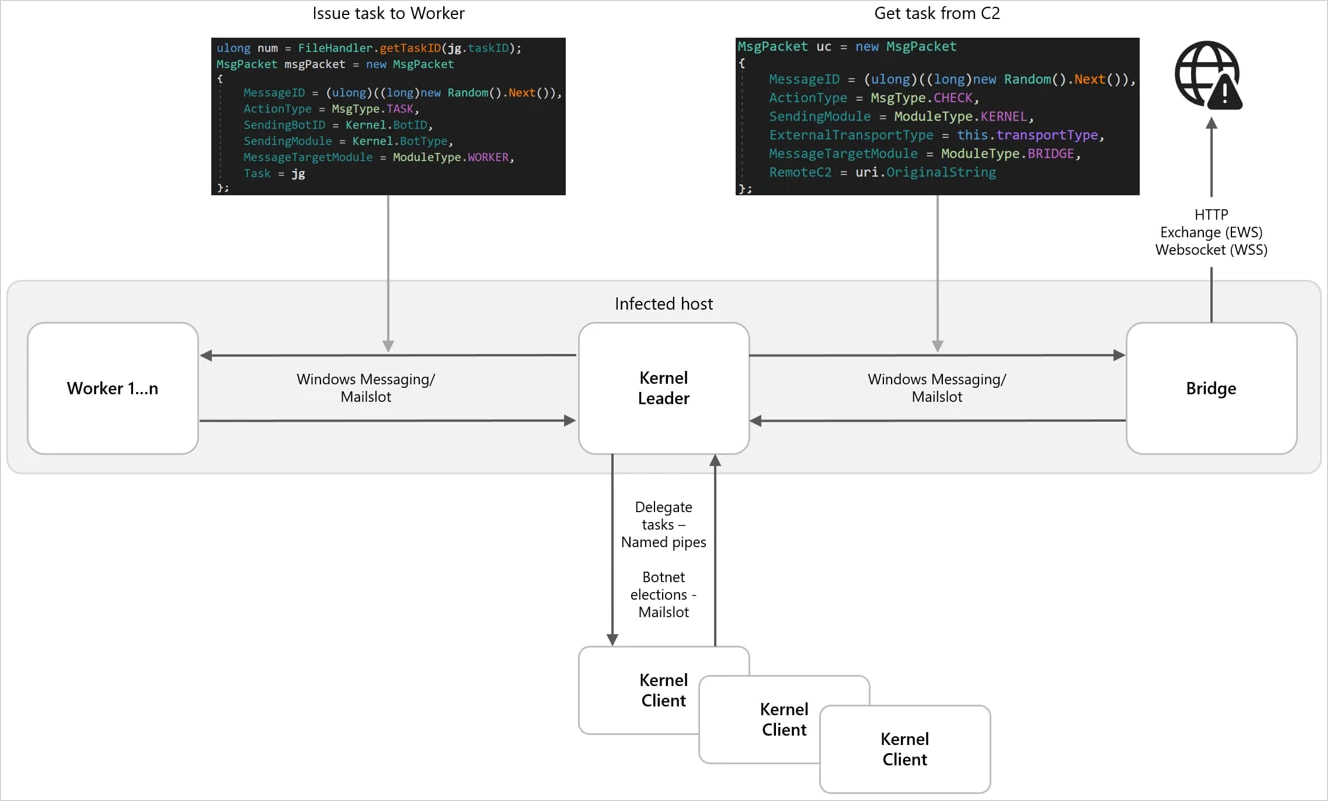
The latest iteration of Kazuar is defined by a tripartite modular architecture: the Kernel, the Bridge, and the Worker. This division of labor is designed to minimize the malware’s "detection surface," effectively hiding the botnet’s heartbeat within the background noise of legitimate enterprise traffic.
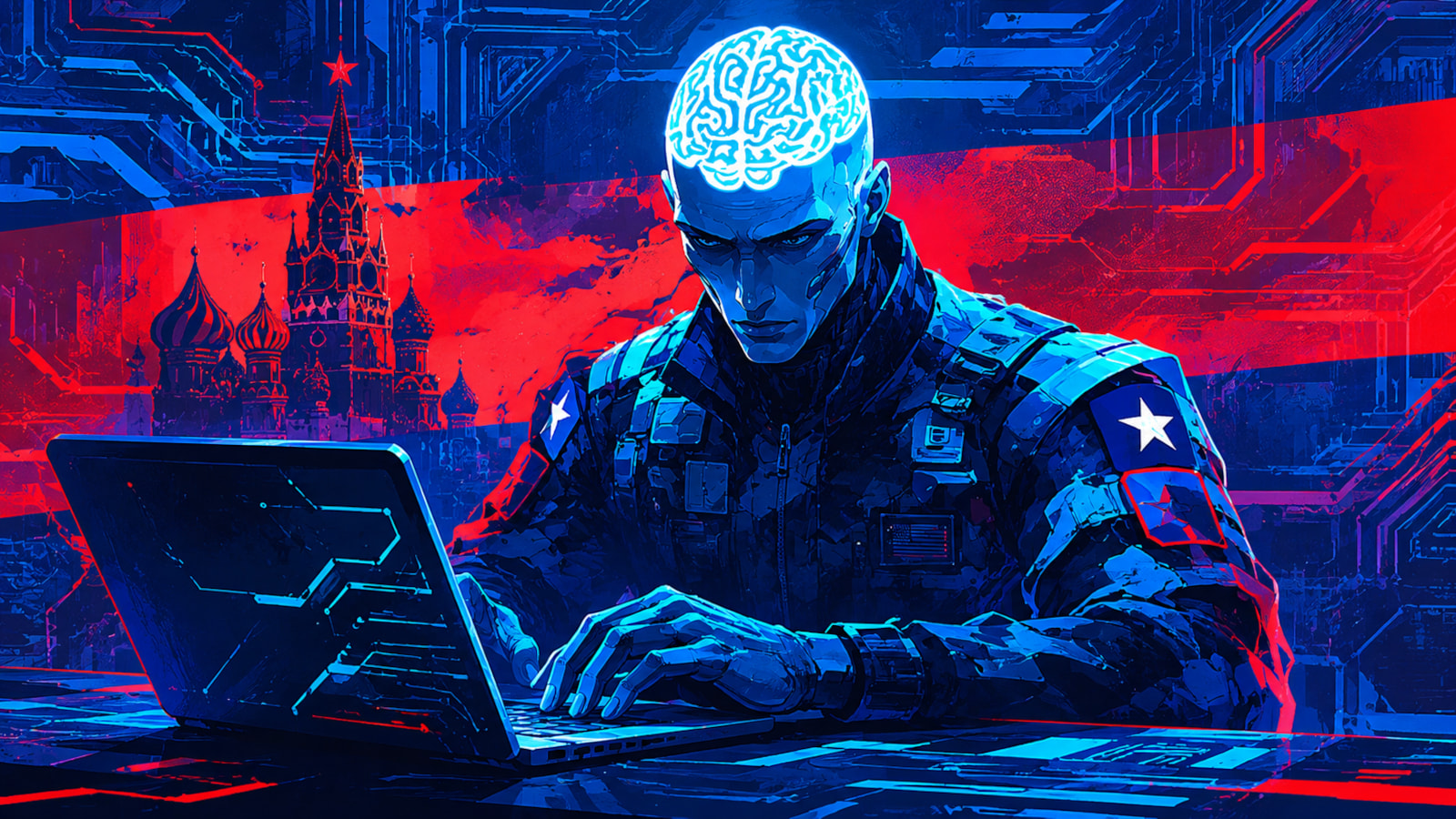
The Kernel: The Brain of the Operation
The Kernel module acts as the central nervous system of the Kazuar botnet. Its primary responsibility is the coordination of tasks, the management of other modules, and the internal election of a "leader" node. This leader acts as the sole point of contact between the infected network segment and the Command-and-Control (C2) server. By restricting external communication to a single, rotating leader, Secret Blizzard significantly reduces the volume of suspicious outbound traffic, making it much harder for network security monitoring (NSM) tools to flag anomalous activity across multiple hosts.
The leader selection process is notably autonomous. It relies on a deterministic calculation involving system uptime, reboot frequency, and interruption counts. If a leader node goes offline or is detected, the botnet automatically negotiates a new leader from the remaining "silent" nodes, ensuring the network remains operational even under defensive pressure.
The Bridge: Tactical Communications
The Bridge module is the specialized interface tasked with bridging the gap between the internal, stealth-focused network and the external C2 infrastructure. It handles the transmission of data using a variety of protocols, including HTTP, WebSockets, and Exchange Web Services (EWS). By leveraging protocols that are typically permitted in corporate environments, the Bridge ensures that exfiltration can continue unabated without triggering aggressive firewall blocks.
Internal communication between the Bridge, Kernel, and Worker modules is handled via standard inter-process communication (IPC) mechanisms, such as Windows Messaging, Mailslots, and named pipes. All internal data is serialized using Google Protocol Buffers (Protobuf) and protected by AES encryption, ensuring that even if internal traffic is captured, its contents remain obscured.
The Worker: Execution of Espionage
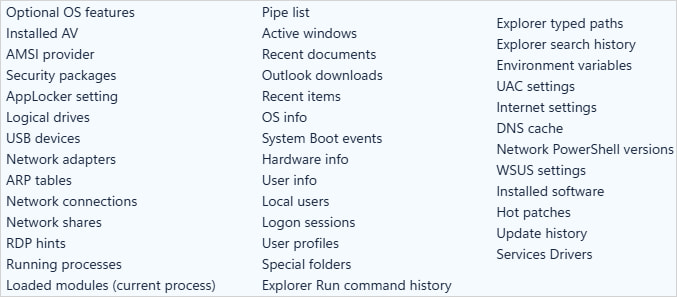
While the Kernel and Bridge manage the network, the Worker module performs the "dirty work." It is responsible for the systematic harvesting of system information, document exfiltration, and the execution of arbitrary commands. The flexibility of this module allows operators to tailor their espionage activities to the specific context of the target, whether that involves pulling sensitive diplomatic cables or scraping classified defense documentation.
The Versatility of Command and Control
One of the most concerning aspects of the updated Kazuar is its extreme configurability. Microsoft analysts have cataloged over 150 distinct configuration options available to the threat actors. This granular control allows operators to:
- Bypass Security Controls: Kazuar now integrates sophisticated bypasses for the Antimalware Scan Interface (AMSI), Event Tracing for Windows (ETW), and the Windows Lockdown Policy (WLDP). By neutralizing these defensive hooks, the malware can execute payloads without being inspected by endpoint protection platforms.
- Dynamic Task Scheduling: Operators can precisely time the theft and exfiltration of data to avoid peak network traffic periods, further blending in with normal organizational behavior.
- Advanced Persistence: Through process injection and task management, the malware ensures that it survives system reboots and remains resident in memory, minimizing the likelihood of discovery by traditional file-based scanners.
Implications for Global Security
The shift to a P2P architecture for Kazuar carries significant implications for defenders. Traditional defense strategies, which often rely on blocking known C2 IP addresses or identifying static file hashes, are largely ineffective against a modular botnet that can rotate its communication "leaders" and reconfigure its behavior on the fly.
The Death of Static Defense
The primary takeaway for organizations is that static signatures are no longer sufficient. Because Kazuar is modular, the "shape" of the malware changes depending on the configuration pushed by the attackers. Defense must instead pivot to behavioral analytics. Security Operations Centers (SOCs) must monitor for the subtle markers of P2P internal traffic—such as unusual named pipe activity or unexplained inter-process communication—rather than waiting for a malware signature to trigger an alert.
Intelligence Gathering as a Strategic Goal
Secret Blizzard’s focus on "political importance" indicates that this botnet is not designed for financial gain. It is a strategic tool for geopolitical intelligence gathering. By maintaining long-term persistence in European and Ukrainian government systems, the group ensures a constant stream of high-value intelligence that can be used to inform foreign policy, influence diplomatic negotiations, or gain a strategic advantage in military theaters.
Addressing the Validation Gap
In the wake of this disclosure, many organizations are realizing that their current security posture may be built on a "validation gap." Automated penetration testing often checks for simple lateral movement, but it rarely tests whether an organization’s detection rules actually fire in response to sophisticated, modular threats like Kazuar.
Defenders are urged to conduct rigorous testing of their detection rules against the tactics described in the Microsoft report. Specifically, teams should:
- Monitor for IPC usage: Look for unusual use of Mailslots and named pipes between processes that do not typically communicate.
- Audit EWS Traffic: If Exchange Web Services are not strictly required for business operations, they should be restricted or closely monitored for anomalies.
- Implement Behavioral Baselines: Establish a baseline for normal inter-process communication and flag deviations that correlate with unauthorized configuration changes.
Conclusion
The evolution of Kazuar into a modular, P2P-capable botnet represents a maturation of the Russian state-sponsored cyber-espionage toolkit. By decoupling the command-and-control communication from the data collection process, Secret Blizzard has created a highly resilient and evasive threat that is exceptionally difficult to eradicate. For government, defense, and critical infrastructure entities, the lesson is clear: the threat is no longer a static file to be deleted, but a dynamic network to be dismantled. As the geopolitical landscape remains volatile, the capabilities demonstrated by this updated Kazuar variant suggest that the digital battlefield will only grow more complex and harder to navigate. Defense against such an adversary requires a move away from the comfort of static indicators and toward a comprehensive, behavior-driven security model that prioritizes visibility and rapid, adaptive response.


 Sagoh
Sagoh
 Nana Wu