Rifan Muazin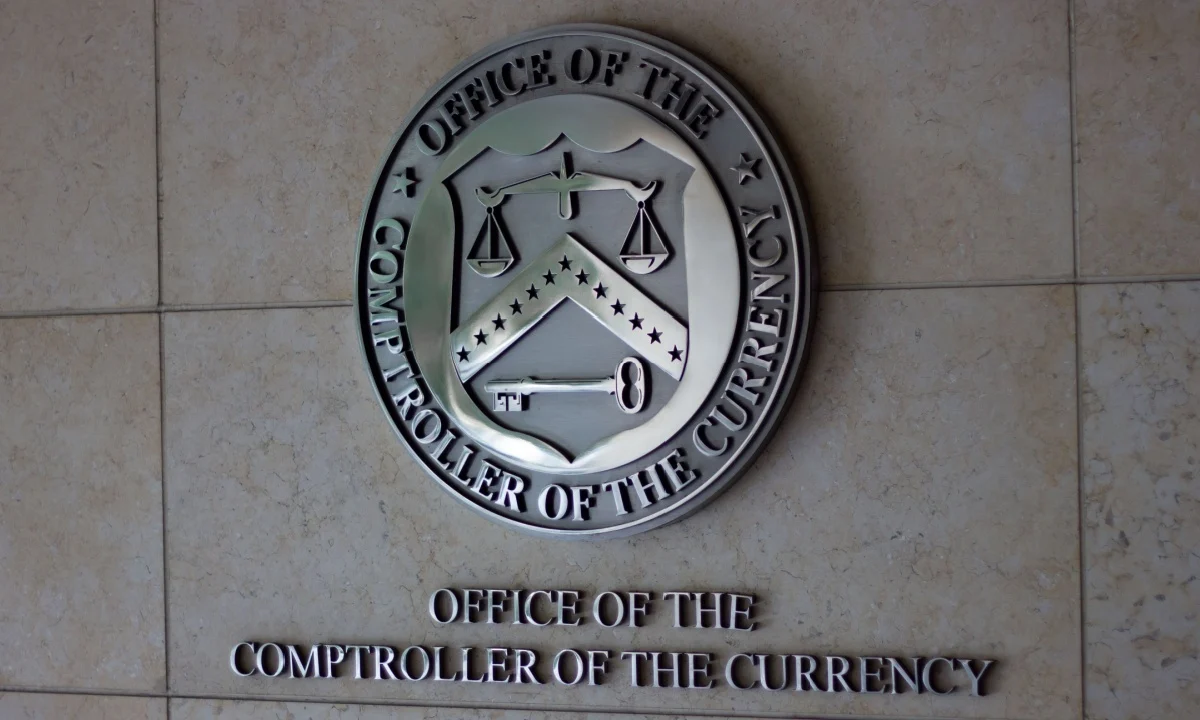
By PYMNTS | May 11, 2026
In a move that signals a tectonic shift in the infrastructure of global finance, the financial services firm formerly known as Ivy has officially rebranded as Augustus. This transition is more than a superficial change of identity; it marks the company’s formal ascent toward becoming a fully chartered U.S. national bank. On Monday, May 11, 2026, the company announced that it has received conditional approval from the Office of the Comptroller of the Currency (OCC) to establish a national banking entity, positioning itself as the first clearing bank designed specifically for the era of artificial intelligence.
The Core Thesis: Fixing a Broken Distribution Model
The decision to rebrand and pursue a federal charter is rooted in a fundamental critique of the current global financial system. According to the company, while the U.S. dollar remains the world’s most powerful and sought-after financial product, the mechanisms used to distribute it are fundamentally outdated.
“The existing clearing model runs on legacy correspondents that are closed 115 days a year, built for humans, and take two days to settle,” the company stated in a LinkedIn announcement. By building what they describe as a “stablecoin and AI-native core,” Augustus aims to collapse these inefficiencies.
The vision is to create a 24/7 financial utility that mirrors the speed and autonomous nature of the AI systems that are increasingly powering global commerce. If the current banking system is built for the human speed of the 20th century, Augustus is betting that the 21st century requires a banking architecture that can execute, settle, and clear transactions at the speed of machine intelligence.
Chronology of the Rise to Federal Charter
The path to this announcement has been marked by rapid development and strategic maneuvering within the FinTech space:
- Foundation and Early Growth: Operating as Ivy, the firm spent its formative years building the technological stack required to support high-frequency, stablecoin-based transactions.
- The Regulatory Engagement: Throughout 2025 and early 2026, the company engaged in rigorous dialogue with the OCC, aligning its internal compliance and risk management protocols with the stringent standards required of a national bank.
- May 11, 2026 – The Rebrand and Approval: The company officially adopted the name "Augustus," symbolizing a new era of stability and institutional authority. On the same day, it secured conditional approval from the OCC, clearing the primary regulatory hurdle to launch its national bank.
Leadership at the Helm: A Blend of Youth and Experience
The leadership structure of Augustus reflects a deliberate balancing act between the agility of a tech-native startup and the seasoned prudence of institutional banking.
Ferdinand Dabitz, the 25-year-old co-founder of the firm, has been named CEO of the bank. His appointment is notable not only for his age—making him the youngest chief executive of a federally chartered American bank in at least 140 years—but also for his vision of integrating AI directly into the clearing process.
To provide the necessary institutional weight, the company has appointed Greg Quarles as President of the bank. Quarles is a heavy hitter in the traditional banking world, having served as CEO of Green Dot Bank, United Texas Bank, and H&R Block Bank. Perhaps most importantly, his background as a former OCC official provides Augustus with an invaluable perspective on how to navigate the complex regulatory environment of federal banking.
The Shift from "Built Around" to "Built As"
Augustus is the vanguard of a broader industry migration. For the past decade, the prevailing strategy for FinTechs was to build around banks rather than as banks. This model relied on third-party partnerships for access to payment rails, deposit insurance, and compliance infrastructure. While this "Banking-as-a-Service" (BaaS) approach allowed for rapid product deployment, it introduced significant vulnerabilities.
As noted in recent industry reporting, the BaaS model left many companies at the mercy of their sponsor banks, which could unilaterally alter terms or succumb to regulatory pressure. The failures of several high-profile BaaS programs in recent years highlighted the fragility of this indirect access model.
Augustus represents the "de novo" comeback—the effort to build a bank from the ground up, with the technology and the charter fully integrated into the firm’s DNA. This allows for greater control over the technology stack, superior compliance integration, and a more robust foundation for scaling services.
Implications for the Financial Ecosystem
The emergence of an "AI-native" clearing bank has profound implications for the future of finance:
1. The Disruption of Settlement Times
If Augustus successfully replaces the two-day settlement cycle with near-instantaneous, AI-driven clearing, it could force legacy institutions to accelerate their own digital transformation efforts. The cost of capital tied up in the current "two-day settle" window is immense; capturing that efficiency is the "Holy Grail" of modern treasury management.
2. Stablecoins as Institutional Infrastructure
By anchoring its core on stablecoins, Augustus is essentially legitimizing the use of blockchain-based assets for institutional-grade clearing. This moves stablecoins out of the realm of speculative retail trading and into the center of the global plumbing of money.
3. The Regulatory "Public Trust"
While the news is being celebrated as a victory for innovation, the regulatory bar remains high. As Rodney E. Hood, the former acting comptroller of the currency, recently noted, a bank charter is “not a trophy, and it certainly isn’t a product label, but it’s a public trust.” Augustus will be subject to ongoing supervision that will test its ability to maintain the balance between rapid innovation and the conservative risk management required of a federally insured institution.
4. The Competitive Landscape
The success of Augustus will likely trigger a wave of imitators. Other FinTechs currently operating under the BaaS model are likely watching this development closely. If Augustus proves that it can maintain its technological agility while under the "hood" of an OCC charter, the incentive for other players to seek their own charters will increase, potentially leading to a fragmentation of the traditional banking hierarchy.
Conclusion: A New Standard for Digital Finance
The rebranding of Ivy to Augustus and the securing of an OCC conditional charter is more than just a headline-grabbing development; it is an indicator of the changing nature of money. We are moving away from an era where finance is an administrative burden managed by humans during business hours, and toward an era where finance is an autonomous, machine-driven layer of the internet.
With Ferdinand Dabitz and Greg Quarles leading the charge, Augustus is betting that the future of banking is not just about moving money, but about moving it with the intelligence and speed that the AI era demands. Whether they can navigate the "public trust" of a federal charter while maintaining their technological edge remains the definitive question for the next chapter of the company’s history. For now, however, the financial world has been put on notice: the era of the AI-native bank has arrived.


 Layla Zulfa
 Ammar Sabilarrohman