Rifan Muazin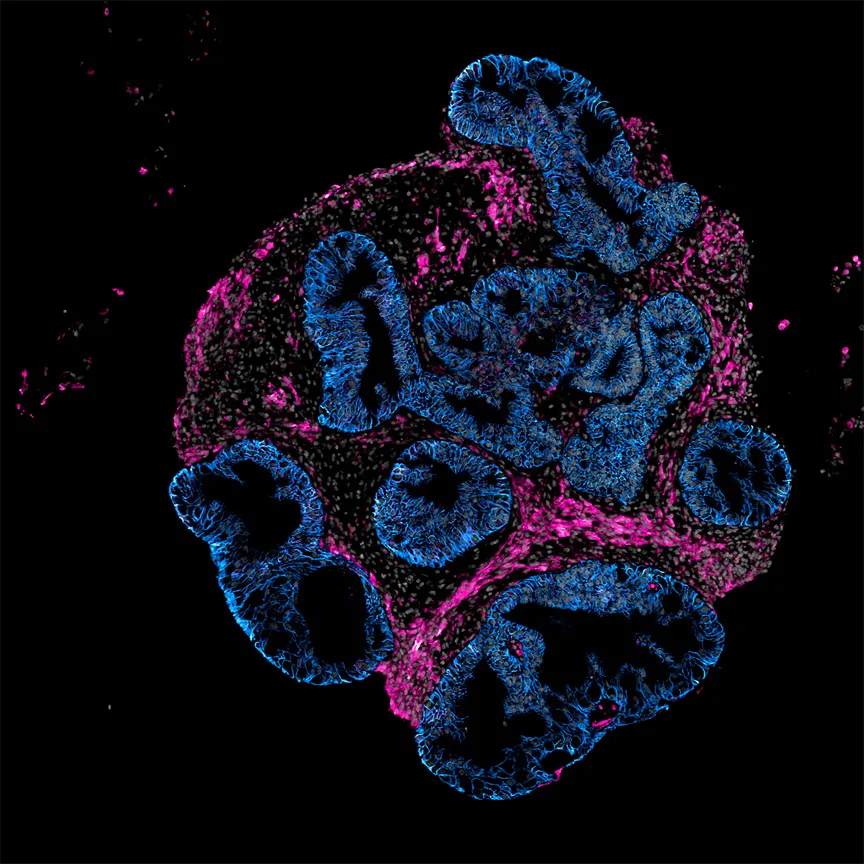
The pharmaceutical industry is currently facing an existential crisis of efficiency. For decades, the gold standard for drug development has relied heavily on animal models—mice, rats, and primates—to predict how a human body will react to a new chemical entity. Yet, the biological chasm between species is vast. Because animals do not perfectly mirror human physiology, a staggering percentage of drugs that show promise in preclinical trials ultimately fail when they reach human subjects.
Enter Intero Biosystems, a Denver-based biotechnology startup that is betting on a radical, lab-grown solution: human intestinal organoids. By shipping “miniature living organs” to pharmaceutical labs, the company hopes to provide a more accurate, ethical, and scalable alternative to traditional animal testing.
The Problem with Current Models: “We Are Neither Mice nor Flat Cells”
The fundamental issue in modern drug discovery is the lack of human-relevant predictive models. Researchers have historically relied on two extremes: animal models, which are genetically distinct from humans, or simple 2D cell cultures, which fail to capture the three-dimensional complexity, cellular diversity, and mechanical functions of an actual human organ.
“Most drugs fail clinical trials, and I think it’s pretty easy to appreciate that we are neither mice nor flat layers of cells,” says Madeline Eiken, co-founder and CTO of Intero Biosystems.
Eiken and her co-founder, CEO Charlie Childs, spun the company out of the University of Michigan with a singular mission: to bridge the translational gap. Their flagship product, GastroScreen, is a sophisticated, three-dimensional intestinal organoid model. Unlike standard cell cultures, these organoids contain the diverse cell and tissue types found in the human intestine. This complexity is crucial; it allows researchers to observe not just how a drug affects a single type of cell, but how it interacts with the complex, multi-layered environment of the gut.
Chronology of a Startup: From Lab Bench to Market
Intero Biosystems was officially founded in 2024, but its roots trace back to years of academic research in regenerative medicine and tissue engineering.
- 2023: The regulatory landscape begins to shift significantly as the U.S. Food and Drug Administration (FDA) signals a move away from mandatory animal testing for certain drug classes, such as monoclonal antibodies.
- Early 2024: Following a $2.3 million pre-seed funding round, the company begins formalizing its commercial operations.
- Late 2024–2025: Intero scales its production capabilities. Between the fourth quarter of 2023 and the third quarter of 2024, the company generated over $400,000 in revenue, a strong signal of market appetite for alternative testing models.
- October 2025: Intero takes the stage at TechCrunch Disrupt in San Francisco, positioning itself as a leader in the next generation of biotechnology infrastructure.
Currently, the startup employs seven people and maintains a client list of just under 10 companies, ranging from major pharmaceutical players to food and chemical conglomerates.
The Logistics of Innovation: Shipping Life
One of the most striking aspects of Intero’s business model is its physical footprint. “We’re literally shipping mini living organs in the mail to people,” says CEO Charlie Childs.
Each organoid is approximately one millimeter in diameter. The company ships these samples in batches of roughly 100, suspended in specialized media that maintains their viability. The "GastroScreen" platform is highly versatile: it can be used to model a healthy human gut, or, through the introduction of specific chemical stressors, it can be manipulated to mirror disease-like conditions.
This flexibility allows pharma companies to conduct a range of experiments, including:
- Safety Profiling: Exposing organoids to drug candidates to identify potential gastrointestinal toxicity before human trials begin.
- Disease Modeling: Testing how tissue responds to compounds designed to treat chronic conditions like Crohn’s disease or ulcerative colitis.
- Custom Research: Intero doesn’t just sell the "hardware"—they provide the full suite of "software," including nutrient mixes, experimental design, lab testing, and data analysis services.
Regulatory Tailwinds and the Shift Toward NAMs
The rise of Intero Biosystems is occurring in lockstep with a major pivot in federal oversight. The "New Approach Methodologies" (NAMs) movement has gained significant momentum in Washington.
In March of this year, the FDA issued draft guidance outlining how drug developers should validate these non-animal methods. While the FDA has not "endorsed" any single company, it has provided a framework that legitimizes the use of organoids and organs-on-chips in regulatory submissions.
"Changes in U.S. law that allow drug developers to use non-animal testing methods in some cases have made pharmaceutical companies more willing to explore technologies such as organoids," Eiken notes. Once-skeptical pharmaceutical giants are now actively seeking to bring these technologies in-house, viewing them as a way to "de-risk" their pipelines early in the development phase.
Competitive Landscape: Who Else is in the Race?
Intero is not alone in the "gut-on-a-chip" and organoid space. The race to replicate the human digestive tract is crowded with innovative peers:
- Altis Biosystems: Focuses on stem cell-derived intestinal models that provide high-throughput screening capabilities.
- InSphero: Provides patient-derived intestinal organoids specifically tailored for toxicity testing.
- MIMETAS: Utilizes microfluidic "organ-on-chip" technology to simulate the dynamic blood flow and mechanical movement of human tissues.
Intero distinguishes itself through its derivation method. Unlike competitors who often rely on tissue samples obtained through invasive procedures like colonoscopies, GastroScreen is derived from induced pluripotent stem cells (iPSCs). These are adult cells—often taken from a simple blood draw—that are reprogrammed to become any cell type. This approach offers two distinct advantages: it allows for the creation of patient-specific, personalized models and enables the company to scale production far more easily than tissue-harvesting methods allow.
Validation: The Three-Stage Roadmap
The skepticism surrounding new biotech is healthy and expected. When asked about the accuracy of GastroScreen compared to animal models, Childs admits that the company is in the middle of a rigorous three-stage validation process.
- Phase One (Complete): Proving that the organoids contain the specific, functional tissues of a human gut.
- Phase Two (In Progress): Testing well-documented drugs with known human effects. Intero has already demonstrated that its organoids react to anti-inflammatory and gut-damaging compounds exactly as a human body would.
- Phase Three (Underway): Head-to-head comparisons. Intero is working with several pharmaceutical partners to compare their organoid data directly against existing animal and clinical trial data.
This phase is the "make or break" for the company. If the data consistently proves that GastroScreen predicts human response with higher accuracy than current models, it could become a standard requirement for drug development pipelines.
Future Implications: From Scaling to the "Artificial Intestine"
While Intero does not currently use AI to build its organoids, it views AI as a vital partner. The company plans to license its high-quality biological datasets to AI firms, providing the "ground truth" that machine learning models need to become more accurate.
In the short term, the company is focused on scale. Current production capacity is in the thousands, but the team is actively automating its manufacturing processes to reach hundreds of thousands of organoids per batch.
Looking further ahead, the vision is ambitious: the creation of a fully functional "artificial intestine." By combining patient-specific iPSC data with industrial-scale manufacturing, Intero hopes to eventually provide a personalized testing ground where a doctor could take a patient’s blood, grow their specific gut organoids, and test which medication will work best for them—turning the "trial and error" of current medicine into a precision science.
For now, Intero Biosystems is a testament to the changing tide of medical research. By moving away from the assumption that a mouse is just a small human, they are betting that the future of drug discovery lies in the palm of our hands—inside a tiny, lab-grown, living tube of human tissue.


 Dwi Wanna
 Suro Senen