
 Neng Nana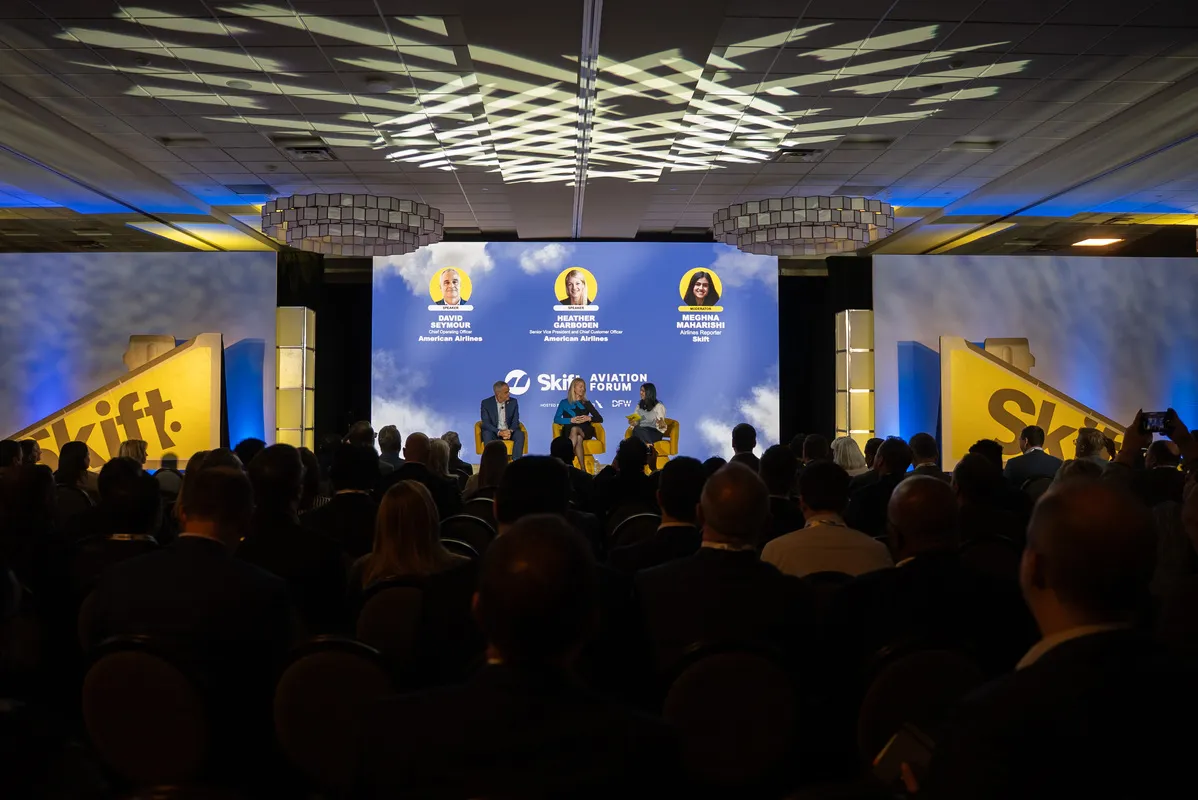
New York City, NY – The global aviation industry stands at a critical juncture, buffeted by unprecedented economic pressures and strategic shifts. Against a backdrop of soaring operational costs and a fragmented competitive landscape, the upcoming Skift Aviation Forum in New York City on November 11-12, 2026, promises to be a pivotal gathering. Industry leaders, policymakers, and innovators will converge to dissect the complex web of external relationships that are increasingly determining the profitability and very survival of airlines worldwide.
The forum will commence with Opening Talks and a Reception at Apella by Alexandria on November 11, 2026, setting the stage for two days of intensive dialogue. The Main Event will then unfold on November 12, 2026, at the iconic TWA Hotel at JFK Airport, a fitting venue that symbolizes aviation’s past grandeur and its relentless pursuit of a future vision.
This year’s forum takes on particular urgency following a tumultuous period marked by extreme volatility. Jet fuel prices, a perennial thorn in the side of airline treasuries, have skyrocketed, registering a staggering 102% year-over-year increase by mid-September. This dramatic surge has eroded even record-setting revenues, leaving many carriers scrambling to maintain equilibrium. The impact has been acutely uneven, starkly illustrated by the unfortunate demise of Spirit Airlines in May 2026, which ceased operations after its second bankruptcy in a single year. In stark contrast, North America’s largest carriers have demonstrated remarkable resilience, buoyed by tightly managed capacity, robust loyalty program revenues, and a sustained willingness of travelers to pay a premium for comfort and enhanced experiences.
The fundamental divergence in fortunes boils down to a single word: leverage. In a global economy where geopolitical events continue to shape the largest cost lines – particularly the price of fuel – airline margins are no longer solely dictated by internal efficiencies or market dynamics. Instead, they are increasingly beholden to five critical relationships that largely operate beyond an airline’s direct control. The Skift Aviation Forum will bring together the architects and arbiters of these relationships, placing leaders from across the aviation ecosystem on stage to confront these challenges head-on.
A Chronology of Turbulence and Transformation (2020-2026)
The period leading up to the 2026 Skift Aviation Forum has been nothing short of transformative, characterized by a rapid succession of crises, strategic adjustments, and unexpected accelerations.
The Post-Pandemic Rebound and Shifting Demands (2020-2024)
The initial years following the global pandemic presented airlines with an unprecedented challenge: navigating a near-total collapse in demand followed by a highly uneven recovery. As travel restrictions gradually eased, a new pattern began to emerge. Leisure travel, particularly domestically, rebounded with surprising vigor, often driven by pent-up demand. Simultaneously, business travel, while slower to return to pre-pandemic levels, saw a significant shift towards premium experiences.
By 2024, this trend had solidified, with premium cabins generating a remarkable $188 billion globally, accounting for 24% of total airline passenger revenue. This was a clear indicator that travelers, especially self-funded leisure segments, were increasingly willing to invest in comfort and convenience. U.S. premium capacity, in particular, expanded by an impressive 33% since 2020, far outstripping the 16% growth seen in economy class. This period also saw the nascent but growing awareness of supply chain fragilities, particularly in aircraft manufacturing, though the full extent of these issues had yet to manifest. Airports, too, began to recalibrate their long-term growth strategies, anticipating a renewed surge in passenger volumes and evolving traveler expectations.
Accelerating Headwinds and Strategic Pivots (2025)
The year 2025 marked a turning point where many of the underlying tensions and emerging trends began to accelerate into significant industry headwinds. The strategic importance of non-traditional revenue streams became glaringly apparent. Delta Air Lines, a pioneer in this regard, reported an astounding $8.2 billion in revenue from its partnership with American Express, representing approximately 14% of its adjusted operating revenue. This underscored the immense profitability of co-brand credit card programs, with estimated operating margins ranging from 35% to 50%. This revenue stream, however, also highlighted a growing dependency on external financial institutions and the regulatory environment governing them.
On the infrastructure front, major hubs like Dallas Fort Worth International Airport (DFW) unveiled ambitious expansion plans, targeting 100 million passengers by 2030 with a new Terminal F. Such projects, while crucial for future capacity, also implied significant capital outlays that would ultimately be passed on to airlines through increased charges, adding another layer of fixed costs. The global supply chain for aircraft also started to show more pronounced signs of strain, with manufacturers struggling to meet delivery schedules, setting the stage for future capacity constraints.
The Defining Moments of 2026
2026 has proven to be a watershed year, crystallizing many of the pressures the industry faces.
- May 2026: The most dramatic event unfolded with the shutdown of Spirit Airlines. After a second bankruptcy filing within a year, the ultra-low-cost carrier, once a symbol of budget travel expansion, succumbed to the relentless pressure of rising costs and intense competition, unable to replicate the leverage enjoyed by its larger counterparts.
- May 2026: In another significant development, United Airlines became the last of the "big four" U.S. carriers to reach a new collective bargaining agreement with its flight attendants. The five-year contract included a substantial 31% pay increase, $741 million in retroactive pay, and the introduction of boarding pay. This deal, following similar agreements by other major airlines, locked in significant labor cost increases for the next half-decade, creating an unhedgeable fixed expense that landed precisely when fuel prices were beginning their steep ascent.
- July 2026: The Farnborough Airshow, a biennial barometer of the aerospace industry, underscored the deepening crisis in aircraft supply. With meaningful narrowbody delivery slots for popular models like the A320neo and 737 MAX now scarce until approximately 2033, and widebody availability remaining tight into the mid-2030s, airlines faced an undeniable reality of constrained growth. The airshow saw lessors placing the largest orders, signaling a strategic shift where these financial entities were increasingly absorbing the balance-sheet risk associated with long-term fleet commitments, a burden airlines were less willing to bear.
- Mid-September 2026: The full impact of geopolitical instability and global energy market dynamics became starkly evident as jet fuel prices were reported to be up 102% year-over-year. This exponential increase served as a brutal reminder of the external forces at play, dwarfing even record revenues and pushing operational costs to unprecedented levels.
- Throughout the year, the innovative approach of São Paulo’s Guarulhos Airport (GRU) with its fully private Terminal BTG Pactual demonstrated a new frontier in airport-airline dynamics. Operating independently, this terminal quickly reached capacity, compelling carriers to adapt their procedures and highlighting a growing competition for the premium traveler’s ground experience.
- Concurrently, IAG Loyalty, the powerhouse behind Avios, intensified its ambitious target of achieving over €1 billion in operating profit, with more than 80% of its revenue projected to come from external partners buying Avios. This reinforced the global trend of loyalty programs evolving into highly profitable, bank-dependent entities.
This complex chronology forms the essential context for the Skift Aviation Forum, where these defining moments will be analyzed and debated by the very leaders who shaped them.
Supporting Data: Dissecting the Five Pivotal Relationships
The core of the Skift Aviation Forum’s agenda is a deep dive into the five external relationships that now hold sway over airline profitability. Each represents a unique challenge and opportunity, demanding strategic foresight and collaborative solutions.
The Aircraft Manufacturers: A Supply-Constrained Horizon
The aerospace manufacturing sector, once a reliable engine of airline expansion, has become a significant bottleneck. The scarcity of new aircraft delivery slots is not merely an inconvenience; it is a fundamental re-shaper of airline growth strategies and market dynamics. The widespread unavailability of meaningful delivery slots for workhorse narrowbodies like the Airbus A320neo and Boeing 737 MAX until roughly 2033, and the persistent tightness in widebody availability into the mid-2030s, stems from a confluence of factors. Supply chain disruptions, exacerbated by geopolitical events and post-pandemic labor shortages, have crippled production lines. Furthermore, an increasingly stringent regulatory environment, particularly for new aircraft certifications, has added further delays.
This shortage cuts both ways for airlines. On one hand, it severely caps the potential growth for every carrier, forcing them to extend the lifespan of older, less fuel-efficient aircraft or aggressively pursue the highly competitive used aircraft market. On the other hand, this very capacity constraint has paradoxically served to support airfares. With fewer new aircraft entering service, overall market capacity remains tight, allowing airlines to maintain pricing power even as fuel costs surge. The strategic decision for airlines now involves committing to fleet plans a full decade in advance, often relying more heavily on lessors who are increasingly willing to absorb the substantial capital expenditure and associated balance-sheet risk that airlines are less eager to carry themselves. This shift fundamentally alters the capital structure of fleet acquisition and places lessors in a more powerful negotiating position.
The Unions: Escalating Labor Costs as an Unhedgeable Fixed Expense
The labor landscape has undergone a dramatic transformation, with unions successfully negotiating significant pay increases and improved working conditions in the post-pandemic environment. The May 2026 settlement between United Airlines and its flight attendants, featuring a 31% pay increase, $741 million in retroactive pay, and new boarding pay, is emblematic of this shift. This agreement, mirroring similar deals struck by American, Delta, and Southwest, has locked in substantial labor costs for the next five years.
Unlike fuel, which can be partially hedged, these labor costs are a fixed, unhedgeable expense that directly impacts an airline’s operational margins. The timing of these agreements, coinciding with the doubling of jet fuel prices, has created a severe squeeze on airline profitability. European airline groups face an identical predicament, grappling with climbing labor and airport costs alongside the fuel crisis. Labor is no longer merely a variable cost; it has become the fixed base that every capacity plan, route expansion, and financial projection must clear before considering the variable costs of fuel, the potential for fare adjustments, or the intricacies of fleet management. This new reality demands a fundamental re-evaluation of how airlines manage their workforce and negotiate future contracts, emphasizing long-term strategic labor relations rather than short-term concessions.
The Premium Traveler: A Double-Edged Sword of Revenue and Risk
The premium travel segment has emerged as a crucial revenue absorber, shielding airlines from some of the most severe shocks of rising costs. In 2024, premium cabins generated $188 billion, representing a robust 24% of global airline passenger revenue. This growth has been particularly pronounced in the U.S., where premium capacity has surged by 33% since 2020, significantly outpacing the 16% growth in economy class. A key driver behind this phenomenon is the rise of the self-funded leisure traveler, individuals or families willing to pay more for enhanced comfort, privacy, and service, blurring the traditional lines between business and leisure travel.
However, Skift Research identifies the next significant risk as potential oversupply. If every airline aggressively scales its premium offerings simultaneously, the market could become saturated, leading to yield dilution. The strategic decision for airlines is therefore delicate: how much cabin real estate should be allocated to premium products before the industry collectively builds more premium capacity than travelers are willing to purchase? This involves intricate forecasting of demand trends, competitive analysis, and a deep understanding of evolving customer preferences. Airlines must innovate not just in physical cabin design but also in service offerings, loyalty benefits, and personalized experiences to differentiate their premium products in an increasingly crowded market.
The Airports: Expanding Infrastructure, Contesting the Customer Journey
Airports are embarking on ambitious, decade-long development horizons, transforming themselves into sophisticated commercial hubs that compete directly for the traveler’s wallet and attention. Dallas Fort Worth International Airport (DFW), for example, is targeting an astounding 100 million passengers by 2030, with a new Terminal F at the heart of its expansion strategy. While such infrastructure projects are vital for accommodating future growth, airlines bear the financial burden through increased airport charges, which fund these developments. This represents another significant, often non-negotiable, cost center for carriers.
Beyond physical expansion, airports are also increasingly moving into the premium experience domain, traditionally considered an airline’s prerogative. São Paulo’s Guarulhos airport, with its innovative fully private Terminal BTG Pactual, offers a compelling case study. Operating independently of airlines, this exclusive terminal quickly reached capacity, forcing carriers to adapt their ground procedures and highlighting a new competitive front. The core decision here revolves around who ultimately "owns" the premium traveler’s time on the ground – the airline with its lounges and dedicated services, or the airport with its own premium facilities? And crucially, who pays for the luxurious terminals and bespoke services designed to capture this lucrative segment? This dynamic creates both opportunities for collaboration and potential areas of friction between airlines and their airport partners, necessitating a redefinition of their traditional relationship.
The Banks: The Unseen Profit Engine Under Regulatory Scrutiny
Loyalty programs, particularly those tied to co-brand credit cards, have evolved into exceptionally profitable business units, often surpassing the margins generated by core airline operations. Delta Air Lines’ reported $8.2 billion in revenue from American Express in 2025, representing about 14% of its adjusted operating revenue, powerfully illustrates this phenomenon. The operating margins for these co-brand partnerships are estimated to be between 35% and 50%, making them an indispensable financial lifeline for many carriers. Outside the U.S., IAG Loyalty, responsible for the Avios program, is ambitiously targeting over €1 billion in operating profit, with more than 80% of that revenue expected to originate from external partners purchasing Avios, rather than direct airline activity.
This lucrative revenue stream, however, is heavily dependent on uncapped U.S. interchange fees, a regulatory framework that is increasingly under threat. The proposed Credit Card Competition Act, if passed, could dramatically alter the landscape by introducing competition among credit card networks and potentially capping interchange fees. Such legislation poses a significant existential risk to a substantial portion of airline earnings, as carriers have tied a considerable amount of their financial health to bank partners and a regulatory environment they do not control. The strategic decision for airlines is how much of their future earnings to tether to these financial partnerships, weighing the immense profitability against the inherent regulatory and legislative risks. This demands a nuanced approach to lobbying, diversification of revenue streams, and a keen eye on legislative developments.
Official Responses and Industry Discourse
The Skift Aviation Forum is uniquely positioned to foster candid dialogue by intentionally bringing these often-disparate counterparties into a single room. The "on stage" sessions will feature airline commercial chiefs alongside the leaders of the unions representing flight attendants across U.S. airlines. Similarly, carriers will engage directly with the manufacturers building their next fleets, and financial executives will debate with regulatory experts. This direct interaction is crucial for bridging understanding and potentially forging collaborative solutions.
The forum’s emphasis on "both sides of the table" recognizes that the challenges facing aviation are multifaceted and require a holistic perspective. While specific speakers from the five relationships are yet to be fully announced, the presence of leaders from Allegiant, Porter Airlines, oneworld, and Homage Ventures & Advisors already signals a diverse range of perspectives, from low-cost to full-service, and from airline operations to venture capital. These executives will undoubtedly offer their official responses to the prevailing conditions, detailing their strategies for navigating the current climate.
A significant portion of the discourse will revolve around the overarching question: who is still independent in five years? The industry is undeniably in a period of accelerated consolidation, and the carriers that emerge strongest from this era of turbulence will likely look significantly different from those that entered it. The forum will host founders and executives who are actively pursuing growth through mergers and acquisitions, as well as those who are firmly betting on organic growth and strategic partnerships as an alternative to consolidation. This will include discussions on potential new alliances, strategic equity investments, and novel business models designed to weather the storm without relinquishing independence. The Skift Aviation Forum serves as a critical platform for these varied perspectives to be aired, debated, and perhaps, reconciled.
Implications: Charting the Course for the Next Five Years
The confluence of high fuel prices, labor cost escalation, supply chain constraints, evolving traveler demands, and regulatory uncertainties presents a formidable challenge, but also a catalyst for innovation and strategic re-evaluation. The implications for the global aviation industry over the next five years are profound and far-reaching.
Consolidation and Survival: The most immediate implication is the accelerated pace of industry consolidation. The demise of Spirit Airlines is a stark warning. Smaller, less diversified carriers with limited leverage against the five external forces will find survival increasingly difficult. The strong will likely get stronger, acquiring assets, routes, and market share. This will lead to a more concentrated market, potentially impacting competition and consumer choice in the long run. The forum will provide critical insights into which carriers are positioned for growth and which are vulnerable to acquisition or collapse.
Innovation in Fleet Strategy: With new aircraft deliveries severely delayed, airlines will be forced to innovate their fleet strategies. This could mean a renewed focus on maintenance and extending the lifespan of existing aircraft, exploring more aggressive wet-lease agreements, or investing in sustainable aviation fuels (SAFs) as a hedge against conventional jet fuel volatility, even if SAFs currently come at a premium. The strategic role of lessors will also expand, becoming integral partners rather than just financing providers.
Redefining Labor Relations: The recent union contracts signal a fundamental shift in labor power. Airlines must move beyond reactive negotiations towards proactive, long-term labor relations strategies that foster partnership and shared goals. This might involve new compensation models, enhanced employee engagement, and a focus on training and retention to mitigate the impact of rising labor costs.
The Evolving Customer Experience: The battle for the premium traveler will intensify. Airlines will need to continuously innovate their cabin products, loyalty programs, and personalized services to justify premium fares and prevent oversupply from diluting yields. The competition with airports for the ground experience will also necessitate new models of collaboration or direct competition, pushing both entities to enhance their offerings. The rise of private terminals suggests a segmentation of the premium market, with ultra-high-net-worth individuals seeking entirely separate, bespoke experiences.
Navigating Regulatory Headwinds: The threat to co-brand credit card revenue, particularly in the U.S., highlights the critical need for airlines to actively engage with policymakers and diversify their revenue streams. This could involve exploring new ancillary revenue opportunities, enhancing cargo operations, or developing new digital products and services. The outcome of legislative efforts like the Credit Card Competition Act could fundamentally reshape the financial architecture of airline loyalty.
Sustainability as a Strategic Imperative: While not explicitly detailed in the initial content, the context of high fuel prices inevitably brings sustainability to the forefront. Airlines will face increasing pressure from regulators, investors, and consumers to reduce their carbon footprint. This will drive investments in fuel-efficient aircraft, operational optimizations, and the accelerated adoption of SAFs, all of which come with significant cost implications that must be factored into future profitability models.
The Skift Aviation Forum 2026 will serve as a crucial compass for the industry, illuminating these complex interdependencies and providing a platform for leaders to collectively chart a course through the turbulent skies ahead. The discussions and insights generated at the TWA Hotel will undoubtedly influence strategic decisions and shape the future trajectory of global aviation for years to come. Additional sessions and speakers will be announced on the official event page in the coming weeks, promising an even more comprehensive exploration of these vital themes.


 Nana
Nana
 Reynand Wu



