Evan Lee Salim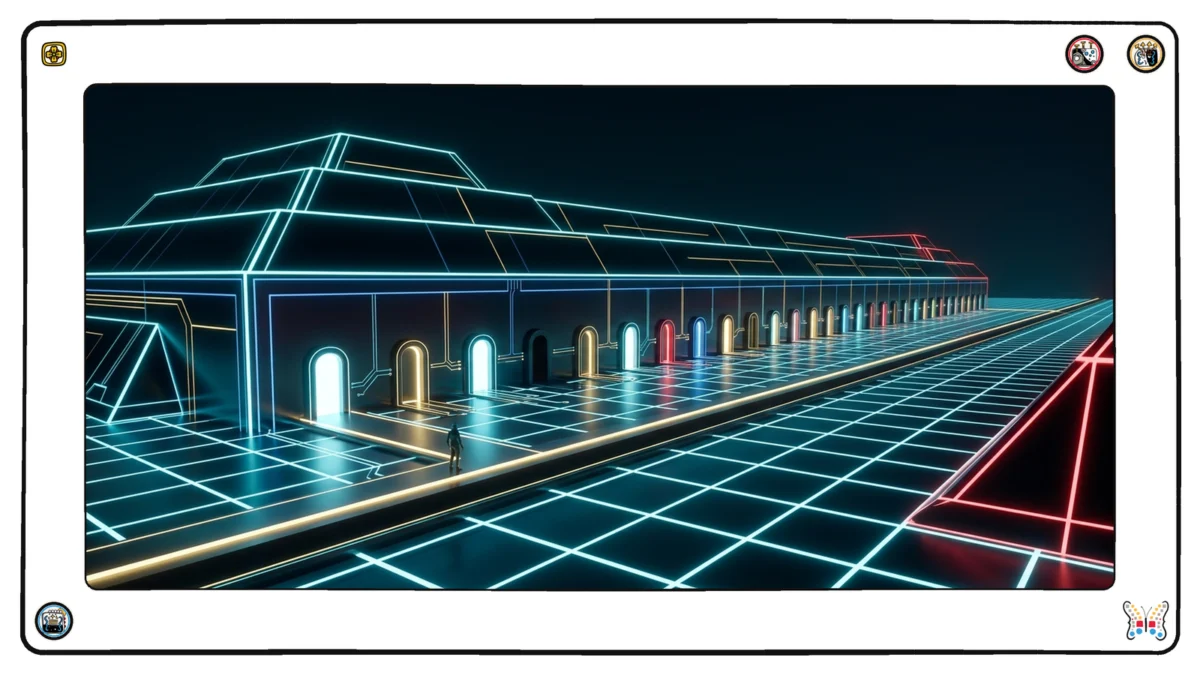
For decades, the /.well-known/ directory has served as the silent, standardized entryway to the inner workings of the internet. It is a humble, unassuming path—a folder located at the root of a domain that acts as a universal handshake. When you need to find an organization’s security policy (security.txt), their OpenID configuration, or their OAuth authorization server, you look in the same place: /.well-known/.
However, as the era of AI agents, automated discovery, and complex dataspace protocols accelerates, this "front porch" of the web is becoming dangerously crowded. What was once a tidy utility for administrative metadata has evolved into a chaotic repository of competing standards, forcing developers to confront a growing crisis of discoverability and technical debt.
The State of the Registry: Main Facts and Observations
The rapid expansion of the /.well-known/ space was recently highlighted by API Evangelist, whose live monitoring of these URIs reveals a staggering shift in how machines interact with domains. Recent specifications, such as SAP’s Open Resource Discovery (ORD)—now under the Linux Foundation Europe’s NeoNephos initiative—utilize the /.well-known/open-resource-discovery path to expose API events. This follows a growing trend of industry-specific discovery mechanisms.
Just in the last few weeks, the landscape has shifted again:
- The Personal Agent Protocol mandates
/.well-known/poppy.json. - MCP Server Cards utilize
/.well-known/ai-catalog.jsonfor domain-level AI discovery. - The Dataspace Protocol requires
/.well-known/dspace-version.
These are not merely suggestions; they are requirements for interoperability in an increasingly automated web. As of this writing, the API Evangelist Standards registry tracks 118 active paths—a number that exceeds the official IANA (Internet Assigned Numbers Authority) registry, which currently lists 106 entries. This discrepancy highlights a growing "shadow registry" where developers are defining their own standards in the wild without formal coordination.
A Chronology of Growth: From Security to AI
The /.well-known/ prefix was formalized under RFC 8615, intended to provide a standardized way to define well-known locations for web-based services. Historically, it was reserved for high-level infrastructure: ACME challenges for SSL/TLS, CoAP for IoT devices, and even specialized protocols for building control systems like BACnet and KNX.
However, the velocity of registration has shifted dramatically in the last three years. The chronology of the registry reveals a clear acceleration:
- 2023: 15 new registrations.
- 2024: 12 new registrations.
- 2025: 6 new registrations (including the permanent registration of A2A’s
agent-card.json). - 2026 (Year-to-date): 12 new registrations already, including
xregistryfrom CloudEvents,scitt-keys, andwebauthn.
The transition from 2023 to 2026 marks a pivot from general infrastructure—like security policies and authentication—to the "Agent Era." We are no longer just telling browsers how to verify a site’s identity; we are telling AI agents how to discover a domain’s capabilities, storage interfaces, and data-sharing protocols.
Supporting Data: The Disconnect Between Formal and Functional
The IANA registry is the formal source of truth for these URIs, containing 63 permanent, 38 provisional, 3 deprecated, and 2 obsoleted entries. Yet, the data suggests that the formal process is failing to keep pace with the needs of modern software engineering.
A significant portion of the 118 paths currently in active use are unregistered. This creates a "collision risk" that could undermine the very goal of the /.well-known/ directory. If two disparate industries independently choose the same path for their discovery files, the resulting conflict will cause broken integrations for any agent attempting to navigate that domain.
The lack of registration isn’t necessarily due to a difficult process; it is a symptom of a decentralized development culture that prioritizes rapid deployment over formal standardization. When a project lead publishes a spec for a new AI catalog, their priority is getting developers to implement it—not navigating the administrative overhead of an RFC-track registration. This "move fast and break things" approach, however, leaves a fragmented ecosystem where providers are tasked with maintaining a dozen different discovery files, most of which go stale within months of being published.
Implications: The "Too Many Front Doors" Dilemma
The proliferation of these files creates a massive maintenance burden for service providers. A modern enterprise, looking to be "agent-ready" in 2026, might be expected to maintain:
- An API catalog.
- An AI catalog.
- An agent card.
- OAuth server metadata.
- Protected resource metadata.
- JSON Web Key Sets (JWKS).
security.txt.
For an engineering team, keeping all seven (or more) of these files accurate, secure, and synchronized is a significant logistical challenge. The evidence from the APIs.io catalog shows the outcome: most providers publish only a fraction of these requirements, and when they do, the files often contain outdated links or stale data.
The implication is a "discovery rot" where the metadata describing the API is more outdated than the API itself. This creates a paradox: in our quest to make the web more machine-readable, we have created a manual-update nightmare that ensures the machines will almost always be reading yesterday’s data.
Toward a Solution: Linked Discovery
If the problem is "too many front doors," the solution is not to close the doors, but to build a hallway. The current fragmentation suggests that the next generation of standards should prioritize interlinking.
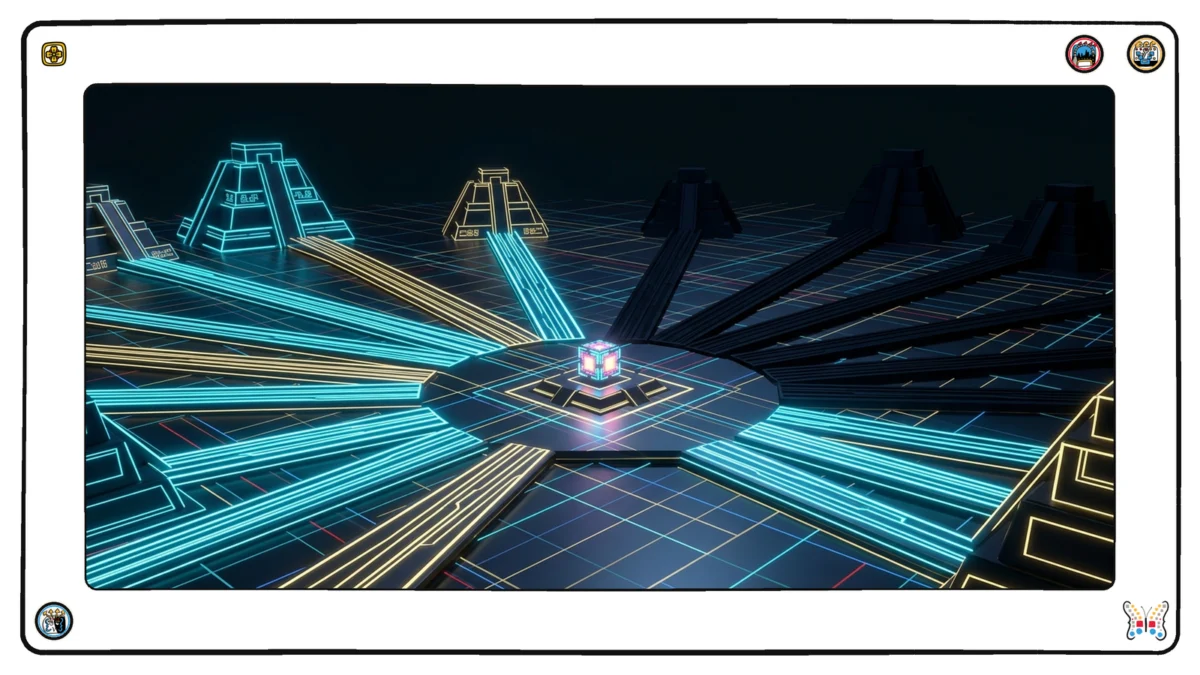
RFC 9727’s api-catalog already demonstrates this potential by using a "linkset" to point to other relevant discovery resources. If every /.well-known/ entry were required to point to a primary "entry point" document, an agent could land on a single URL and follow a chain of links to discover everything it needs to know about a domain.
For instance, an AI agent hitting /.well-known/ai-catalog.json should be able to see a reference to the security.txt and the api-catalog. By creating a web of linked metadata, we move away from the "laundry list" of files that must be probed individually, toward a graph-based discovery system.
Conclusion
The /.well-known/ directory remains the most critical, yet overlooked, piece of real estate on the internet. As we move deeper into an economy powered by automated agents, the pressure on this directory will only increase.
The path forward requires a two-pronged effort. First, developers and standards bodies must return to the IANA registry to ensure that new paths are officially documented, preventing the collision of standards. Second, architects of these specifications must embrace the "linked discovery" philosophy. We cannot expect providers to maintain an infinite number of independent front doors. Instead, we must treat the /.well-known/ directory as a connected ecosystem, where one well-placed request provides the keys to the entire house.
The porch is crowded, but with better organization and a focus on interlinked standards, it can continue to serve as the reliable, shared gateway that the decentralized web requires. Failure to do so will result in a "discovery winter," where the very tools meant to enable autonomous agents become the obstacles that keep them from finding their way.

 Raul Delapena Setiawan
 Ammar Sabilarrohman