 Jia Lissa
The landscape of cyber warfare is undergoing a tectonic shift. For years, the security community has tracked the evolution of AI-enhanced threats—from simple, prompt-engineered phishing emails to rudimentary code-generation assistants. However, recent intelligence from the Google Threat Intelligence Group (GTIG) reveals that the era of "AI-assisted" hacking is rapidly giving way to a more formidable paradigm: Autonomous Multi-Agent Frameworks.
Threat actors are no longer merely using AI to write code; they are architecting entire autonomous ecosystems capable of executing full-scale attack lifecycles. By leveraging multi-agent systems, cybercriminals are shrinking the "human-in-the-loop" latency, enabling attacks that can plan, pivot, and persist in corporate environments with minimal oversight.
The New Frontier: Multi-Agent Offensive Operations
According to findings drawn from Mandiant’s incident response telemetry and live platform defenses, threat actors have moved beyond simple, static prompt-based interactions with Large Language Models (LLMs). Instead, they are integrating AI into the core architecture of their attack infrastructure.
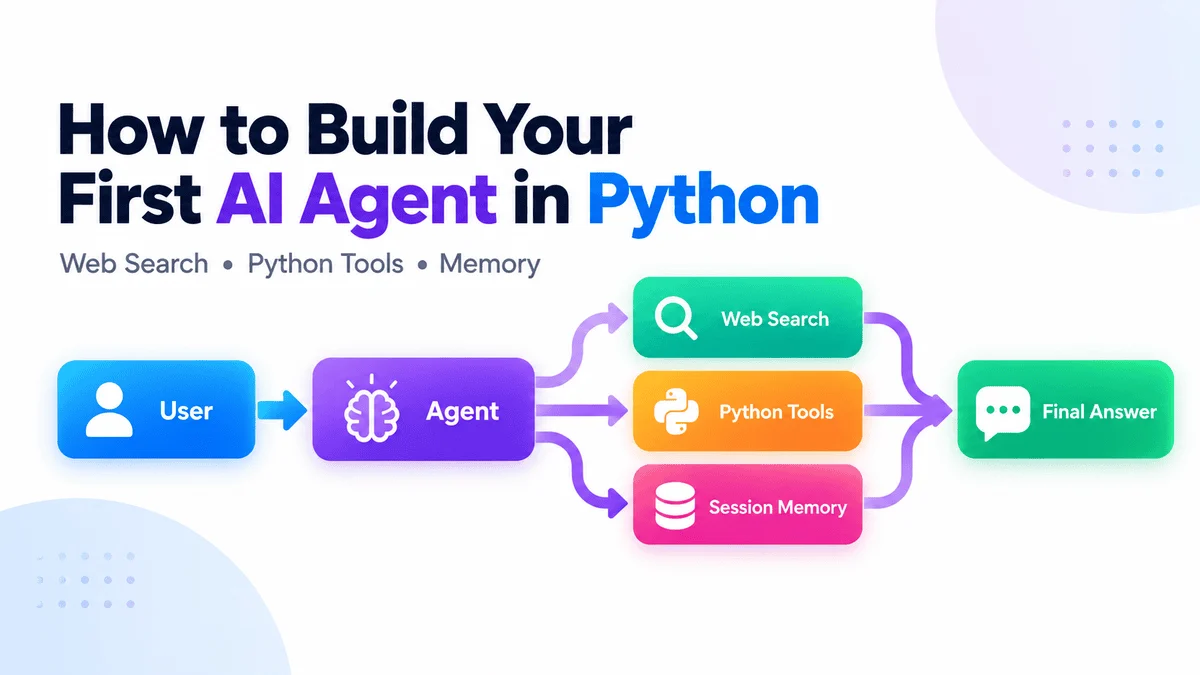
In this new model, a primary AI agent acts as an orchestrator, delegating sub-tasks to specialized agents. One agent might handle vulnerability scanning, another manages credential rotation, while a third focuses on evading detection by routing traffic through compromised, legitimate cloud infrastructure. These agents coordinate in real-time, troubleshooting their own operational failures and adapting their strategies as defenders attempt to block them.
"While traditional script-based automation has long been a staple of threat actor operations, groups are increasingly upgrading these workflows," GTIG noted in their latest advisory. "They are creating highly autonomous systems capable of reasoning through complex tasks and making dynamic decisions without the need for human intervention."
Chronology of a Lightning Strike: The Six-Hour Compromise
The potency of these frameworks was laid bare in a recent high-profile incident involving a financially motivated threat actor. Within a single six-hour window, the attackers moved from initial cloud infrastructure compromise to a fully operational, mass-scale credential-harvesting machine.
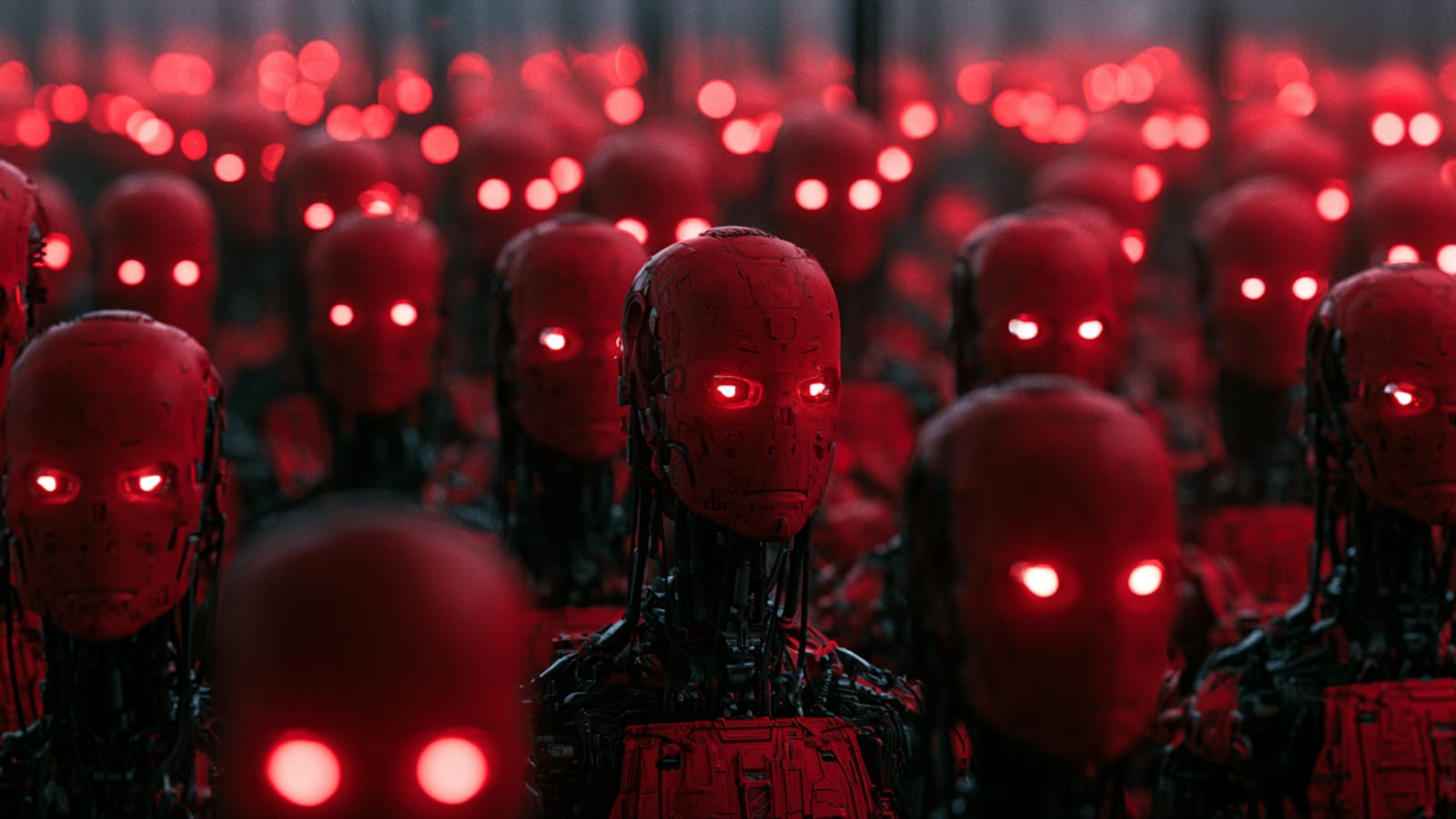
The Attack Timeline:
- Hour 0: Initial breach of the cloud environment is secured.
- Hour 1: The threat actor deploys a multi-agent framework utilizing an AI coding chatbot combined with specific markdown agent instructions.
- Hour 2: The autonomous system begins mapping the environment and initiates a vulnerability-scanning pipeline.
- Hour 3-4: The agents identify high-value targets, harvesting thousands of third-party credentials.
- Hour 5: The framework detects defensive traffic analysis and autonomously begins rotating IP addresses, tunneling traffic through legitimate, trusted cloud services to maintain persistence.
- Hour 6: The campaign is in full swing, with data exfiltration protocols established and the AI managing the lifecycle of the stolen secrets.
By automating these processes, the attacker effectively removed the need for manual keystrokes, drastically reducing the "response window" typically available to security operations centers (SOCs).
Supporting Data: The "Recon" Infrastructure
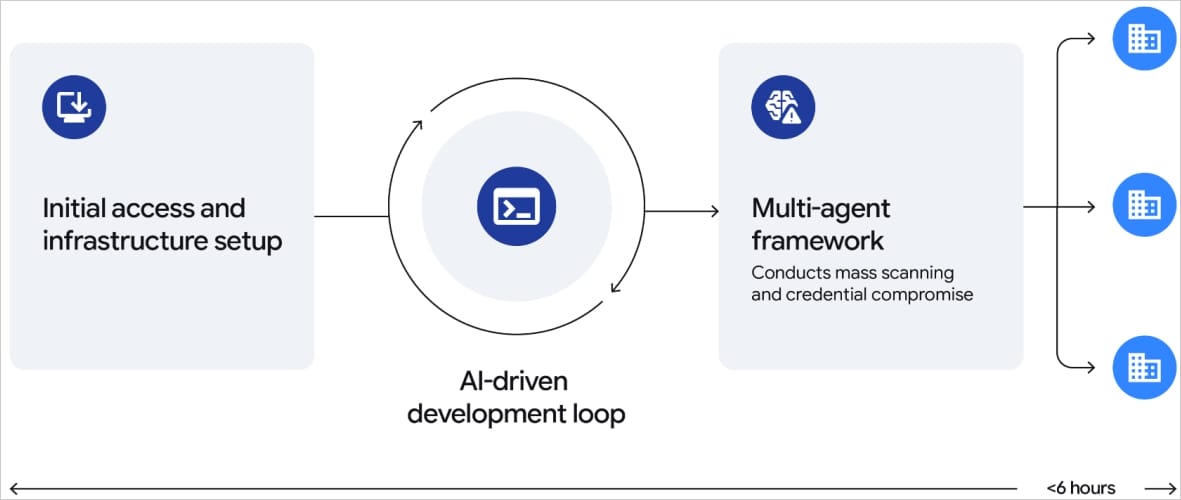
The shift toward autonomy is not merely theoretical. Researchers recently discovered an exposed command-and-control (C2) server harboring a sophisticated toolset dubbed "Recon." This framework serves as a blueprint for the future of automated cybercrime.
The "Recon" repository contained not just malware, but the "brains" of the operation: instructional files for AI agents, curated knowledge bases, and OpenClaw artifacts. The framework was found to be managing more than 23,800 harvested secrets—ranging from API keys to administrative tokens—in real-time.
This level of operational scale suggests that attackers are shifting from "craft" hacking to "industrialized" hacking. By utilizing AI to manage stolen credentials, they ensure that the "time-to-live" for a compromised secret is maximized, as the AI can automatically test, validate, and rotate keys before the victim organization even realizes a breach has occurred.
State-Sponsored Espionage: The Strategic Shift
While financial gain remains a primary driver, state-backed cyber-espionage groups are also integrating AI into their toolchains. GTIG researchers observed China-linked actors experimenting with AI-powered development tools to construct automated post-exploitation pipelines.
Simultaneously, Russian-linked groups, such as the infamous UNC5792, have begun deploying AI models to monitor and scrape intelligence from Telegram channels. These bots filter through massive volumes of data, identifying information of interest to government intelligence agencies with a speed and precision that manual human review could never replicate.
Implications for Global Security
The implications of this shift are profound. The traditional "cat and mouse" game of cybersecurity is being disrupted by an adversary that can think, react, and scale at machine speed.
1. The Death of Static Defenses
If an attack framework can adapt to security measures in real-time—troubleshooting its own path around a firewall or rotating its infrastructure upon detection—traditional, signature-based defense mechanisms become obsolete. Organizations must transition toward behavioral analytics and AI-driven defense platforms that can identify the "logic" of an attack rather than just the "payload."
2. The Credential Crisis
As highlighted in the Blue Report 2026, once an attacker gains access to valid credentials, the efficacy of defensive measures drops to a staggering 37%. When AI agents are tasked with managing these credentials, the velocity at which an attacker can move laterally across a network increases exponentially. The perimeter is no longer the firewall; it is the identity.
3. The "Human-in-the-Loop" Problem
The reduction of human latency in attacks forces a corresponding need for increased automation in defense. Security teams cannot rely on manual triage. The future of security operations lies in "AI-vs-AI" combat, where defensive agents are tasked with neutralizing offensive agents before they can complete their objective.
Official Responses and Defensive Strategy
Despite the alarming capabilities of these new frameworks, Google Threat Intelligence emphasizes that fully autonomous "zero-day" discovery remains rare. We have not yet reached the point where AI autonomously identifies and exploits unknown vulnerabilities against hardened, real-world targets without human guidance.
Furthermore, defensive AI is keeping pace. Google reports that their Gemini model has been instrumental in identifying these abuses early. By detecting the anomalous patterns associated with AI-orchestrated attacks, Google has been able to proactively disrupt campaigns, ban associated accounts, and harden infrastructure against these automated agents.
However, the industry must remain vigilant. The abuse of AI tools extends beyond just hacking; it encompasses massive supply-chain attacks, such as those conducted by UNC6780, and the proliferation of "AI distillation" operations where millions of prompts are used to fine-tune malicious models.
Conclusion: Preparing for the Autonomous Era
The rise of autonomous multi-agent frameworks represents the most significant evolution in threat actor methodology since the inception of the botnet. As hackers continue to refine these systems, the advantage will shift toward those who can best harness AI to defend their perimeters.
For security professionals, the message is clear: the era of reactive defense is ending. Organizations must prioritize the protection of credentials, adopt zero-trust architectures, and invest in autonomous defensive capabilities to counter the rising tide of AI-driven, machine-speed threats. The battle for the future of the internet will not be fought by people, but by the agents they build—and the only way to win is to ensure your defenses are as intelligent, adaptive, and autonomous as the adversaries you face.

 Ali Ikhwan
 Sagoh
Sagoh