Iffa Jayyana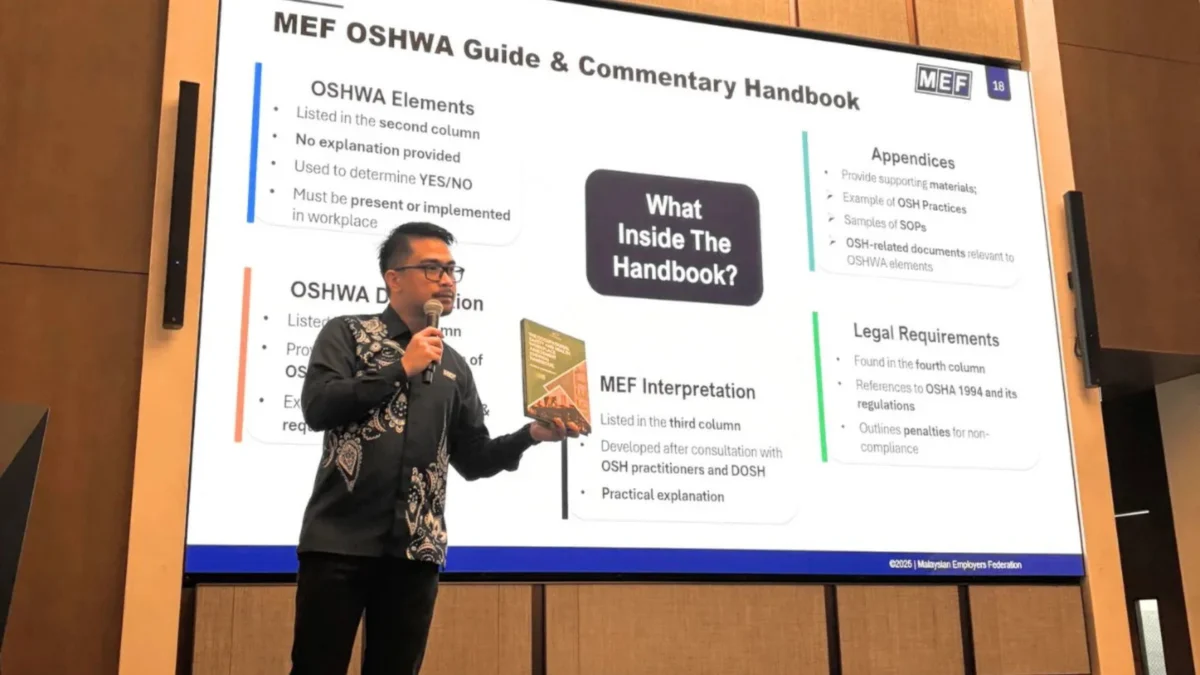
In an era defined by rapid technological disruption and increasingly complex global supply chains, the imperative for robust Occupational Safety and Health (OSH) management has never been more critical. As Malaysia navigates a significant transition in its regulatory landscape—marked by pivotal amendments to the Occupational Safety and Health Act (OSHA) 1994—the Malaysian Employers Federation (MEF) has taken a decisive step toward modernizing safety standards. Through the launch of a new digital assessment tool, supported by the European Union-funded PROTECT project, Malaysia is positioning itself to harmonize domestic safety practices with international expectations.
The Digital Shift: A New Era for Workplace Safety
For years, workplace safety was often viewed through a lens of reactive compliance—a checklist to be completed to satisfy government inspectors. However, the paradigm is shifting. Modern enterprises are increasingly recognizing that managing workplace safety is a dynamic, ongoing process that requires proactive risk identification, comprehensive worker education, and agile systems capable of adapting to evolving technologies and shifting workforce demographics.
The newly launched MEF–ILO Occupational Safety and Health (OSH) Digital Assessment Tool serves as the centerpiece of this evolution. Developed in collaboration with the International Labour Organization (ILO), the platform is designed to demystify the complexities of safety management. By transitioning from traditional, paper-based reporting to a systematic, practical, and efficient digital interface, the tool empowers employers to conduct granular safety assessments that yield actionable data.
This digital transformation is not merely about convenience; it is about precision. In high-risk sectors such as manufacturing and construction, the ability to track safety trends in real-time allows for early intervention, potentially preventing workplace injuries before they occur.
Chronology: A Roadmap to Enhanced Compliance
The roll-out of this initiative represents the culmination of strategic planning and inter-agency collaboration.
- Pre-2024: Malaysia initiates a comprehensive review of its OSH framework, identifying gaps in risk assessment requirements and the need for broader legislative coverage.
- Early 2024: The Malaysian government formalizes amendments to the Occupational Safety and Health Act 1994, introducing more stringent risk-assessment requirements and expanding the scope of the Act to cover virtually all workplaces in the country.
- July 20, 2024: The MEF, supported by the ILO’s PROTECT project, hosts a major hands-on training session in Port Klang. More than 80 employers from the Klang Valley participate, marking the first large-scale deployment of the OSH Digital Assessment Tool and the introduction of the OSH Workplace Assessment (OSHAWA) Handbook.
- Post-July 2024: The programme enters its expansion phase, with plans to extend training and advisory services to Sabah and Sarawak. A pilot advisory component is launched, providing direct, on-site support to companies as they integrate the digital tool into their daily operations.
Supporting Data and the Regulatory Landscape
The necessity for this digital pivot is underscored by the evolving legal and economic climate. The amendments to the Occupational Safety and Health Act 1994 are not merely administrative; they represent a fundamental raising of the bar. By expanding coverage across all workplaces, the government has effectively closed loopholes that previously allowed certain sectors to operate with less oversight.
However, the pressure to improve does not come solely from Putrajaya. The global market is increasingly holding Malaysian exporters to higher standards. International buyers, particularly in Europe and North America, are demanding verifiable proof of responsible business practices. This includes not only OSH performance but also stringent human rights due diligence. For Malaysian firms integrated into global supply chains, failing to demonstrate a robust safety culture is no longer just a legal risk—it is a commercial liability that could lead to the loss of key contracts.
Furthermore, the demographic reality of the Malaysian workforce necessitates a more sophisticated approach. Migrant workers constitute a substantial portion of the labor force in critical industries such as construction, plantations, and manufacturing. These sectors are inherently high-risk, and the vulnerability of this demographic is often compounded by language barriers that prevent a clear understanding of safety protocols. Moreover, there is an increasing recognition of the need to protect migrant workers from risks such as violence and harassment, making systematic, consistent safety assessments a human rights imperative.
Official Responses: Fostering a Culture of Safety
The leadership at the MEF has been clear about the vision behind this initiative. During the Port Klang training session, MEF Chief Executive Dato’ Seri Rosman Mohamed emphasized that the digital transition is about more than just software—it is about mindset.
"As work environments continue to evolve with new technologies and emerging risks, continuous learning is essential," said Dato’ Seri Rosman. He highlighted that the programme provides a dual benefit: it improves compliance with national safety standards while simultaneously fostering a positive safety culture within organizations. For the MEF, the goal is to shift the perception of OSH from a burdensome cost to a strategic advantage that improves productivity and worker retention.
The ILO’s involvement, through the PROTECT project, further underscores the international significance of this move. By aligning Malaysian practices with global ILO standards, the initiative helps bridge the gap between local operations and international expectations, ensuring that Malaysian businesses remain competitive on the world stage.
Implications: Building Long-Term Resilience
The implications of this initiative extend far beyond the initial training workshops. The MEF has structured this programme as a long-term advisory service, ensuring that the digital tool and the OSHAWA Handbook become permanent fixtures in the federation’s support ecosystem. This longevity is crucial; the ILO’s project support will eventually conclude, but the infrastructure—both digital and educational—will remain to support members for years to come.
1. Strengthening the SME Sector
Small and Medium Enterprises (SMEs) often lack the dedicated safety departments found in multinational corporations. By providing a user-friendly, digital-first tool, the MEF is democratizing access to high-level safety management, allowing smaller players to achieve compliance levels that were previously unattainable due to resource constraints.
2. Addressing Vulnerable Populations
The programme’s focus on migrant workers is a significant step toward inclusive safety. By incorporating tools that simplify complex information and standardize safety procedures, the MEF is helping to mitigate the specific risks faced by non-native speakers and marginalized segments of the workforce.
3. Integrated Human Rights Due Diligence
The PROTECT project’s scope goes beyond just OSH. By linking this safety initiative with broader efforts—such as the recently launched survey on migrant-worker housing and toolkits for fair recruitment—the MEF is helping employers build a holistic framework for ethical business conduct. This integrated approach ensures that safety, housing, and labor rights are treated as interconnected pillars of a sustainable business model.
4. Future-Proofing the Workforce
As the Malaysian economy moves toward increased automation and high-tech manufacturing, the types of hazards workers face are changing. Traditional safety methods may not account for the nuances of human-machine interaction or the psychological stresses of digital work environments. The flexibility of the MEF’s digital tool allows for updates and modular adjustments, ensuring that as workplace risks evolve, the assessment criteria can evolve alongside them.
Conclusion: A New Standard for Malaysian Industry
The launch of the MEF–ILO OSH Digital Assessment Tool marks a transformative moment for workplace safety in Malaysia. By synthesizing legislative compliance with digital efficiency and a focus on inclusive labor practices, the initiative sets a high bar for industry standards. As the programme expands into Sabah and Sarawak, the ripple effects of this cultural shift toward proactive, data-driven safety will likely redefine the expectations of both employers and the workforce.
In an increasingly interconnected world, where the quality of a product is judged not only by its price but by the conditions under which it was produced, Malaysia’s commitment to safety is a powerful signal to the global community. Through the dedication of the MEF and the support of the ILO, Malaysian employers are not just meeting the legal requirements of today—they are building the resilient, safe, and ethical workplaces of tomorrow.


 Ali Ikhwan
 Neng Nana