Nana Muazin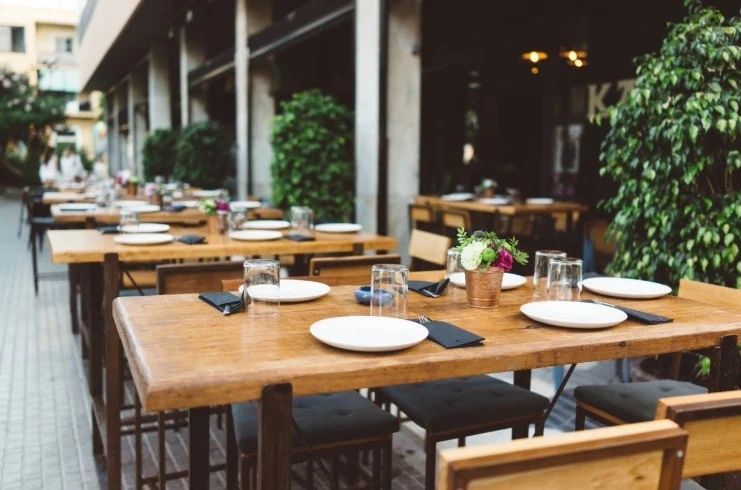
As global temperatures continue to reach record-breaking highs, the hospitality industry faces an existential challenge: how to maintain the allure of open-air dining and social spaces without sacrificing guest comfort—or profitability. For many hotels, the rooftop bar, the garden terrace, and the poolside patio are not just amenities; they are high-margin revenue centers. However, as extreme heat becomes a standard feature of the summer season, these spaces risk becoming liabilities rather than assets.
In an exclusive interview with LODGING, David Rames, HVAC R&D leader at Midea, argued that the solution lies in a paradigm shift regarding cooling technology. Rather than viewing climate control as a static operational expense, savvy operators are beginning to treat advanced HVAC solutions as a strategic investment. By leveraging ductless cooling technology, hotels can mitigate the impact of heatwaves, extend the viability of their outdoor venues, and ultimately secure a competitive edge in an increasingly volatile climate.
The Heat Wave Dilemma: Why Shade Is No Longer Enough
For decades, the hospitality playbook for outdoor comfort was simple: umbrellas, awnings, and large-scale ceiling fans. While these passive measures remain standard, they are increasingly insufficient against the backdrop of rising ambient temperatures.
"The issue for outdoor food and beverage (F&B) locations is clear: if the environment is physically taxing, guests will not stay," Rames explains. "When a guest is uncomfortable, they order one drink instead of two, or they simply leave to find an air-conditioned interior. That is a direct hit to the bottom line."
Rames points out a common misconception in the industry: that shade is a cooling solution. Shade provides protection from direct solar radiation, but it does nothing to lower the ambient air temperature. When the mercury hits 95°F (35°C), a shaded area remains a 95°F environment. To create true climate resilience, hotels must move beyond static shade and introduce active thermal management.
Chronology of an HVAC Evolution
The integration of HVAC into outdoor hospitality has evolved through three distinct stages:
- The Passive Era: Dominated by natural airflow and basic shade structures. Reliability was high, but comfort levels were entirely dependent on the weather.
- The Industrial Fan Era: Hotels began installing high-velocity misting fans. While effective in specific climates, they were often loud, caused moisture buildup on surfaces, and offered limited cooling capacity.
- The Smart-Efficiency Era (Present): The current shift toward ductless mini-split systems—units traditionally used for indoor residential and commercial cooling—that are being adapted for outdoor use.
This transition marks a departure from "brute force" cooling—which is energy-intensive and expensive—to precision-controlled thermal management. By utilizing inverter-driven compressors, modern HVAC systems can modulate their output to match the immediate need, rather than running at 100% capacity at all times.
Supporting Data: The Power of Inverter Technology
The efficacy of modern outdoor cooling hinges on the variable-speed inverter compressor. To explain the efficiency gains, Rames uses the analogy of an automobile.
"Think of a car engine," he says. "If you only need to go 30 miles per hour, you don’t keep the engine revving at maximum RPM. You modulate your speed to match the road conditions. HVAC systems now function the same way."
In a typical hotel scenario, a rooftop bar might require heavy cooling during the heat of the afternoon. However, during breakfast service or as the sun begins to set, the ambient temperature drops. An inverter-driven system senses this change, ramping the compressor down to as little as 30% of its total capacity. This prevents the "on-off" cycling of older systems, which is notorious for wasting energy and causing temperature spikes.
Data from recent implementations suggest that when these systems are correctly installed—often protected by aesthetic canopies or integrated into structural soffits—they can reduce utility consumption by as much as 40% compared to traditional HVAC solutions, while maintaining a consistent "feel-good" temperature even on the hottest days.

Official Perspective: HVAC as a Revenue Driver
Rames is emphatic that the conversation around HVAC needs to change. "Too many operators look at the invoice for an HVAC installation and see a cost. They should be looking at the projected lift in F&B revenue," he asserts.
When a property invests in cooling, they are essentially buying "time." By lowering the temperature by even 10 to 15 degrees, a hotel can double the amount of time a guest spends at a table. In the restaurant and bar business, time is the primary currency. A guest who stays for two hours instead of one is a guest who is statistically likely to order a second round of cocktails or an extra dessert.
"The investment in the right HVAC setup pays for itself," Rames notes. "If you create the most comfortable rooftop bar in the city, you don’t just gain customers—you gain a reputation. Word-of-mouth becomes your most powerful marketing tool, and that leads to a sustainable increase in profit margins that easily covers the initial overhead."
Strategic Implications for Future-Proofing
Looking ahead, the reality of climate change means that the "exceptionally hot" days of the past are becoming the "average" days of the future. Hotels that fail to adapt now will find themselves at a severe disadvantage.
The Maintenance Partnership
Rames advises owners to treat their HVAC contractors as long-term strategic partners. "If I were a hotel owner, I would not just call my contractor when something breaks. I would have them on speed dial, constantly asking about the latest in efficiency tech, heat pump advancements, and IoT-enabled monitoring."
Integrating Tech into Design
The future of outdoor hospitality lies in the seamless integration of technology and architecture. Rather than tacking a unit onto a wall, forward-thinking designers are now working with HVAC engineers during the blueprint phase to ensure that units are hidden, quiet, and optimally positioned to create a "curtain of cool" for guests.
Monitoring and Adaptability
Finally, Rames emphasizes the importance of data. Modern smart-HVAC systems provide feedback loops that allow managers to see energy usage in real-time. By tracking this data against F&B sales, managers can perform a cost-benefit analysis of their cooling strategies, allowing them to optimize settings for maximum profit.
Conclusion: A New Standard for Hospitality
The "coolest" hotel in town is no longer just a metaphorical description; in the era of rising temperatures, it is a literal goal. As the line between indoor and outdoor dining continues to blur, the ability to control one’s climate is becoming a primary pillar of the guest experience.
By embracing advanced ductless technology, hotels can do more than just survive the summer—they can thrive. They can transform their outdoor spaces from weather-dependent risks into reliable, year-round engines of growth. As David Rames concluded, "It is not getting any cooler outside. The environment is changing, and the technology exists to address it. Those who invest in that technology today will be the ones setting the standard for the luxury and comfort of tomorrow."
For the hotelier, the mandate is clear: Stop fighting the heat and start managing it. The tools are available, the ROI is measurable, and the guest experience is waiting to be perfected.


 Lina Hope