Suro Senen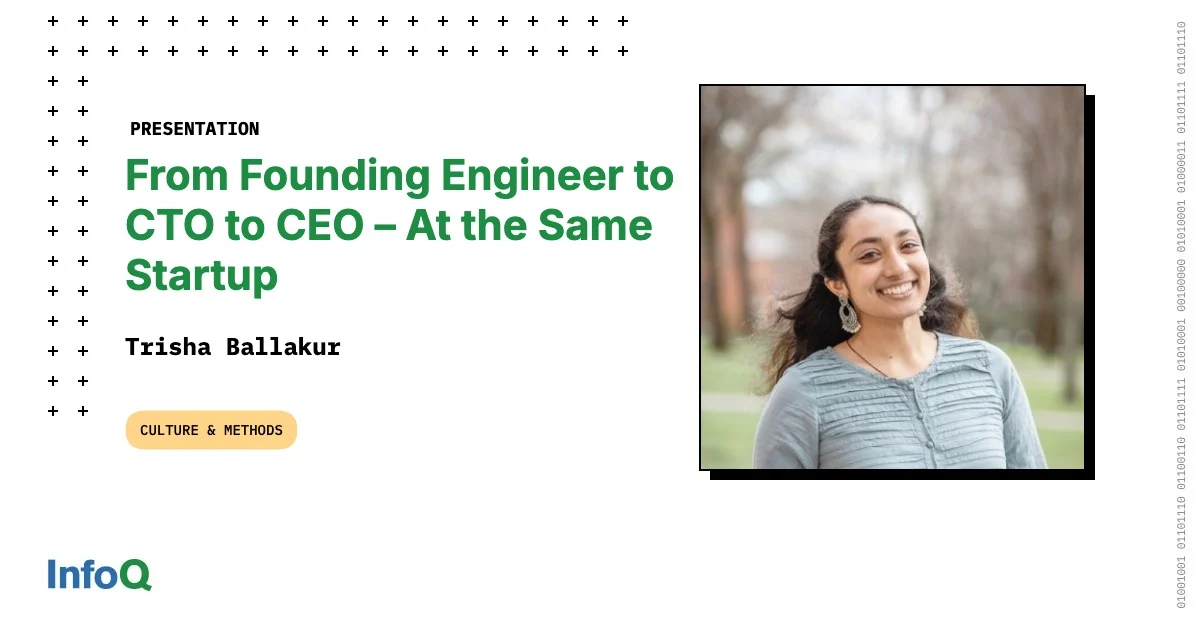
In the competitive landscape of modern entrepreneurship, the transition from software engineer to chief executive is often viewed as a perilous leap. Yet, for Trisha Ballakur, founder and CEO of Pointz, this evolution was not merely a career shift—it was a strategic necessity. Starting as a computer science student at Brown University, Ballakur has successfully navigated the complexities of product-market fit, international team scaling, and the pivot from consumer-facing mobile apps to robust B2B partnerships. Her journey serves as a masterclass for developers looking to bridge the gap between technical output and commercial success.
Main Facts: The Genesis of Pointz
Pointz originated as a solution to a pervasive, human-centric problem: the anxiety surrounding urban mobility. Ballakur observed that while micro-mobility options like bikes and scooters were proliferating, many potential users remained sidelined by a simple, overriding emotion—fear.
The Pointz mobile application was designed to cure this hesitation. By providing A-to-B routing that prioritizes safety and "low-stress" paths rather than just the fastest route, the app differentiates itself from industry giants like Google Maps. While competitors often route cyclists onto high-speed highways, Pointz leverages granular safety data to ensure a comfortable user experience. Today, the platform has expanded its scope to include walking and public transit, evolving into a comprehensive navigation tool for urban commuters.
Chronology: A Multi-Stage Evolution
Ballakur’s professional development occurred in three distinct phases, each requiring a shift in mindset and operational focus.
Phase 1: The Founding Engineer (Sophomore Year)
During her second year at Brown, Ballakur balanced intense coursework in operating systems with the early development of Pointz. Influenced by mentors at the Nelson Center for Entrepreneurship, she resisted the "drop-out" cliché often glorified in Silicon Valley. Instead, she leveraged her academic environment to refine her technical skills while simultaneously conducting 50 deep-dive customer discovery interviews. This period solidified the realization that technical proficiency alone is insufficient; one must learn to ask if a market actually wants the product being built.
Phase 2: The Co-Founder and CTO
Transitioning into her junior and senior years, Ballakur moved into a formal CTO role. This era was defined by "creating excellence on an unbeaten path." She learned the art of delegation, utilizing global contractor platforms like Upwork and Fiverr to augment her team. By tapping into a diverse, global talent pool—including developers in India, South America, and New Zealand—she bypassed the limitations of local hiring and accelerated production cycles.
Phase 3: The CEO Transition
Roughly 18 months ago, following the departure of a co-founder, Ballakur stepped into the CEO role. This phase necessitated a departure from the "day-to-day" technical grind. Recognizing that her value to the company was shifting from writing code to driving revenue and strategy, she empowered a new head of engineering to take over technical operations. This allowed Ballakur to focus on business development, government partnerships, and the complex world of grant funding.
Supporting Data: The Science of Product-Market Fit
Central to Ballakur’s success is the rigorous application of "bottom-up" customer discovery. She points to the methodology popularized by Superhuman founder Rahul Vohra as the gold standard for achieving product-market fit (PMF).
The core of this process is a single, revealing question: "How would you feel if you could no longer use this product?"
According to Ballakur, a startup achieves true PMF when at least 55% of users respond that they would be "very disappointed" if the service were discontinued. By segmenting users based on this sentiment, companies can:
- Identify the Ideal Customer Persona (ICP): Focus resources on those who find the most value in the product.
- Prioritize the Backlog: Instead of guessing features, founders should ask their most enthusiastic users what they need next.
- Reduce Churn: By addressing the feedback of those on the "fence" (the "somewhat disappointed" group), developers can rapidly iterate to pull more users into the "very disappointed" (i.e., highly engaged) category.
Ballakur notes that this data-driven approach removes the guesswork from development. If a feature request comes from a user who would be indifferent to the app’s disappearance, it should be deprioritized.
Official Insights: Strategies for Scaling
Ballakur emphasizes that technical founders often suffer from the "imposter syndrome" of the business world, fearing they lack the aptitude for sales or marketing. She argues that these skills are not innate, but learned through systematic trial and error.
1. Leveraging Technical Superpowers in Business
Engineers are uniquely equipped to handle the business side of a startup. When Ballakur needed to reach 1,000 bike shops, she didn’t rely on manual labor; she utilized her technical background to automate outreach and data collection. By applying the same logic used in debugging code to "debug" a sales funnel, technical founders can operate with a level of efficiency that non-technical competitors cannot match.
2. The Role of Open Source
Ballakur credits her growth to the strategic use of open-source projects, such as the Valhalla routing engine. Rather than attempting to build every component from scratch—a common trap for junior engineers—she advises building on top of established, high-performance engines. This allows for rapid iteration and ensures that the core product is built on a stable, proven foundation.
3. Navigating the "Valley of Death"
Ballakur shares a poignant piece of advice from her investors: "If a dog is dying, shoot it." In a startup context, this means knowing when a pivot is necessary. If a business model—such as marketing directly to casual bike riders—isn’t generating the required traction, it must be abandoned quickly to preserve capital and resources. Ballakur’s transition from B2C to B2B partnerships with city departments and urban design firms was the direct result of this "kill-the-darlings" mentality.
Implications: The Future of the "Builder"
The implications of Ballakur’s experience are clear: the definition of a "builder" is expanding. It no longer refers exclusively to those writing code, but to those who can synthesize technical, operational, and financial inputs into a sustainable business.
For those looking to replicate her path, Ballakur offers three final pillars of advice:
- Prioritize the User: Never stop asking, "Would you be disappointed if this vanished?"
- Evolve or Outsource: Recognize when your technical output is no longer the highest-leverage activity you can perform for your company.
- Adopt an Experimental Mindset: Use the rigors of software testing—defining test cases, analyzing results, and iterating—as the framework for business development.
As the tech landscape continues to change, with AI agents and new development tools becoming standard, the ability to act as a bridge between technology and human need will become the ultimate competitive advantage. Trisha Ballakur’s journey from a "dungeon-like" computer lab at Brown to the helm of a growing urban mobility company illustrates that the most successful founders are those who treat their careers as a project—one that is constantly being debugged, refactored, and optimized for impact.


 Pevita Pearce
 Raul Delapena Setiawan