Iffa Jayyana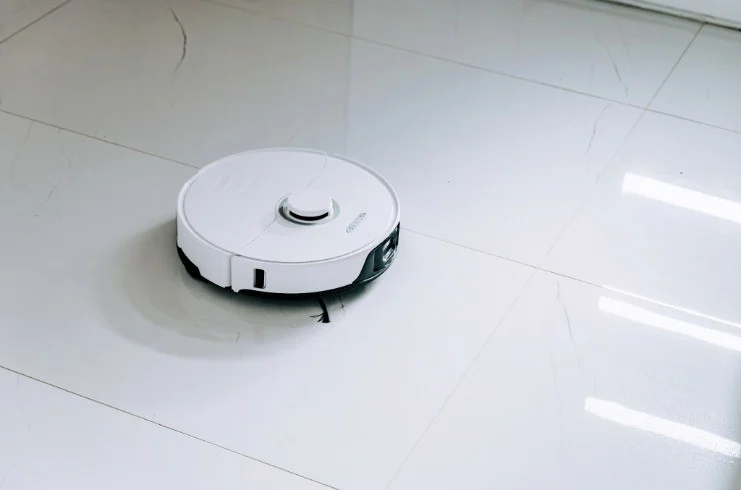
Not long ago, a robot rolling through a hotel lobby was a choreographed spectacle—a glorified photo opportunity designed to impress tech-savvy travelers. Guests would stop to capture the moment on their smartphones, while hotel staff hovered nearby, anxious and ready to troubleshoot should the machine falter mid-shift. It was a period defined by curiosity and, occasionally, gimmicks.
That era is over. The current phase of hotel technology is quieter, less flashy, and infinitely more consequential. Across the global hospitality industry, artificial intelligence (AI) and robotics have shifted from experimental curiosities to foundational infrastructure. The operators who, only a year ago, were asking skeptically, "Does this actually work?" have pivoted toward a more urgent question: "How quickly can we scale it?"
The Shift in Strategy: From Lobby Shows to Operational Backbone
The hospitality sector has reached a critical inflection point. No longer is technology evaluated by its "wow" factor, but rather by its ability to resolve persistent operational bottlenecks. This transition marks the end of the "gimmick" phase and the beginning of the "utility" phase.
Chronology of the Tech Evolution
- 2015–2019 (The Experimental Era): Robotics and AI were primarily used as marketing assets. Hotels introduced "concierge robots" that could answer basic questions, primarily to generate press and social media engagement.
- 2020–2022 (The Reactive Phase): Driven by severe labor shortages post-pandemic, operators turned to automation out of necessity rather than innovation, focusing on contactless check-ins and basic digital communication tools.
- 2023–2024 (The Integration Phase): The industry began to view AI as a data-driven layer meant to synthesize fragmented systems, focusing on revenue management and predictive maintenance.
- 2025–Present (The Infrastructure Phase): AI and robotics are now integrated into the standard "tech stack" of major hospitality brands, treated as essential assets equivalent to HVAC or property management systems (PMS).
Robots That Work: The Back-of-House Revolution
The most meaningful robotics deployments currently occurring in the industry are focused on the "invisible" work—the housekeeping and logistics that form the backbone of the guest experience.
Autonomous cleaning units are now standard fixtures in forward-thinking properties. These machines scrub hallways in the dead of night, while delivery bots shuttle towels, toiletries, and room service orders between floors, significantly reducing the "step count" for human staff. Major global players, including Marriott and Hilton, have quietly integrated these autonomous solutions into their daily workflows.
The impact is measurable. By offloading the physical strain of repetitive cleaning and material transport, these robots are actively contributing to injury reduction and improved labor retention. In an industry notoriously plagued by high turnover, automating the most strenuous tasks is a direct investment in human workforce longevity. The robotics conversation has finally moved from the lobby—where it was performative—to the back-of-house, where it is truly transformative.
Predictive AI: The Intelligence Engine
For years, the promise of "predictive AI" appeared on every major hospitality conference agenda, often as a vague, futuristic concept. Today, it has matured into a tactical reality.
Modern revenue management systems now synthesize vast, disparate demand signals—ranging from hyper-local event schedules and regional hiring patterns to complex travel search trends—to create highly accurate forecasts. These tools allow general managers to make staffing and pricing decisions weeks, rather than hours, in advance.
Furthermore, the rise of "IoT-enabled predictive maintenance" is changing how hotels manage physical assets. Instead of waiting for a guest to report a malfunctioning HVAC unit or a leaking faucet, sensors now flag performance anomalies to maintenance teams before a breakdown occurs. These are the operational improvements that compound over time; they don’t generate headlines, but they show up clearly on the bottom line.
The Rebirth of the Chatbot
Conversational AI previously suffered from a significant credibility crisis. Early deployments were brittle, clunky, and often lacked the linguistic nuance required to resolve complex guest issues, leading to frustration and the eventual abandonment of the technology.
The current generation, powered by advanced Large Language Models (LLMs), is a different product entirely. Hotels processing millions of guest inquiries annually are now routing a meaningful share of that traffic through AI-powered messaging. These systems can navigate multi-turn conversations, handle specific booking requests, and provide localized recommendations with a level of accuracy that mimics human service.
This shift is crucial: by resolving 60–70% of routine inquiries through automation, staff are freed to focus on the high-touch, emotional intelligence-based moments that define a truly "hospitable" experience.

Supporting Data and Industry Trends
According to recent industry research, 98% of hoteliers have begun to adopt some form of AI in their operations. Yet, the adoption remains uneven. While 85% of luxury properties are utilizing AI for personalized guest recommendations, only 40% of mid-market properties have successfully implemented AI-driven predictive maintenance.
The return on investment (ROI) for these technologies is becoming increasingly clear:
- Labor Efficiency: Properties utilizing robotic floor care have reported a 15–20% increase in productivity for housekeeping teams.
- Revenue Optimization: AI-driven revenue management has been shown to increase RevPAR (Revenue Per Available Room) by 3–7% compared to manual, spreadsheet-based forecasting.
- Guest Satisfaction: Properties that effectively deploy conversational AI report a 25% decrease in front-desk wait times during peak hours.
Official Responses and Strategic Perspectives
Industry leaders emphasize that the challenge is no longer about the capability of the software, but the readiness of the organization.
"We are moving past the ‘pilot program’ mentality," says a senior executive at a global hotel chain. "If a tool doesn’t demonstrate a clear path to reducing operational friction within the first 90 days, we don’t scale it. Our focus is on removing the cognitive load from our staff so they can be present for the guest."
However, technology vendors warn of a "fragmentation trap." Many properties operate on five, six, or seven legacy systems that were never designed to communicate with one another. "You cannot layer high-level AI over a foundation of disconnected data," notes a chief information officer in the hospitality space. "The current priority is consolidation—building a ‘single source of truth’ that allows AI to function correctly."
The Tech Stack Problem: The Industry’s "Open Secret"
A significant portion of AI investment in hospitality is underperforming, not because the AI is flawed, but because the underlying infrastructure is fragmented. This is the issue nobody likes to talk about: the "legacy debt" of older property management systems.
The path forward requires a shift in priorities. It necessitates commitment from ownership and leadership—not just the IT department—to invest in infrastructure, API integration, and data cleanliness. This work is not glamorous, and it is rarely celebrated in marketing brochures, but it is the essential prerequisite for all future digital transformation.
Implications: Redefining the Human Role
The most forward-thinking operators are not asking how to replace their people with technology; they are asking how to make their people more effective with it. This requires a fundamental redesign of workflows and an honest conversation with staff about how their roles are evolving.
The hospitality worker of the future will be a "technological orchestrator." They will manage the fleets of robots, interpret the data provided by AI, and step in when the technology reaches the limits of its empathy. The properties that will look back on this period as a competitive turning point are the ones treating AI and robotics as tools that elevate the human element, rather than tools that threaten it.
Conclusion: The End of Experimentation
The phase of experimentation is firmly behind us. The hospitality industry has entered an era where operational excellence is inextricably linked to technological fluency. The future of the industry depends less on which specific tools an operator selects and more on their willingness to fundamentally rethink the operation around them.
For the modern hotelier, the choice is no longer between "human" or "machine." It is about building an ecosystem where technology handles the complexity, allowing the staff to handle the humanity. The robots may be working in the background, but the impact on the guest experience will be louder than ever.


 Lina Hope
 Nana Muazin