Laily UPN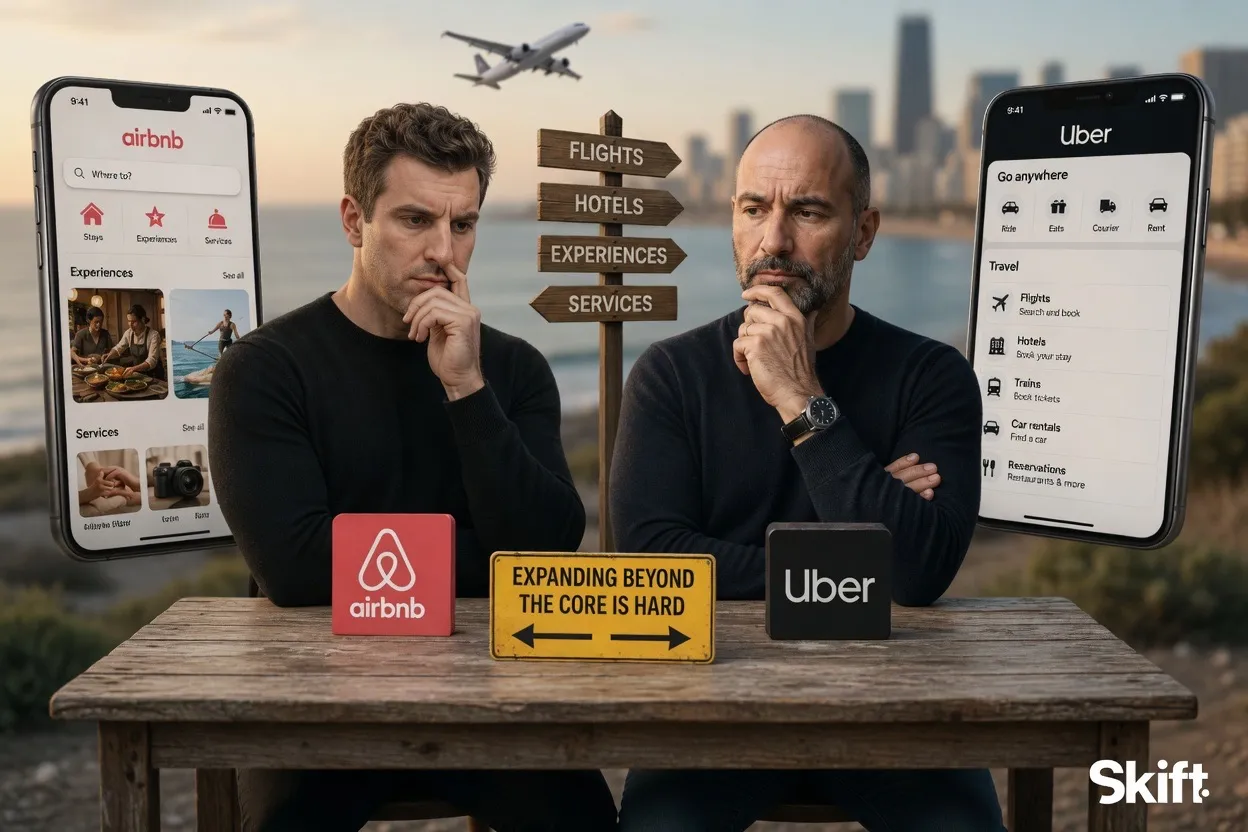
Main Facts
The digital titans of the sharing economy, Airbnb and Uber, are engaged in ambitious, multi-billion-dollar endeavors to transcend their foundational services and capture a larger share of the global travel and leisure market. For Airbnb, the disruptor of traditional accommodation, the strategic imperative is to integrate "Experiences" — from local cooking classes to guided tours — directly into its booking ecosystem, hoping to evolve from a home-sharing platform into a comprehensive travel companion. Simultaneously, Uber, synonymous with on-demand ride-hailing, is pushing to transform its ubiquitous app into a holistic travel portal, offering bookings for flights, hotels, trains, and even car rentals, aiming to become the ultimate "super-app" for mobility and exploration.
This expansive vision, however, is fraught with significant challenges, not least of which is the deeply entrenched behavioral patterns of consumers when it comes to travel planning and booking. Both companies are pouring substantial resources into these diversification efforts, yet tangible proof of concept, in terms of widespread adoption and sustained profitability for these new verticals, remains elusive. The historical landscape of online travel offers a cautionary tale: numerous platforms with vast user bases have attempted similar pivots, only to discover the formidable inertia of consumer habits and the difficulty of shifting core brand perceptions. The question at the heart of these ventures is whether a company primarily known for a single, powerful service can successfully convince its users to trust it with the entirety of their travel itinerary, or if specialization will continue to reign supreme in the complex world of leisure and business travel.
Chronology: A History of Expansion and Obstacles
The journey of digital platforms attempting to broaden their scope within the travel sector is not new, and its history provides critical context for the current strategies of Airbnb and Uber.
Early Disruption and Core Service Dominance:
Both Airbnb and Uber burst onto the scene in the late 2000s and early 2010s, fundamentally disrupting established industries. Airbnb, founded in 2008, revolutionized accommodation by enabling individuals to rent out spare rooms or entire homes, offering unique stays and often lower prices than hotels. Uber, launched in 2009, transformed urban transportation with its on-demand ride-hailing service, providing convenience and often outcompeting traditional taxis. Their initial successes were built on hyper-focused execution, user-friendly technology, and a clear value proposition that resonated globally. For years, their growth narratives were almost exclusively tied to the expansion of these core services into new cities and countries.
The Genesis of Diversification – Airbnb Experiences:
Airbnb’s first major foray beyond accommodation began with the conceptualization and eventual launch of "Airbnb Experiences" in November 2016. The idea was to leverage the platform’s global network of hosts and local experts to offer unique activities, from cooking classes with local chefs to guided hikes and art workshops. This move was framed as an evolution into an "end-to-end travel platform," aiming to immerse travelers more deeply in local culture. The initial rollout was modest, focusing on a handful of cities, but the ambition was clear: to own more of the traveler’s journey, not just their overnight stay. Over the years, Airbnb has invested heavily in curating and expanding these offerings, attempting to make them a seamless part of the booking process for users already securing their accommodation through the app.
Uber’s Ambition for a Travel Super-App:
Uber’s diversification strategy has been more explicitly aimed at creating a "super-app" — a single platform for a multitude of services. While early expansions included food delivery (Uber Eats) and freight (Uber Freight), its direct entry into broader travel booking took shape more recently. In late 2021 and early 2022, Uber began rolling out "Uber Travel" in select markets. This feature allowed users to book flights, hotels, and train tickets directly through the Uber app, often leveraging partnerships with established online travel agencies (OTAs) and booking engines. The rationale was to capitalize on Uber’s massive existing user base and frequent engagement, positioning the app as a central hub for all travel-related needs, from getting to the airport to booking the entire trip.
Lessons from Metasearch – A Cautionary Tale:
The current endeavors of Airbnb and Uber echo historical precedents in the online travel industry, particularly the experiences of metasearch engines. The provided excerpt highlights Kayak’s pioneering effort in 2011 to offer direct hotel bookings, partnering with Travelocity. This was a logical progression: Kayak, a leading flight and hotel comparison site, already attracted a vast audience of travelers in the planning phase. The assumption was that if users were already on the platform comparing prices, they would naturally prefer to complete their transaction there rather than navigate to another site.
Following Kayak’s lead, other major metasearch players like Google Flights/Hotels, Skyscanner, and Tripadvisor also integrated direct booking capabilities or facilitated seamless transitions to partner sites for booking. They too possessed enormous user bases and high intent traffic. However, despite significant investment and strategic partnerships, these metasearch sites never truly transformed into primary booking platforms. While they remain invaluable tools for research and comparison, the vast majority of transactions ultimately occur on traditional OTAs (like Expedia or Booking.com) or directly on airline and hotel websites. Consumers, it seemed, valued the specialization and perceived best deals offered by dedicated booking platforms, or preferred the direct relationship with the supplier. This historical pattern underscores the inherent difficulty of altering deeply ingrained consumer booking behaviors, even for platforms with established trust and massive reach.
Supporting Data: Market Dynamics, Consumer Psychology, and Competitive Landscape
The aspirations of Airbnb and Uber are set against a backdrop of a colossal global travel and leisure market, valued at trillions of dollars annually, yet they face significant headwinds from ingrained consumer behaviors, brand perception, and fierce competition.
The Lure of a Trillion-Dollar Market:
The sheer scale of the global travel market is undoubtedly the primary driver behind Airbnb and Uber’s diversification. Pre-pandemic, the travel and tourism industry contributed over 10% to global GDP. Even with recent disruptions, projections indicate robust recovery and growth. This immense addressable market, encompassing everything from short-haul commutes to international luxury travel, presents an irresistible target for companies seeking new revenue streams beyond their core, often commoditized, services. The potential to capture even a small percentage of this broader market translates into billions in additional revenue. Furthermore, diversifying reduces reliance on a single business model, offering resilience against market fluctuations or regulatory changes affecting their primary operations.
The "Single App" Dream vs. Reality:
The "super-app" concept, popularized in Asia by platforms like WeChat and Grab, posits that consumers desire a single, seamless digital ecosystem for a multitude of daily needs, including travel. From a theoretical standpoint, this offers unparalleled convenience: one app for booking a flight, a hotel, an experience, and then a ride to each destination. It promises to reduce friction, save time, and potentially offer integrated loyalty programs or personalized recommendations based on a holistic view of user data.
However, Western consumer behavior, particularly in travel, has historically leaned towards specialization. Consumers often employ a multi-platform approach, using metasearch for comparison, OTAs for booking bundles, and direct airline/hotel sites for specific loyalty benefits or best rate guarantees. The challenge for Airbnb and Uber is to convince users that their new offerings are not merely tacked-on features but genuinely superior or more convenient alternatives to existing, specialized solutions. The brand association is a powerful psychological barrier: people associate Airbnb with unique homes, and Uber with quick rides. Shifting these deeply ingrained perceptions to encompass flights or massages requires a fundamental re-education of the user base.
Investment and Operational Complexity:
Both companies have invested significant capital in these expansion efforts. This includes:
- Technology Development: Building or integrating booking engines, search functionalities, and user interfaces for new service categories.
- Partnerships and Acquisitions: Securing deals with airlines, hotels, tour operators, and other travel providers, or acquiring smaller players to accelerate market entry.
- Marketing and User Acquisition: Educating existing users about new features and attracting new users to the expanded offerings.
- Operational Support: Scaling customer service, dispute resolution, and payment processing for a broader array of complex travel services.
The operational complexity of managing diverse travel verticals is immense. A flight booking has different cancellation policies, pricing dynamics, and customer service requirements than a home rental or a ride. Ensuring a consistent, high-quality user experience across such varied services is a monumental task, requiring different skill sets and technological infrastructures.
The Competitive Gauntlet:
Airbnb and Uber are not entering empty markets. They are stepping into highly competitive arenas dominated by established players:
- Online Travel Agencies (OTAs): Giants like Booking.com, Expedia Group (which includes Hotels.com, Vrbo, Travelocity, Orbitz), and Agoda have spent decades building comprehensive inventories, sophisticated booking engines, and strong brand loyalty for flights, hotels, car rentals, and packages.
- Specialized Experience Platforms: Companies like GetYourGuide, Klook, and Viator (owned by Tripadvisor) are dedicated solely to booking tours and activities, offering extensive inventories and specialized curation.
- Direct Suppliers: Airlines, hotel chains (Marriott, Hilton, Accor), and car rental companies (Hertz, Avis) actively compete for direct bookings, often leveraging loyalty programs and exclusive offers.
- Google Travel: Google’s own suite of travel planning tools (Flights, Hotels, Trips) leverages its search dominance to direct users to various booking options, posing an omnipresent competitive threat.
These incumbents possess deep industry knowledge, long-standing supplier relationships, and often, highly optimized conversion funnels. For Airbnb and Uber to succeed, they must not only match these capabilities but offer a compelling differential advantage that justifies a shift in consumer behavior.
Official Responses: Strategic Narratives and Analyst Perspectives
Both Airbnb and Uber have articulated clear strategic narratives underpinning their diversification, often echoing a desire to enhance user experience and unlock new growth vectors. Industry analysts, while acknowledging the strategic imperative, often temper enthusiasm with a healthy dose of skepticism regarding execution and market reception.
Airbnb’s Vision of "End-to-End Travel":
From Airbnb’s perspective, the expansion into Experiences is a natural evolution designed to deepen the connection between travelers and destinations. A spokesperson for Airbnb might articulate the strategy as: "Our mission has always been to create a world where anyone can belong anywhere. While homes are central to that, true belonging comes from connecting with local culture and people. Airbnb Experiences allows us to offer an end-to-end travel experience, moving beyond just where you stay to what you do, how you connect, and how you truly immerse yourself in a community. This not only enhances the traveler’s journey but also creates new economic opportunities for local entrepreneurs globally." CEO Brian Chesky has frequently emphasized the company’s ambition to become a "full travel platform," suggesting a long-term play rather than a quick win. The company often highlights the curated nature of its experiences, aiming for authenticity over mass tourism offerings.
Uber’s Pursuit of the "Travel Super-App":
Uber’s rationale for its travel booking expansion is rooted in leveraging its massive, engaged user base and positioning itself as the ultimate convenience provider. An Uber executive might state: "Millions of people open the Uber app every day for their mobility needs. Our expansion into flights, hotels, and trains with Uber Travel is about simplifying their entire journey. Why juggle multiple apps when you can plan your entire trip, from doorstep to destination, within the trusted Uber ecosystem? We are leveraging our technology and our unparalleled reach to become the go-to platform for all travel planning, offering convenience, choice, and a seamless experience that reduces the friction inherent in modern travel." Uber’s CEO, Dara Khosrowshahi, has consistently championed the "super-app" strategy, viewing it as crucial for expanding the company’s total addressable market and increasing user lifetime value.
Analyst and Expert Commentary:
Industry analysts generally view these diversification efforts as strategically necessary for growth, especially as core markets mature and competition intensifies. However, many remain cautious. Sarah Miller, a senior analyst at a prominent tech research firm, might comment: "For both Airbnb and Uber, expanding beyond their core is a strategic imperative to maintain growth trajectories and satisfy investor expectations. The ‘super-app’ vision is compelling on paper, promising increased user engagement and revenue per user. However, the travel industry is fiercely competitive and notoriously difficult to penetrate at scale with a new booking engine. The challenge isn’t just building the technology; it’s changing deeply ingrained consumer habits and building trust in new verticals where they don’t have a legacy of expertise. The history of metasearch sites attempting to become booking platforms serves as a stark reminder of how difficult this pivot can be."
Another expert, Dr. Kenji Tanaka, a professor specializing in digital economics, might add: "While the ‘convenience factor’ is often cited, consumers in mature markets often prioritize choice, price competitiveness, and specialized expertise over a single, all-encompassing app, especially for high-value purchases like international travel. The ‘long game’ strategy is key here; it won’t be an overnight success. Success will hinge on superior user experience, genuinely competitive pricing, and building a distinct value proposition that differentiates them from established players without diluting their core brand identity."
Implications: Reshaping the Travel Landscape and Consumer Choices
The success or failure of Airbnb and Uber’s ambitious expansion will have profound implications for the companies themselves, the broader travel industry, and ultimately, for how consumers plan and experience their journeys.
For Airbnb and Uber: High Stakes, High Rewards:
The upside potential for both companies is enormous. If they successfully convert a significant portion of their vast user bases to their new offerings, they stand to unlock massive new revenue streams, significantly increase user lifetime value, and build an even more formidable competitive moat. A truly integrated "end-to-end" travel platform could foster unparalleled user loyalty, making it difficult for competitors to poach customers. Furthermore, diversified revenue streams could insulate them from market shocks affecting their core businesses.
However, the risks are equally substantial. The heavy investment in technology, partnerships, and marketing for these new ventures could be largely wasted if adoption rates remain low. This could lead to significant financial write-offs and investor disappointment. Moreover, a protracted, unsuccessful diversification effort could dilute their powerful core brands, distracting management and resources from their primary businesses. There’s also the risk of alienating existing users if the new features clutter the app or detract from the core experience they value. The pursuit of the "super-app" could, paradoxically, lead to a "jack of all trades, master of none" scenario.
For the Wider Travel Industry: Intensified Competition and Potential Consolidation:
The entry of well-funded, tech-savvy giants like Airbnb and Uber into broader travel booking and experiences intensifies an already cutthroat market. Traditional OTAs, specialized experience platforms, and even direct suppliers will face increased pressure to innovate, compete on price, and enhance their own user experiences. This could lead to a new wave of consolidation, as smaller players struggle to compete with the marketing muscle and technological prowess of the newcomers. It might also force existing players to rethink their partnership strategies, potentially leading to new alliances or even acquisitions. The competition could drive down prices for consumers in certain segments, but it could also lead to a more consolidated market with fewer independent choices in the long run.
For Consumers: Convenience vs. Choice and Specialization:
For consumers, the implications are mixed. On one hand, the promise of a single app for all travel needs offers unparalleled convenience, potentially simplifying the often-fragmented process of planning a trip. Integrated recommendations, personalized itineraries, and streamlined booking flows could enhance the overall travel experience. Loyalty programs that span across multiple service types could also offer attractive benefits.
On the other hand, a move towards "super-apps" could limit consumer choice and potentially reduce price competitiveness if these platforms gain too much market share. Consumers might find themselves locked into a single ecosystem, foregoing the opportunity to shop around for the absolute best deals or specialized services offered by niche providers. There’s also the potential for data privacy concerns, as a single company collects a comprehensive profile of a user’s travel habits and preferences. The debate between the convenience of an integrated platform and the benefits of a diverse, competitive marketplace will continue to shape consumer decisions.
The Future Outlook: Specialization or Integration?
The ultimate success of Airbnb and Uber’s expansions hinges on whether the allure of a unified, convenient platform can overcome deeply entrenched consumer behaviors and the established strengths of specialized competitors. The cautionary tale of metasearch sites suggests that while consumers appreciate comparison tools, they often prefer to complete transactions with entities perceived as experts or offering the best value for specific services. The "super-app" model has proven successful in certain markets, particularly in Asia, where mobile-first adoption and lower digital literacy might favor an all-in-one solution. However, in Western markets, where digital users are accustomed to a multitude of specialized apps and often seek out the "best in class" for each category, the path to a fully integrated travel super-app is far more challenging.
The coming years will reveal whether these tech behemoths can truly redefine how we travel, or if the fragmented, specialized nature of the online travel industry will continue to resist even the most ambitious attempts at consolidation. The bet is massive, the stakes are high, and the outcome will undoubtedly reshape the future of digital travel.


 Lina Hope
 Layla Zulfa