 Asro
Asro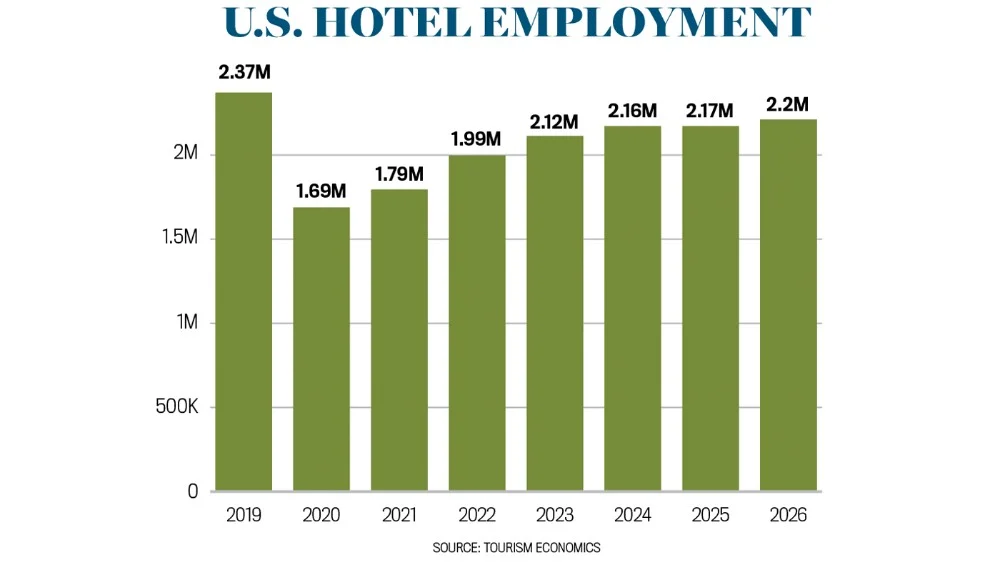
The hospitality industry has arrived at a definitive, structural breaking point. Squeezed between a rapidly shrinking talent pool and an increasingly unforgiving balance sheet, hotel operators find themselves navigating a new reality. The era of relying on top-line revenue growth to mask rising operational inefficiencies is officially over. Today, the sector is forced to confront a fundamental reset of the social contract between employer and employee, even as labor costs climb toward 35 percent of total revenue.
For decades, many operators viewed labor as a volatile line-item expense—a variable to be trimmed during lean times and ramped up during surges. That mindset is now considered an existential risk. In the 2026 economic climate, labor is no longer just a cost to be managed; it is the most critical, controllable investment in both the guest experience and long-term asset value.
The Margin Squeeze: A Data-Driven Reality
The financial architecture of the modern hotel is under immense pressure. According to Jan Freitag, national director of hospitality analytics at CoStar Group, the gap between revenue growth and expense inflation has created a "profitability trap."
"Margin pressure is clearly intensifying," Freitag notes. "Top-line revenue growth is trailing expense growth, which makes profit generation more challenging. Any upside in GOPPAR [Gross Operating Profit Per Available Room] will come from consistent, disciplined management of each expense line. Labor remains the primary pressure point."
The numbers bear this out. With Average Daily Rate (ADR) growth hovering around a modest 1 percent, projections for RevPAR growth are stagnant at approximately 0.6 percent. This pace is well below current inflation and significantly trails wage growth across most major markets. Operators can no longer depend on ADR premiums to offset the rising cost of human capital.
Supporting Data: The 2026 Landscape
The American Hotel & Lodging Association’s (AHLA) 2026 State of the Industry Report provides a sobering look at these headwinds. The report highlights a "perfect storm" of rising expenses, including:
- Mandated Wage Increases: Legislative shifts in minimum wage laws across major urban hubs.
- Benefit Expansions: A competitive necessity to attract and retain staff.
- Compliance & Tariffs: Increased overhead costs related to procurement, such as furniture and operational supplies.
As the report states, "Each incremental increase in labor burden now translates directly into margin compression, reducing gross operating profit with limited ability for operators to offset costs through pricing alone."
The Valuation Shift: Labor as a Metric of Risk
In previous investment cycles, the primary post-acquisition focus for buyers was the Property Improvement Plan (PIP). That era has passed. Today, labor stability and insurance premiums are emerging as top-tier considerations in asset valuation.
The correlation between labor stability and property value is becoming more pronounced, particularly in union-heavy markets like Los Angeles, Boston, and New York City. Transaction volumes in these regions have effectively stalled as investors wait for clarity on pending contract renegotiations. Buyers are now performing "labor due diligence" with the same rigor they apply to structural engineering or environmental reports.

Strategic Diversification
To combat the volatility of room revenue, operators are turning to high-margin ancillary streams. CBRE research indicates that owners are prioritizing revenue sources that require minimal labor, such as:
- Elevated Grab-and-Go Concepts: Reducing the need for full-service restaurant staffing.
- Zero-Proof Beverage Programs: Tapping into the wellness trend with high-margin, low-complexity offerings.
- Attribute-Based Pricing: Leveraging technology to unbundle services in a way that maximizes the bottom line without increasing headcount.
Amber Asher, chair of the hotel group at Helbraun Levey, emphasizes that these strategic partnerships and robust F&B concepts offer a "weather-proof" income profile that is highly attractive to lenders.
Operational Precision: The PM Hotel Group Approach
For operators like PM Hotel Group, which is celebrating its 30th anniversary this year, the answer to the labor crisis is operational precision. Paul Sacco, the company’s chief growth and development officer, argues that the goal is not to "do more with less," but to do the right things with the right people at the right time.
"Labor is absolutely a defining variable in hotel performance today," says Sacco. "We view it as the largest controllable investment in both guest experience, team member experience, and owner returns."
Sacco advocates for a model of decentralized leadership. By utilizing data-driven insights to predict demand patterns, operators can empower on-property managers to make localized decisions. This alignment ensures that service standards remain high during peak demand while preventing overstaffing during lulls. In this view, "precision" is the engine that creates durable income streams for ownership.
Redefining the "Stopgap" Career Path
A persistent debate in the industry concerns the nature of hospitality work: Is it a destination career or a transient stopgap? David Sherwyn, academic director of the Cornell Center for Innovative Hospitality Labor and Employment Relations (CIHLER), suggests that the industry should embrace both.
"Hospitality will always be a stopgap, because it’s the perfect stopgap," Sherwyn notes. "It’s the home of students, actors, musicians, and writers. You can make, relatively speaking, a lot of money in a short amount of time with limited education."
However, the industry faces a challenge in converting these transient employees into long-term professionals. The narrative of upward mobility—moving from an entry-level position to a General Manager or corporate executive—is a powerful tool for retention, yet it is often under-communicated.
The AHLA Perspective
Rosanna Maietta, AHLA President & CEO, emphasizes that the hospitality sector is the ultimate vehicle for the "American Dream." "Many hotel owners and executives worked their way up from entry-level jobs: washing dishes, making beds, helping guests check in," she says.

The AHLA’s 2026 projections suggest a positive trend in total employment, with over 30,000 new positions expected, bringing total direct hotel operations employment to roughly 2.2 million. To facilitate this growth, Maietta points to specific legislative priorities:
- The "No Tax on Tips" Act: A critical tool for increasing take-home pay for frontline workers.
- H-2B Visa Modernization: Updating the 30-year-old visa cap to a need-based system to address acute staffing shortages.
The ROI of Retention
The financial argument for retention is overwhelming. According to data from the Cornell Center for Hospitality Research, the cost of replacing a single frontline employee can exceed $6,000. When factoring in managerial roles, the Society for Human Resource Management (SHRM) estimates the cost can reach nine months of salary due to lost productivity and recruitment expenses.
Operators who view retention as an investment—rather than an expense—are seeing dividends. By investing in cross-training, technology enablement, and clear career pathways, hotels are fostering a more engaged workforce. As Sacco notes, "This framework reduces turnover costs, which are just as impactful as wage considerations."
The Human-Tech Equilibrium: A Final Synthesis
The final piece of the labor puzzle is the strategic integration of technology. The hospitality industry is currently undergoing a necessary transition: yielding mundane, repetitive tasks to automation while doubling down on the "human touch."
Guests have shown a clear preference for digital frictionless interactions when it comes to mundane tasks, such as checking in via an app or ordering a quick meal through a kiosk. These efficiencies are not meant to replace staff, but to liberate them. By automating the administrative "clutter," operators can redeploy human staff to roles that require high-level empathy, personalized problem-solving, and emotional intelligence—areas where AI remains woefully inadequate.
Looking Toward the Future
The hospitality landscape of 2026 and beyond belongs to the adaptable. The winners of this era will be those who successfully navigate the intersection of fiscal discipline and human-centric service. By treating labor as a strategic asset, leveraging technology to enhance—rather than eliminate—the guest experience, and creating legitimate pathways for career growth, the industry can redefine itself as an employer of choice.
The structural breaking point is not a sign of the industry’s decline; it is a signal of its evolution. As the hotel sector moves forward, the focus must remain on the irreplaceable warmth of human connection, balanced by the cold, hard logic of data-driven efficiency. For those who can strike this balance, the future is not just sustainable—it is prosperous.


 Reynand Wu
 Siti Muinah