Rifan Muazin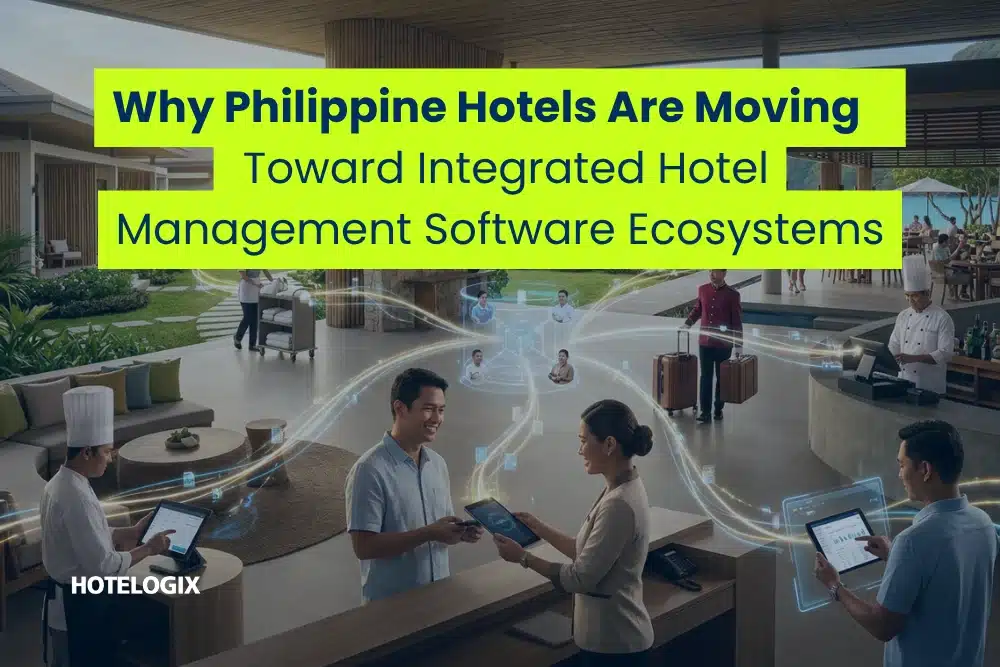
As the Philippine tourism industry stands on the precipice of a massive expansion—projected to reach a valuation of USD 10.95 billion by 2030—the nation’s hospitality sector is undergoing a profound structural shift. The days of siloed operations and manual bookkeeping are rapidly becoming relics of the past. Today, hotel operators across the archipelago, from the bustling high-rises of Makati to the tranquil boutique resorts of Palawan, are pivoting toward integrated hotel management software ecosystems.
This transformation is not merely a trend; it is a strategic response to the increasing complexity of modern travel, where guest expectations for seamless experiences meet the operational realities of a lean-staffed, high-volume market.
Main Facts: The Shift Toward Unified Operations
The core challenge facing contemporary Philippine hoteliers is the "fragmentation trap." Historically, many properties relied on a patchwork of disconnected software—one system for the front desk, another for housekeeping, and a third for managing Online Travel Agencies (OTAs).
This disconnected architecture creates significant "information friction." When a guest books a room via an OTA, the update might not reflect instantly on the property management system (PMS), leading to overbookings or service delays. The modern integrated ecosystem solves this by serving as a "single source of truth." By centralizing reservations, distribution, guest profiling, and operational workflows into a unified cloud-based platform, hotels are eliminating the manual intervention that often leads to human error.
The Ecosystem Framework
A modern, integrated tech stack for a hotel now includes:
- Centralized Property Management System (PMS): The heartbeat of the operation, controlling inventory and guest data.
- Real-time Channel Manager: Essential for synchronizing availability across multiple booking platforms simultaneously.
- Web Booking Engine: A direct channel that captures high-margin bookings without commission fees.
- Automated Housekeeping & Operational Modules: Tools that translate front-office data into actionable task lists for maintenance and cleaning staff.
- Advanced Analytics & Reporting: Data-driven insights that allow managers to forecast demand and optimize room rates dynamically.
Chronology of Digital Adoption in the Philippines
The evolution of hospitality tech in the Philippines has occurred in three distinct waves:
- The Manual Era (Pre-2015): Most hotels relied on spreadsheets and physical logbooks. Coordination between departments was conducted via phone calls or face-to-face meetings, resulting in high overhead and slow response times.
- The Fragmented Digital Era (2015–2020): As online travel grew, hotels began adopting disparate digital tools. While this was an improvement, it led to "integration fatigue," where staff had to log into four or five different systems to manage a single guest journey.
- The Integrated Ecosystem Era (2021–Present): Accelerated by the post-pandemic need for contactless services and operational efficiency, the focus has shifted toward "all-in-one" cloud platforms. The industry is now prioritizing interoperability, where systems "talk" to one another automatically, reducing the need for administrative oversight.
Supporting Data: Why the Move is Necessary
The necessity for this change is supported by market trends that suggest a shift in both the scale and nature of Philippine tourism.
- Growth Projections: The Philippine hospitality market’s projected growth to nearly USD 11 billion by 2030 implies an influx of new room inventory and higher competition. Hotels that cannot manage their inventory efficiently will lose market share to more agile, digitally-enabled competitors.
- Eco-Tourism Boom: Emerging trends indicate that eco-tourism—including hiking, national park visitation, and sustainable travel—is expected to grow at a 6% CAGR between 2026 and 2035. These travelers are often tech-savvy, demanding instant confirmations and digital check-ins, further pressuring hotels to upgrade their systems.
- Operational Efficiency: For smaller boutique hotels, which dominate the Philippine landscape, labor costs represent a significant percentage of revenue. Integrated software allows these properties to operate with smaller teams without sacrificing guest service levels, effectively automating repetitive administrative tasks.
Official Perspectives: The Value of Centralization
Industry experts and tech analysts consistently argue that the ROI of integrated systems extends beyond simple cost savings.
"The integration of property management with channel management is no longer optional for hotels in destinations like Boracay or Cebu," says a representative from the hospitality tech sector. "In a market where seasonal demand spikes can overwhelm a property, the ability to adjust rates across all channels with a single click—and have that reflected instantly in the housekeeping app—is the difference between a profitable season and a missed opportunity."
Furthermore, the shift to cloud-based architecture provides "horizontal scalability." As a hotel group expands from one property to three, a centralized ecosystem allows the corporate office to oversee all operations from a single dashboard. This level of visibility was once exclusive to global hotel chains but is now accessible to local boutique operators.
Implications: Preparing for the Future
The move toward integrated ecosystems has significant implications for how hotels will compete in the next decade.
1. Enhanced Guest Experience
When housekeeping, the front desk, and the reservation team are synced, the guest experience is transformed. Check-ins are faster, room assignments are accurate, and personalized service becomes easier to deliver because the system keeps a consolidated history of guest preferences.
2. Strategic Revenue Management
Integration allows for data-driven decision-making. By analyzing data from both the PMS and the booking engine, hoteliers can identify patterns—such as the best time to run promotions or which channels provide the highest-value guests—enabling smarter, more profitable revenue management strategies.
3. Resilience Against Labor Shortages
With the Philippine hospitality sector constantly facing labor mobility challenges, an integrated system acts as a "safety net." If a staff member is unavailable, the system’s intuitive interface and automation ensure that essential tasks—such as updating inventory or triggering automated guest emails—are completed without manual input.
Strategic Checklist: Choosing the Right Ecosystem
For hoteliers currently evaluating their tech stack, the following criteria are paramount:
- Cloud-Native Architecture: Ensure the system is accessible from anywhere, allowing managers to monitor operations remotely.
- API Openness: The platform should allow for seamless integration with third-party tools like payment gateways, accounting software, and guest feedback platforms.
- Ease of Use: A system is only as good as the team’s ability to use it. Opt for platforms that prioritize intuitive UI/UX to reduce training time.
- Reliable Support: In the hospitality industry, downtime is not an option. Look for providers that offer 24/7 support, ideally with a local understanding of the Philippine market.
- Scalability: Choose a system that can grow with you, whether you are managing one small inn or a multi-property group.
Conclusion: The Path Forward
The Philippine hospitality industry is at a crossroads. As it prepares for the projected tourism boom of the next decade, the reliance on disconnected, manual systems is a liability that many properties can no longer afford.
By embracing integrated hotel management software ecosystems, operators are not just upgrading their software; they are upgrading their entire business model. They are moving from a reactive state of "firefighting" daily operational issues to a proactive state of growth, efficiency, and exceptional guest service.
For the modern Philippine hotelier, the technology stack is no longer just an IT expense—it is the foundational pillar upon which future success will be built. As the industry moves toward a more digitized and efficient future, those who adopt these integrated solutions today will be the ones defining the standards of Filipino hospitality tomorrow.
Ready to modernize your operations? Book a free demo today to see how an integrated ecosystem can streamline your property management, boost your revenue, and elevate your guest experience.


 Ammar Sabilarrohman