Rifan Muazin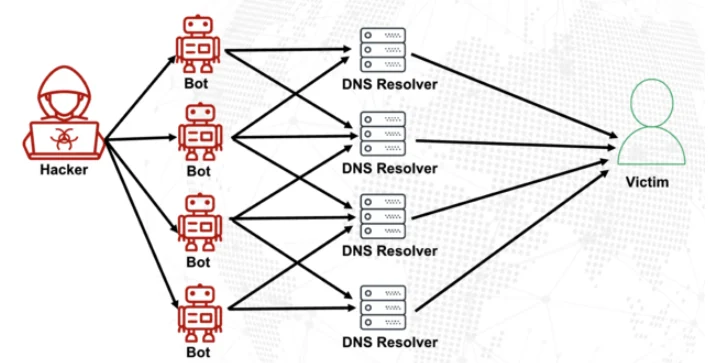
In a startling convergence of cybersecurity irony, a Brazil-based firm specializing in protecting network infrastructure from Distributed Denial-of-Service (DDoS) attacks has been linked to the very botnet responsible for a sustained, years-long campaign of digital sabotage against Brazilian Internet Service Providers (ISPs).
Investigations led by cybersecurity journalist Brian Krebs have revealed that Huge Networks, a company founded in Miami with deep operational roots in Brazil, had its internal infrastructure and executive credentials leveraged to power a sophisticated network of compromised devices. The botnet, primarily composed of vulnerable home routers, has been systematically targeting regional Brazilian network operators, causing significant disruption to local internet connectivity.
The Anatomy of the Breach
The discovery stems from an inadvertently exposed online directory containing a cache of sensitive files. Among the materials in this archive were sophisticated, Portuguese-language Python scripts designed to orchestrate large-scale DDoS attacks. Most incriminating, however, were the private SSH (Secure Shell) authentication keys belonging to Erick Nascimento, the CEO of Huge Networks.
The presence of these keys within a repository of malicious code suggests that threat actors gained deep-level access to the firm’s internal systems. With this access, the attackers were able to utilize Huge Networks’ own infrastructure to manage a sprawling botnet, which they built by scanning the global internet for insecure hardware.
The Role of TP-Link Vulnerabilities
The botnet’s engine is primarily built on the exploitation of TP-Link Archer AX21 routers. Specifically, the attackers targeted devices that remained unpatched against CVE-2023-1389, a critical command injection vulnerability that allows unauthenticated remote attackers to execute arbitrary code. By identifying and infecting these devices, the perpetrators created a formidable "army" of IoT (Internet of Things) nodes, which they then harnessed to launch high-volume reflection and amplification attacks.
DNS Reflection: Turning Infrastructure Against Itself
The botnet relies on "DNS reflection and amplification," a classic but devastating technique. Attackers send spoofed DNS queries to misconfigured servers across the internet. By using an extension of the DNS protocol that allows for large packet sizes, the botnet can trigger a response from these servers that is 60 to 70 times larger than the original request. When these massive responses are directed toward a victim’s IP address, the sheer volume of data overwhelms the target’s network capacity, effectively knocking them offline.
Chronology of the Digital Siege
While the recent exposure of the archive has provided the "smoking gun," the timeline of these events suggests a prolonged and calculated operation:
- September 2016: The Mirai malware strain—the foundation for the current botnet—makes its debut, launching record-breaking attacks that signal a new era of IoT-based DDoS threats.
- January 2026: Huge Networks reports a security incident involving the compromise of two development servers and the theft of the CEO’s personal SSH keys. The company claims to have wiped the servers and rotated keys at the time.
- 2026 (Ongoing): Throughout the year, various malicious domains associated with Mirai variants—such as
hikylover.standc.loyaltyservices.lol—are used to command the botnet. - April 2026: An anonymous source discovers an open directory containing the incriminating Python scripts, SSH keys, and command-line histories, linking the botnet’s operations directly to the credentials of Huge Networks’ leadership.
Technical Analysis: Behind the Python Scripts
The recovered archive offers a rare, granular look at the operational discipline of the threat actors. The command-line history logs detail the systematic scouring of the internet for vulnerable TP-Link hardware. Once a device was compromised, it was integrated into the botnet, which was then coordinated from a Digital Ocean server—an IP address that has been flagged hundreds of times for malicious activity over the past year.
The scripts reveal a highly targeted approach. Unlike indiscriminate botnets that attack global targets, this operation was strictly focused on Brazilian IP address ranges. The attackers employed a "hit-and-run" strategy, cycling through target prefixes and launching 10-to-60-second bursts of traffic using four parallel processes per host. This method is specifically designed to degrade service quality for smaller ISPs without triggering large-scale global security alerts that might lead to a rapid shutdown of the infrastructure.

Official Responses and Denials
When confronted with the evidence, Huge Networks CEO Erick Nascimento denied any involvement in the malicious activity. He acknowledged that the company had seen an increase in DDoS activity targeting small ISPs, but claimed he was unaware of the extent to which his firm’s own infrastructure was being implicated.
"We received and notified many Tier 1 upstreams regarding very, very large DDoS attacks against small ISPs," Nascimento stated. "We didn’t dig deep enough at the time, and what you sent makes that clear."
The "Competitor" Theory
Nascimento posits that the entire incident is the result of a targeted "false flag" operation orchestrated by a business rival. He claims that the January 2026 breach was a singular event and that the keys found in the archive were part of a "legacy personal droplet" that was destroyed months ago. He further argues that the logic of the attack contradicts his business model.
"We don’t run DDoS attacks against Brazilian operators to sell protection," Nascimento wrote. "Our sales model is mostly inbound… The targets in the scripts you received are small regional providers, the vast majority of which are neither in our customer base nor in our commercial pipeline."
Nascimento asserts that he possesses "strong evidence stored on the blockchain" that identifies a specific competitor as the mastermind. He declined to name the party, citing the need to maintain a "surprise factor" for an upcoming industry event where he claims the competitor will be making a rare appearance.
Implications for the DDoS Mitigation Industry
The case of Huge Networks highlights a growing trend in the cybersecurity world: the "democratization" of massive DDoS power. As the cost of launching attacks drops and the availability of vulnerable IoT hardware remains high, even established firms find themselves in the crosshairs of sophisticated actors.
The Problem of "Credential Leakage"
The reliance on SSH keys as a primary authentication vector is a standard practice in the tech industry, but it remains a significant single point of failure. If an executive’s keys are compromised, the entire security posture of the company is essentially nullified. This incident serves as a stark reminder that even companies whose core business is security are not immune to the fundamental risks of credential hygiene and internal privilege management.
The Erosion of Trust
Perhaps the most damaging implication is the loss of trust within the Brazilian ISP community. When a firm tasked with providing defense is found to be the source of the threat—whether through negligence or malicious intent—the entire ecosystem suffers. Smaller ISPs, already struggling to maintain uptime against constant, low-level DDoS harassment, are left wondering if the "protection" they are buying is merely a shield for the very people attacking them.
As the investigation continues and more details emerge from the leaked archive, the incident at Huge Networks will likely serve as a case study for the necessity of more rigorous internal audits, the danger of "shadow" infrastructure, and the persistent, evolving threat posed by Mirai-derived IoT botnets. Whether the truth lies in a sophisticated competitive sabotage or a failure of internal security controls remains to be seen, but the fallout from this breach will undoubtedly be felt across the Brazilian digital landscape for some time.


 Sagoh
Sagoh
 Nana Wu